
 infection.)
Two healthcare workers in India’s West Bengal state have been confirmed with Nipah virus (NiV) infection, prompting heightened monitoring by health authorities and concern from the World Health Organization (WHO). The cases involve a male and female nurse, both aged 20 to 30, from Barasat in the North 24 Parganas district. They reportedly fell ill in late December 2025 and were hospitalized in early January 2026.
Nipah virus is a highly lethal zoonotic disease, with fatality rates ranging from 40% to 75%. The virus is primarily carried by fruit bats (Pteropus species), which are considered its natural reservoir. Transmission can occur through contaminated food, such as raw date palm sap, or through direct contact with infected animals, including pigs.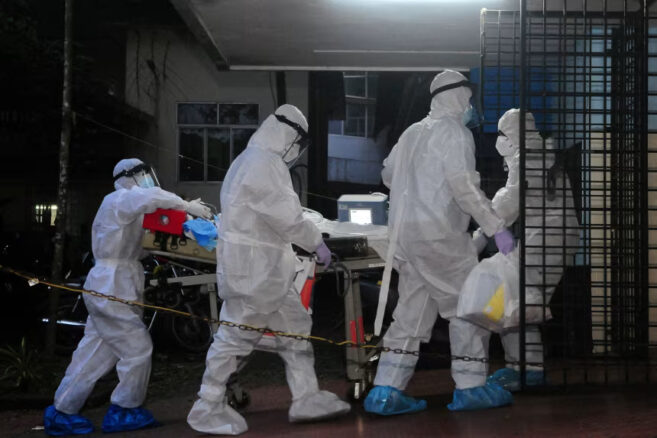
India notified the WHO on January 26, 2026, after laboratory confirmation by the National Institute of Virology in Pune. As of late January, one patient was reported to be improving, while the other remained in critical condition. Health officials have traced and tested more than 190 contacts, all of whom have reportedly tested negative.
Human-to-human transmission is also possible, particularly through close contact with bodily fluids, and has been documented in healthcare settings.
Early symptoms of Nipah virus include fever, headache, muscle pain, vomiting, and sore throat. In severe cases, it can progress rapidly to encephalitis, seizures, coma, and respiratory distress. The incubation period is typically between three and 14 days, though it can extend up to 45 days.
Since 2001, periodic outbreaks have been reported in Bangladesh and India, often linked to seasonal harvesting of date palm sap. West Bengal has previously recorded Nipah-related incidents in 2001 and 2007. While India has reported relatively low annual case numbers in recent years, major outbreaks have occurred in the past, including 66 cases in 2001 and 18 in Kerala in 2018.
There is currently no licensed vaccine or specific treatment for the Nipah virus. Medical response remains focused on supportive care and strict infection control measures.
The WHO has assessed the subnational risk as moderate due to the virus’s high fatality rate, diagnostic challenges, and potential for human-to-human transmission. The organization has urged stronger surveillance, contact tracing, and infection prevention protocols, emphasizing a One Health approach given the continued risk of spillover from bats.
While the WHO considers regional and global risks currently low, health officials continue to monitor the situation closely. No travel restrictions have been recommended, but travelers are being advised to avoid foods that bats may contaminate and to remain alert for symptoms.
Share
Related Articles
Read more