

By: Anne Marie Thompson, Attorney-at-Law, Former Labour Commissioner
Almost six years ago, on May 20, 2020, the Government issued a warning to the public about squatting. In its brief statement, the Government reminded us that squatting on national land or private land is illegal.
The statement ended with the following reminder:
• “While it is the responsibility of private landowners to remove trespassers from their land, the Ministry reiterates that, under the Summary Jurisdiction (Offences) Act, Chapter 98 of the Laws of Belize, Revised Edition 2000, trespassing on private lands is illegal and subject to removal at the expense of trespassers.”
Here’s the landing!
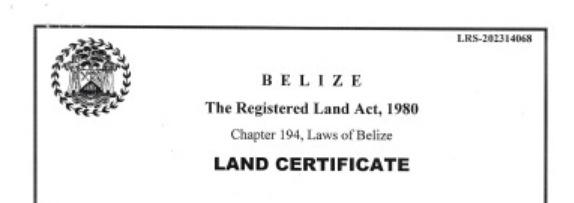
A willful trespasser may step onto your land for a short time and be gone by the end of the day, with no claim to ownership. A squatter, on the other hand, goes further. A squatter settles in, takes over the use of your land, lives openly, and may eventually try to claim your land as their own, even though such a claim is not automatic. And so, this is where the Registered Land Act, Chapter 194 of the Laws of Belize, Revised Edition 2020, comes in.
In Belize, only registered land can be claimed through adverse possession, which is the legal process that gives a squatter the legal right to apply for prescriptive title after years of occupation. In other words, a trespasser is a temporary intruder with no claim to the ownership of your land. But a squatter on registered land, under the law, may challenge your land ownership by actually saying to you, “I have been here long enough; this land can now be mine”. In other words, a trespasser may be gone in a day or two, but a squatter on registered land can trigger a fierce and costly legal battle with you over your own land. Can you believe this? And if squatting is ignored or challenged, you, the registered landowner, could ultimately lose your land to the squatter through adverse possession.
Due to certain circumstances, registered landowners may sometimes be absent from their properties. That’s when squatters can step in. By the way, squatters are not always strangers. A squatter could be a relative, a worker left to manage your land, or someone invited to stay on your property. Yet, in Belize, if a squatter is allowed to occupy registered private land uninterrupted for 12 years, long-established legal principles allow them to apply for ownership. The law also recognizes that someone who uses and cares for the land as an owner would — openly, exclusively, undisturbed, and without permission — may eventually acquire it through adverse possession.
Taking proactive steps isn’t just about preventing squatting. It is about preserving your legal rights and evidence that you are the rightful landowner. As a registered landowner, you can protect your property by visiting and inspecting it regularly. Keeping fences and boundaries clearly marked and maintained is very important, as well as documenting their presence with photographs, survey maps, and maintenance records. Simple measures like putting up “No Trespassing” signs, planting crops, or placing a visible chain and lock on the property can show potential squatters that the land is actively used and monitored.
Also, any permission given to relatives, workers, or tenants to temporarily use or occupy your land should be clearly documented in writing, making it clear they are not claiming ownership. And if a caretaker were to be appointed, do so under a formal employment contract, which defines their duties and access, and provides legal evidence of your control of your land.
Remember, be on the lookout. If someone is found occupying your land without permission, act immediately. Interrupt their continuous occupation by, among other things, sending them formal warnings and written notices or pursue legal proceedings.
Don’t lose your ground!
By combining vigilance, ensuring documentation, and initiating tangible and timely action, you can prevent unauthorized occupation on your land from evolving into squatting and a costly legal claim. At the same time, you would be ensuring that your rights remain protected under the law. However, because the rules are complex and the consequences potentially severe, it is recommended that you seek legal advice when it comes to adverse possession.
Anne Marie Thompson
sandonaconsulting2025@gmail.com