

In Belize, it is illegal to keep wildlife in captivity. The Belize Forest Department continues to enforce this law and reminds current parrot owners that the registration application period for their birds will close on March 31st. After this date, the opportunity to legalize parrots already in captivity will end. For full registration information, visit the Belize Bird Rescue licensing section (https://shorturl.at/zklXB) or contact the Forest Department at 610-1524.
Wild parrots are the largest group of captive animals in Belize, and some are still captured and sold illegally in the pet trade. Of the nine parrot species found in Belize, the scarlet macaw and yellow-headed parrot are now threatened with extinction due to habitat loss and illegal capture (poaching).
Forest Officer with the Belize Forest Department, Victoria Chi, noted that the country’s scarlet macaw population is estimated at around 300 birds. In contrast, the yellow-headed parrot population is estimated at 1,200-1,600.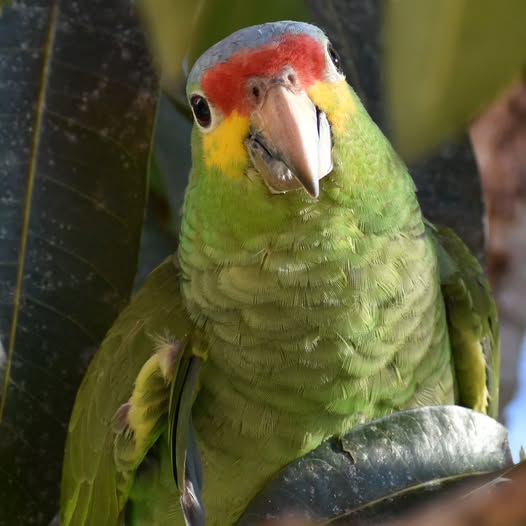
“If everyone wants to have a parrot, then this affects the population in the wild. That is the reason these birds should not be kept in captivity,” Chi said. “Most of the time, people do not take proper care of them, and the birds do not survive. But we now have this process whereby people can register and keep the birds as long as they meet certain criteria.”
Chi explained that an inspection is carried out to ensure the bird has enough living space and that the owner provides proper nutrition. She also mentioned that the Belize Forest Department has a manual that guides its officers and serves as a resource for the public to learn more about parrots.
Nikki Buxton, Director at Belize Bird Rescue, shared that the organization assists in reintroducing parrots to the wild after their owners surrender them. She explained that the process can take several years.
“At the Belize Bird Rescue, we have large enclosures where we build flocks of parrots of their own species and gradually introduce them to each other. After a period of time, usually between two and five years, we can release them back into the wild,” she said.
Buxton also spoke about the appropriate diet for parrots. This includes in-season fruits, certain vegetables, and even cooked beans, all of which are high in protein. She cautioned against feeding peanuts, as they can cause birds to gain excess weight and affect their health.
According to conservation experts, most captive parrots live only about five years and rarely reproduce, which lowers reproductive rates. In the wild, however, parrots can live up to 90 years and may produce between 18 and 72 offspring, helping to keep population levels healthy.
The public is reminded that under the Wildlife Protection Act and the Convention on International Trade in Endangered Species of Wild Fauna and Flora (CITES), anyone caught capturing, exporting, importing, hunting, killing, or disturbing wildlife may face imprisonment and/or fines. According to the Belize Forest Department, fines can go up to $10,000.
After the March 31 deadline, the department states it will step up enforcement of regulations protecting Belize’s birds. The public is encouraged to report any illegal wildlife activities to the Forest Department at 822-1524.
Share
Related Articles
Read more