

On Thursday, March 19th, the International Court of Justice (ICJ) permitted Guatemala to intervene in the case concerning the dispute over the southern Sapodilla Cayes between Belize and Honduras.
In a unanimous ruling, the ICJ held that Guatemala may intervene as a non-party in the case, pursuant to Article 62 of the Court’s Statute. This provision states that “should a State consider that it has an interest of a legal nature which may be affected by the decision in the case, it may submit a request to the Court to be permitted to intervene.”

Guatemala presented its application to the ICJ in November 2025. The Guatemalan legal team told the Court that it was only seeking to protect its legal interests and to avoid any determination in the Belize-Honduras case that could affect its separate case with Belize. Belize and Guatemala are currently seeking a resolution at the ICJ over a long-standing territorial, insular, and maritime dispute, which also includes the Sapodilla Cayes.
The ICJ did not accept Honduras’ argument that Guatemala’s application should be rejected as an abuse of process. The Court noted that Guatemala sought permission to intervene specifically to protect its legal interests regarding sovereignty over the cayes. “Therefore, its intervention is to be limited to the issue of sovereignty over the Sapodilla Cayes/Cayos Zapotillos, including fishing rights in the surrounding waters,” the Court stated.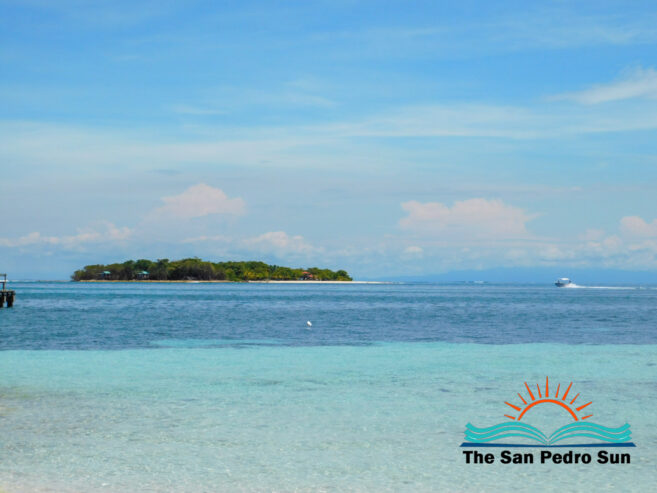
Belize did not object to Guatemala’s application. During oral hearings last year, Belize’s Agent, His Excellency Assad Shoman, reiterated that Belize’s priority is an efficient and complete resolution of all claims against its territory by both Honduras and Guatemala. As such, Shoman urged the ICJ to coordinate the two related cases, the Belize-Guatemala and Belize-Honduras matters, to avoid duplication. He further suggested that it would be logical to hear the Belize-Guatemala case first.
The Belize Ministry of Foreign Affairs and Foreign Trade issued a statement saying that the Court’s decision does not in any way affect the legal rights or claims of any of the parties. “It allows only for each party’s claims and counterclaims to be aired as part of the hearings. The Court’s judgment that Guatemala has a legal interest to participate in the case does not affect any of the substantive issues that the Court is yet to rule on,” the statement indicated.
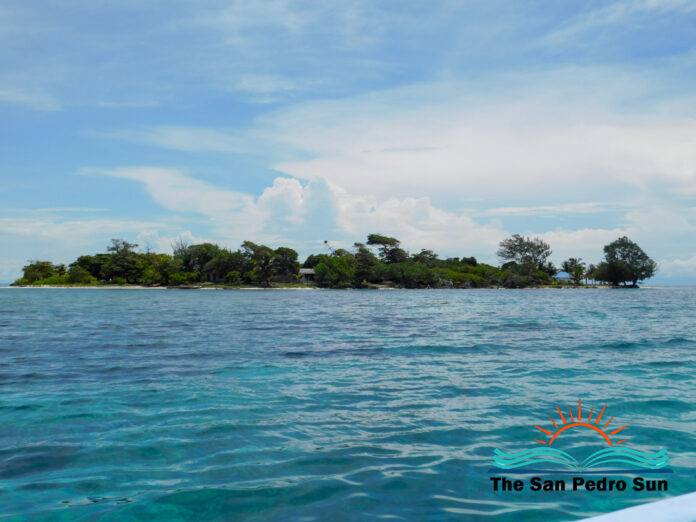
The Sapodilla Cayes, located off the southernmost part of the Toledo District, form part of a marine protected area and are a popular destination for visitors, particularly from Guatemala. The group of Caribbean islands remains under Belizean administration, which bases its claim on the fact that they were under the authority of the United Kingdom until the country’s independence in 1981.
Honduras, however, claims title to the cayes on the basis that they were under Spanish sovereignty. Guatemala has made similar claims in its case against Belize, arguing that due to an alleged breach of the 1859 Boundary Treaty between Great Britain and Guatemala, the Sapodilla Cayes—along with all cayes in Belize, associated maritime areas, and a significant portion of Belizean territory—should fall under Guatemalan authority.
Moving forward, the ICJ has set May 19, 2026, as the deadline for the submission of Guatemala’s written statement as a non-party. Meanwhile, July 20, 2026, is the deadline for Belize and Honduras to file their respective written observations to Guatemala’s written statement. In the meantime, the oral hearings for the Belize-Guatemala territorial, insular, and maritime dispute are expected to begin later this year.