
 has set up several composting sites to handle the ongoing influx of sargassum.)
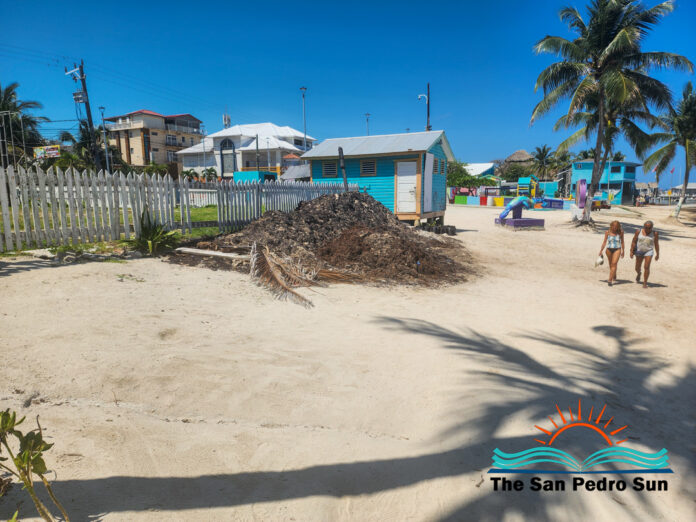
The San Pedro Town Council (SPTC) has set up several composting sites to handle the ongoing influx of sargassum. The initiative allows the seaweed to dry for about 60 days, after which it can be turned into usable material for beach nourishment projects. This method addresses immediate cleanup needs while supporting long-term coastal restoration, especially as sargassum arrives earlier than expected. SPTC representatives explained the process during an interview on April 8th, mentioning that sites have been established in areas such as Boca del Rio, Central Park, San Pedro High School, near the church, the library, and the cemetery.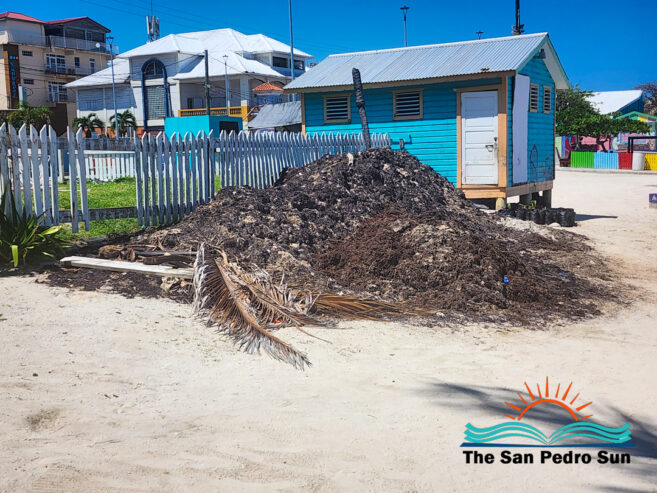
The method involves collecting sargassum from beaches and placing it at inland or fenced sites, away from the shoreline, to prevent exposure to storms and rapid decay. Over time, the seaweed, made up of about 80% water, dries out and naturally breaks down in the sun, compressing into a sand-like material rich in organic matter. This material can then be used to help rebuild beaches. The process avoids burying sargassum directly on beaches, which officials say can weaken shorelines by disrupting natural sand compaction and increasing vulnerability during high tides.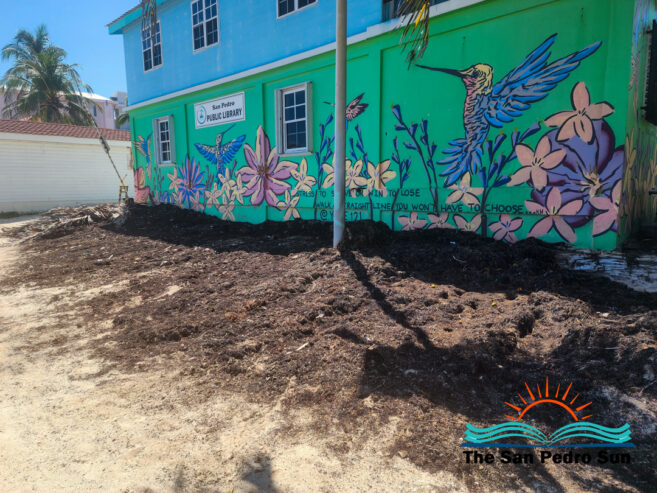
Challenges remain, including preventing garbage dumping at composting sites, which can attract pests and slow decomposition, and ensuring that staff follow proper handling protocols.
Since 2015, Sargassum has affected San Pedro, leading to beach erosion because traditional removal methods often take up to 40% of the sand with each load. In the past, the seaweed was disposed of by transporting it to landfills or remote sites. However, recent efforts, backed by World Bank funding and research from scientists like Valentine Rosado, have shifted focus to on-island composting after seeing successful results at older sites, including piles near San Pedro High School that have fully broken down into sand-like material. These initiatives support the national Sargassum Task Force’s efforts to enhance collection and management systems.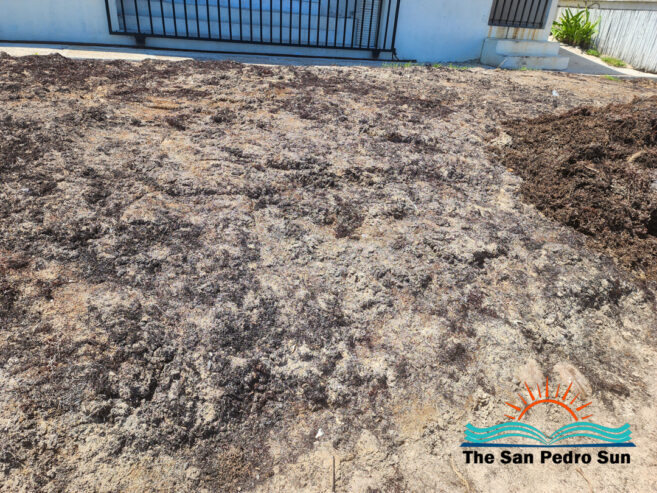
SPTC representatives stressed that the process is a practical beach management method, not a complete solution. They explained that instead of burying sargassum on the beach, the decomposed material is used to help restore sand lost during cleanup efforts.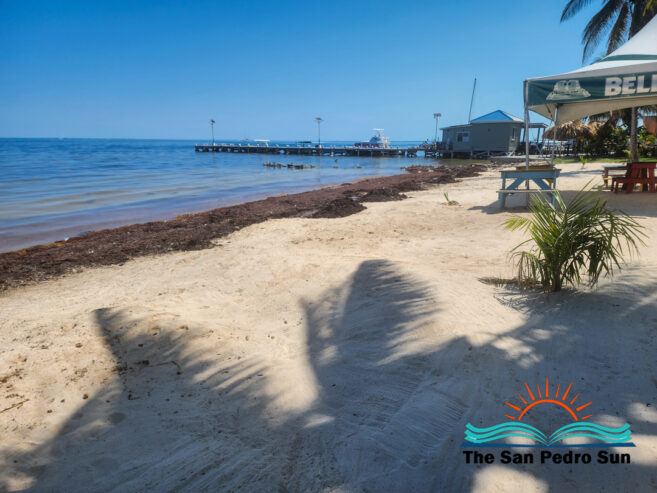
Looking ahead, the council plans to rotate composting sites, filling some while harvesting from others, to ensure continuous beach nourishment. Recent efforts have removed about 75 tons of sargassum, showing progress despite ongoing heavy influxes. Future partnerships with international firms may introduce technology to remove heavy metals, potentially enabling expanded uses such as fertilizer production. SPTC is also exploring collaborations that could create scalable solutions for Belize’s coastline while helping to keep beaches cleaner year-round.
San Pedro Launches Sargassum-to-Sand Initiative for Beach Nourishment
Share
Related Articles
Read more