

The Government of Belize has introduced a retention package for public health nurses, including those at the Dr. Otto Rodriguez San Pedro Polyclinic II, to curb the outflow of skilled workers. Approved by Cabinet and set to be implemented in phases, starting in the 2025/2026 budget cycle, the initiative provides financial incentives and benefits for nurses across the country.
The package follows years of advocacy by the Nurses Association of Belize and discussions with the Ministry of Health and Wellness. It is intended to address the growing trend of nurses leaving for higher-paying opportunities in countries such as the United States, the United Kingdom, and Canada. Chief Nursing Officer Lizette Bell described the initiative as “one step towards keeping our nurses at home,” noting that it forms part of broader efforts, including scholarship opportunities and access to land. The move comes amid data showing significant losses in the nursing workforce following the COVID-19 pandemic, placing increased pressure on public healthcare facilities.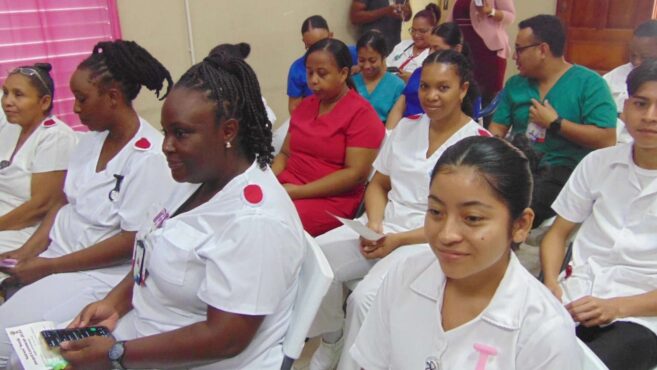
Under the retention package, nurses will receive a 10% specialist allowance on their annual salary, an increase in uniform allowance from $300 to $500 per year, and a monthly hazard allowance of $200. Additional benefits include a night duty allowance, a $300 monthly on-call responsibility allowance, access to house lots, and opportunities for further education through scholarships.
Before the introduction of this package, Belize faced ongoing shortages within the public health system. Facilities such as the Karl Heusner Memorial Hospital reported losing dozens of nurses and, in some cases, had to rely on foreign recruits from countries including the Philippines, Nicaragua, and Cuba. Many of these recruits have also advocated for improved working conditions. Regional nurses have cited better compensation packages abroad as a key factor driving migration, prompting repeated calls for stronger national-level incentives.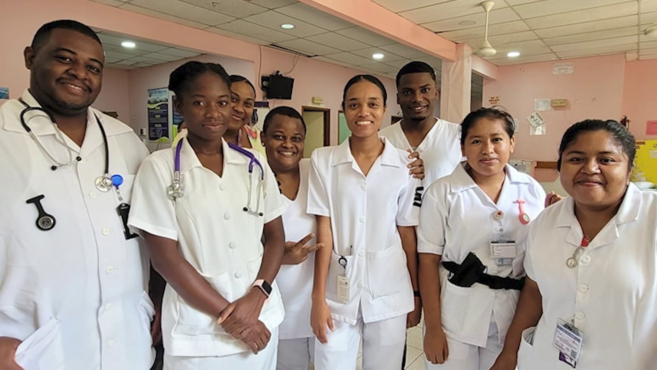
On April 21st, nurses shared mixed reactions to the announcement. Nurse Andrew Baird noted, “When the nurses were leaving just after COVID, many of them were receiving better offers abroad than what we have here.” Chief Nursing Officer Bell added, “Nurses are often required to work on call with no compensation, so this responsibility allowance provides some level of recognition for that commitment.” Senator Christopher Coye also addressed the issue, stating, “We’ve been losing quite several nurses to better-paying jurisdictions. It is important that we not only retain but also attract more nurses into the system.” A nurse at the San Pedro Polyclinic welcomed the move, saying it is encouraging to see improvements in how healthcare workers are supported.
While the first phase of the package is expected to ease some of the pressure on the healthcare system, stakeholders note that continued reforms may be necessary to remain competitive internationally. The initiative is seen as a step toward stabilizing healthcare services in communities such as San Pedro. Still, its long-term success will depend on sustained support and further policy development.
Share
Related Articles
Read more