

The Belize Tourism Industry Association (BTIA) and the Belize Tourism Board (BTB) convened key stakeholders on April 29th at Mambo Restaurant at Matachica Resort in northern San Pedro Town, Ambergris Caye, to address the growing influx of sargassum affecting coastal tourism. Led by BTIA President Efren Perez and featuring BTB Director of Industry Development and Guest Experience Andrew Usher, the meeting brought together representatives from the Sargassum Task Force and tourism stakeholders to review research findings, learn about mitigation equipment, and coordinate a more unified response to the issue.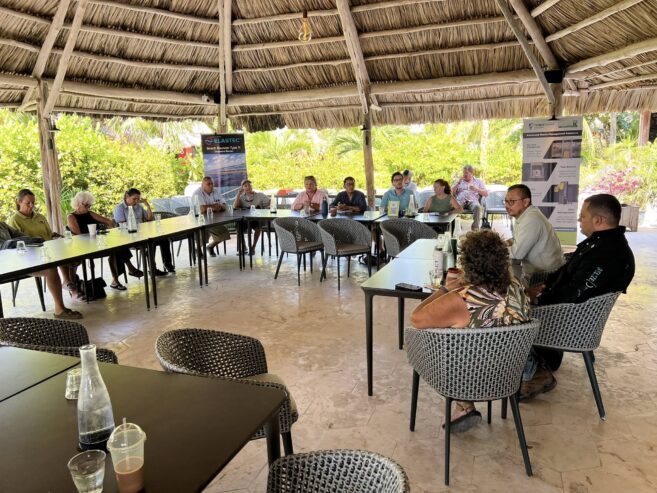
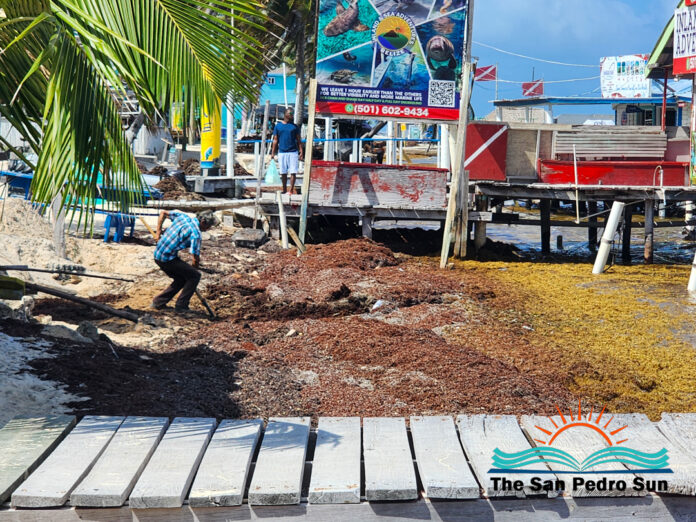
Sargassum, a floating seaweed, has increasingly inundated Belize’s beaches, affecting visitor experiences through beach fouling, strong odors, and costly cleanup efforts. The BTB outlined a data-driven response to improve efficiency in collection and disposal.
Among the technologies discussed was the Desmi Triturtle system, designed to operate in waters at least two feet deep. The system collects sargassum along with water, which is then separated through dewatering processes on floating platforms or barges. Components for this system have already arrived in Belize, with plans to establish permanent setups at larger properties using underground piping.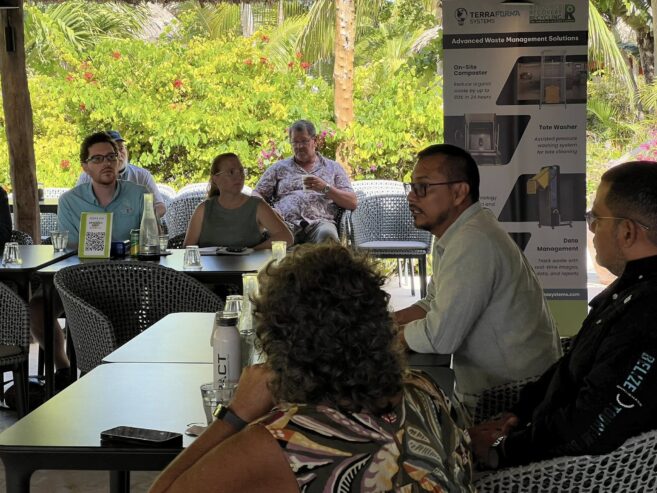
Additional trials included a customized beach rake attached to a mini excavator in Placencia, which reportedly removed approximately 300 cubic yards of sargassum in six to seven hours, significantly faster than manual cleanup methods, while minimizing disturbance to the sand. Other solutions, such as conveyor belt systems and locally produced collection nets, are also being explored, though some face procurement delays.
Officials emphasized that no single solution would fit all locations, noting that site-specific strategies are necessary to improve collection, transport, and disposal processes.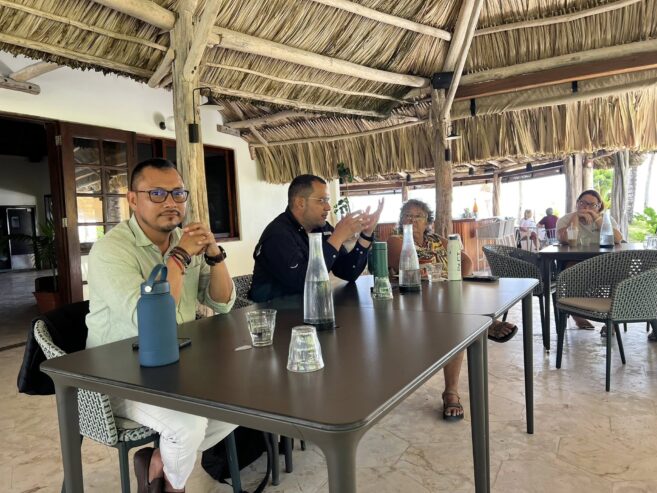
The meeting builds on months of increased sargassum accumulation across the region, driven by ocean currents depositing large quantities along Belize’s coastline. Previous efforts have been hindered by fragmented responses among government agencies, high equipment costs, and limited private-sector investment due to unproven technologies.
Data collected from earlier trials, including insights from international partners and suppliers, has helped guide the current approach. However, stakeholders noted that public perception remains a challenge, with many believing insufficient action is being taken due to limited communication.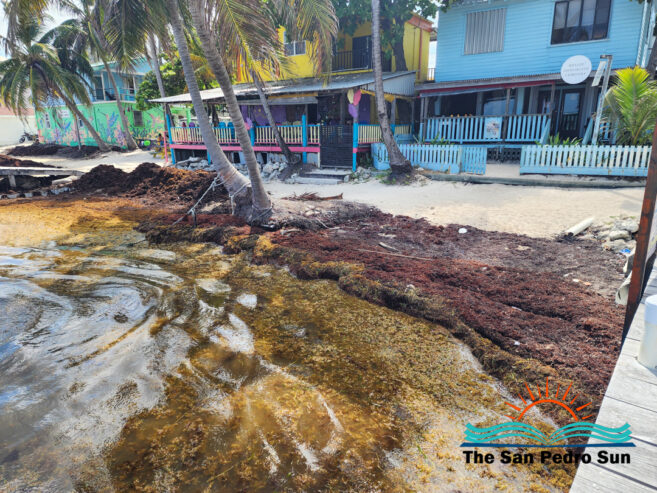
Usher acknowledged the cost of the equipment and the need for strategic deployment. “Some of this equipment is not cheap,” he said. “We will deploy it in targeted areas and invite the private sector to observe how it performs.” He emphasized the importance of data-driven decisions and noted that daily sargassum accumulation underscores the need for long-term solutions.
Looking ahead, the BTB aims to refine and standardize these methods by September or October 2026, with the goal of expanding their use along Belize’s coastline. Support is expected from the central government and funding sources such as the Belize Fund for Sustainable Tourism.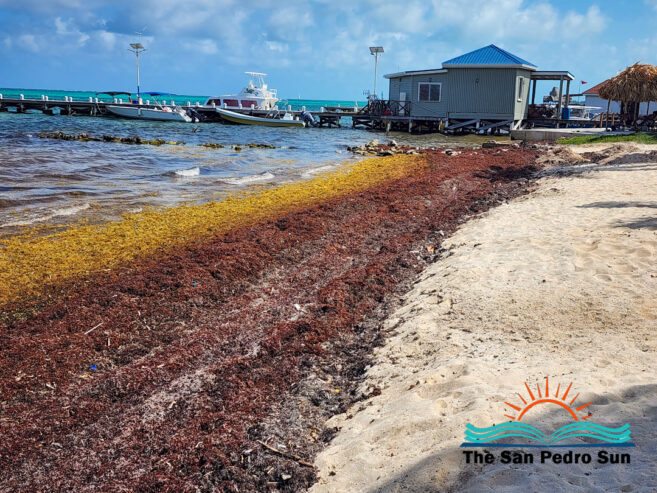
Stakeholders also discussed the role of private operators through BTIA chapters, including the potential for shared equipment and coordinated cleanup initiatives. Additional measures, such as improved public communication, sargassum tracking tools for travelers, and economic impact assessments, are expected to help mitigate reputational damage.
The meeting concluded with a call for stronger inter-ministerial coordination and increased private-sector involvement to ensure scalable, sustainable solutions that protect Belize’s coastal tourism industry.
Share
Related Articles
Read more