
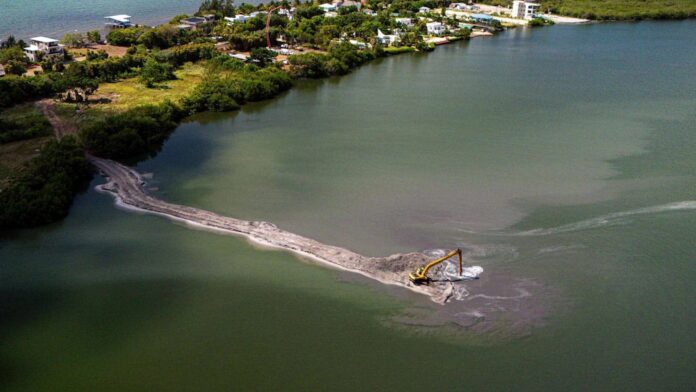

A coalition of several of Belize’s leading conservation and environmental organizations issued a joint release on May 18th calling on the Government of Belize to strengthen protections for the country’s coastal areas and marine ecosystems. One of the coalition’s strongest demands was for a halt to approvals for coastal developments, arguing that mangrove forests, fishing and nursery grounds, and portions of the Belize Barrier Reef System continue to face growing threats from what they described as unsustainable development practices.
Organizations signing the joint statement included the Ambergris North Alliance, World Wildlife Fund (WWF), Oceana, Fragments of Hope, the Placencia Village Council, Belize Flats Fishery, and several other non-governmental organizations. The coalition denounced activities such as irregular dredging near or within environmentally sensitive areas, unregulated mangrove clearing, and insufficient environmental monitoring and enforcement.
According to the statement, Belizeans are witnessing the “daily degradation” of critical natural resources across the country. The coalition accused government agencies of failing to adequately enforce environmental laws, noting that violations are often addressed only after irreversible damage has already occurred and that repeat offenders rarely face meaningful penalties.
The coalition called on the Government of Belize, specifically the Ministry of Sustainable Development, the Ministry of Blue Economy, the Ministry of Natural Resources, and the Department of the Environment (DOE), to suspend approval processes for projects in sensitive marine and coastal areas. Areas highlighted in the release included the Bacalar Chico Marine Reserve in northern Ambergris Caye, the Hol Chan Marine Reserve south of Ambergris Caye, the Placencia Peninsula and lagoon system in southern Belize, the Corozal Bay Wildlife Sanctuary, and several offshore cayes.
The joint release followed reports of controversial dredging activities in the Placencia Lagoon, which were halted on May 14th after a verbal stop order was reportedly issued to Seaboard Holdings Limited while the DOE investigated. On May 16th, Placencia village councilors and residents staged a protest near the dredging site, blocking heavy equipment and successfully stopping work for the day.
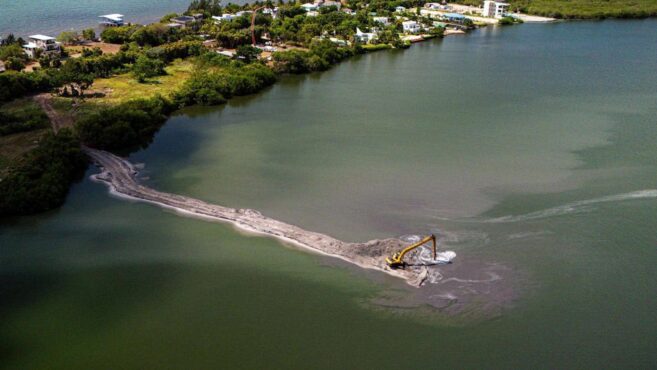
Placencia Village Councilor Kristine Small said she was disappointed that approval had reportedly been granted for the project despite prior environmental concerns and scientific recommendations cautioning against the type of coastal modification being undertaken. According to Small, those recommendations were ignored.
“These activities do not only affect our ecosystem in the lagoon, but the residents, the tour guides, and the people of the entire peninsula who get food from the lagoon,” Small said. “They go fishing. Our message is, and I cannot stress this enough, there has to be oversight.”
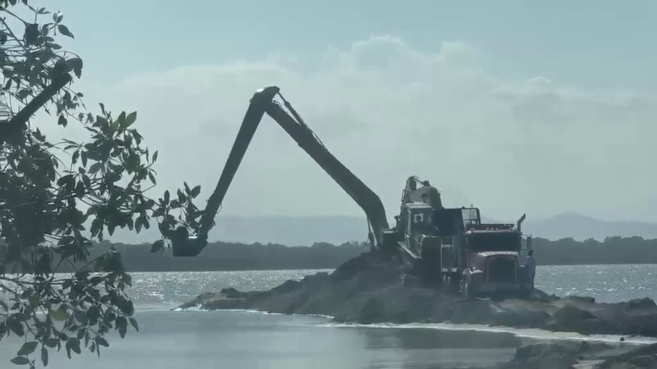
Following intervention by the DOE and the Mining Unit, the Placencia Village Council is now advocating for greater involvement in environmental clearance and mining permit decisions affecting the area. Small added that the impact of such developments extends beyond one village and affects the livelihoods of communities throughout the peninsula.
DOE Chief Environmental Officer Anthony Mai acknowledged that the department faces limitations in monitoring environmental compliance.
“Everyone knows that all government departments have limitations. We understand that the works on the ground were going contrary to the approved plans, and persons in the area notified us,” Mai said. “We went down and stopped the activity immediately, and an investigation started.”
Mai also commended members of the public for reporting environmental irregularities.
Meanwhile, the Opposition, through the United Democratic Party’s caretaker for Belize Rural South (Cayes), Senator Gabriel Zetina, accused the government of prioritizing short-term economic gain over long-term sustainability.
“We are killing the goose that lays the golden eggs just to sell the feathers. In Placencia, residents for weeks have watched in horror while dredging machines tear into one of the most biodiverse areas,” Zetina said.
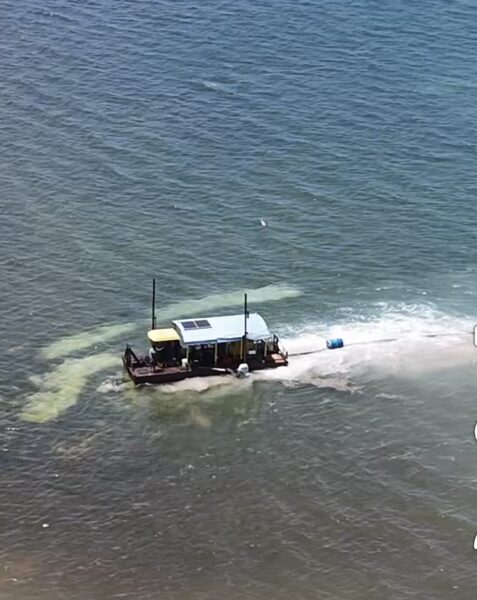
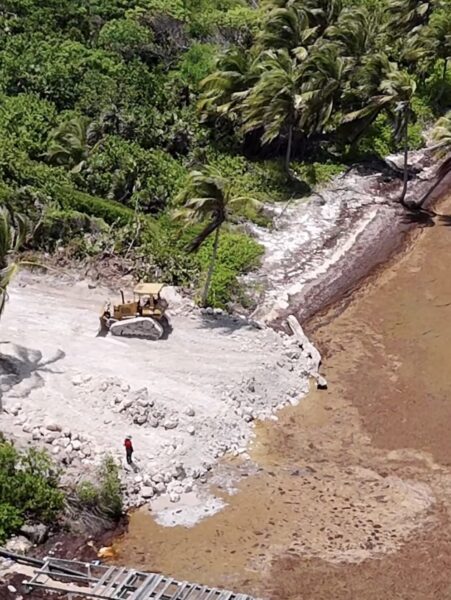
He added that residents on Ambergris Caye continue demanding transparency regarding dredging and development operations. Recent reports from island residents include concerns about activities near the Mexico Rocks Marine Reserve on the island’s northern coast, where excavation and dredging have reportedly been observed to facilitate a docking area for barges. Environmental advocates argue that such activities threaten the nearby reserve and barrier reef ecosystem. The DOE office on Ambergris Caye stated that all complaints are documented and investigated.
Calls for stronger oversight of coastal development were also echoed by the Belize Tourism Industry Association (BTIA). On Wednesday, May 20th, the organization issued a release calling for an immediate moratorium on mining and dredging activities in the Placencia Lagoon and on Ambergris Caye.
The BTIA noted that Belize’s tourism industry remains heavily dependent on the protection and sustainability of the country’s natural resources.
“Our marine ecosystems, lagoons, mangroves, reefs, beaches, and biodiversity are not only environmentally significant, but also fundamental pillars of Belize’s tourism economy and the livelihoods of thousands of Belizeans,” part of the release stated.
The organization emphasized that development must take place within a framework that ensures transparency, scientific guidance, regulatory compliance, environmental accountability, and meaningful public consultation.
“The tourism industry cannot remain silent while some of Belize’s most sensitive and valuable ecosystems face increasing pressure,” said BTIA President Efren Perez. “We fully support responsible and sustainable development, but it must be guided by proper environmental safeguards, transparency, enforcement, and stakeholder engagement. The long-term health of Belize’s tourism industry depends on the protection of our natural assets.”