
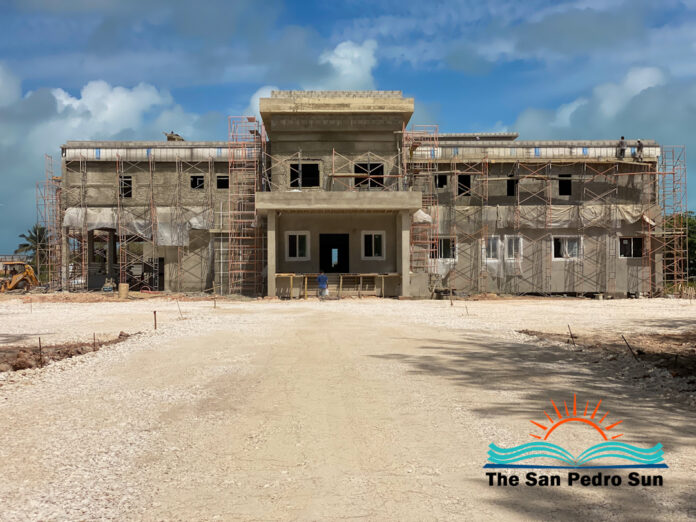

Almost a year ago, during a site visit, progress on the San Pedro/Caye Caulker General Hospital was described as positive, on schedule, and within budget, with funding facilitated by a grant from the Republic of China (Taiwan). However, by May 2026, construction costs for the hospital had reportedly increased significantly, pushing the project above its original budget. Prime Minister Honorable John Briceño addressed the matter on May 20th, stating that the government will continue discussions with Taiwanese officials.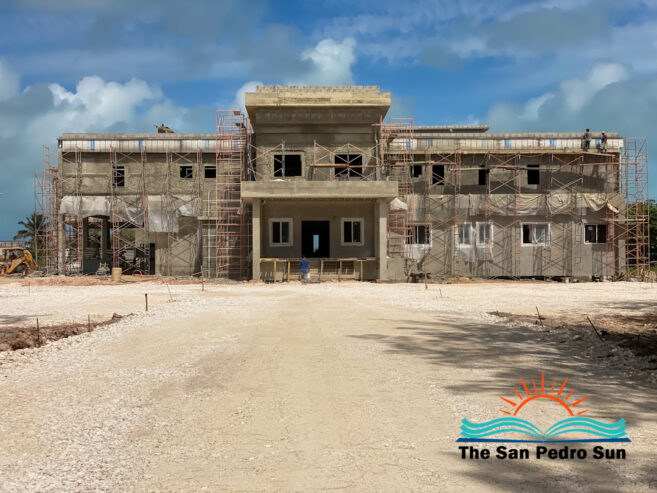
While the Prime Minister did not confirm the reported overrun figure, believed to exceed $10 million, he acknowledged that construction costs have risen sharply in recent months.
“A few months ago, a load of sand was around $850; now it is around $1,700. Everything has been going up,” Briceño said.
The hospital was originally expected to be completed by the end of this year, but rising costs could delay the project.
The hospital is being constructed through a US$16.5 million grant from Taiwan. However, with expenses continuing to rise, Briceño said the government will need to meet with Taiwanese officials to determine how to address the shortfall.
“After speaking with the Taiwanese, we will find out if they are prepared to help, and whatever shortfall, obviously, the government will have to pay,” Briceño added.
The state-of-the-art facility is under construction on Seagrape Drive, south of San Pedro Town. Once completed, the hospital will have 45 beds and offer both primary and secondary healthcare services. The facility will also provide on-site housing for doctors and nurses.
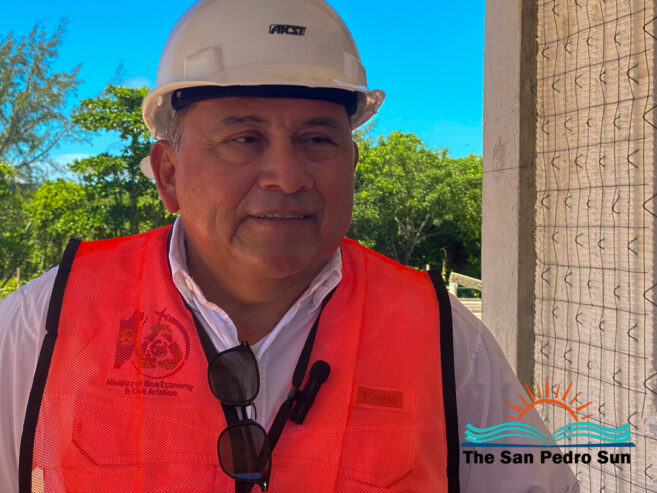
Area Representative Honorable Andre Perez was unavailable for comment regarding the reported budget concerns. However, in previous interviews, he noted that the hospital is expected to employ approximately 250 full-time staff and include operating theatres, sterilization rooms, laboratories, maternity units, specialist services, and a morgue.
Once operational, the hospital is expected to provide inpatient services on Ambergris Caye and significantly reduce the need for medical evacuations to Belize City.