
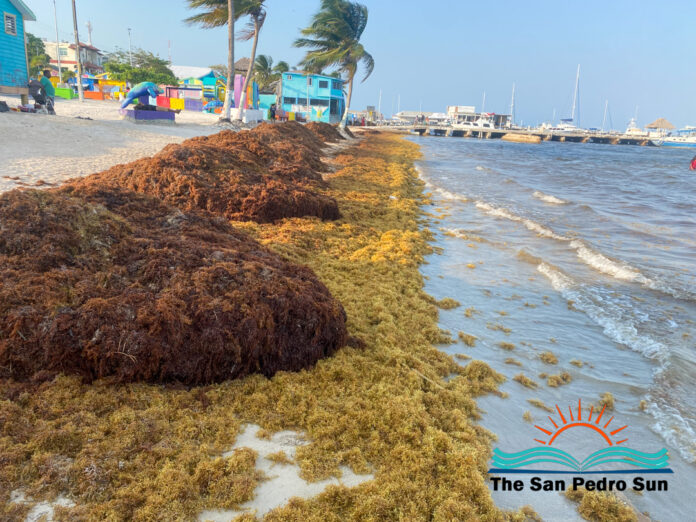

The ongoing influx of Sargassum continues to impact Belize’s coastline, particularly tourism-dependent destinations such as San Pedro Town and Caye Caulker. Local and central government authorities have invested significant resources to manage the problem. On May 27th, it was confirmed that approximately $25 million has been spent on Sargassum mitigation and beach clean-up efforts in San Pedro alone, yet the challenge remains far from resolved.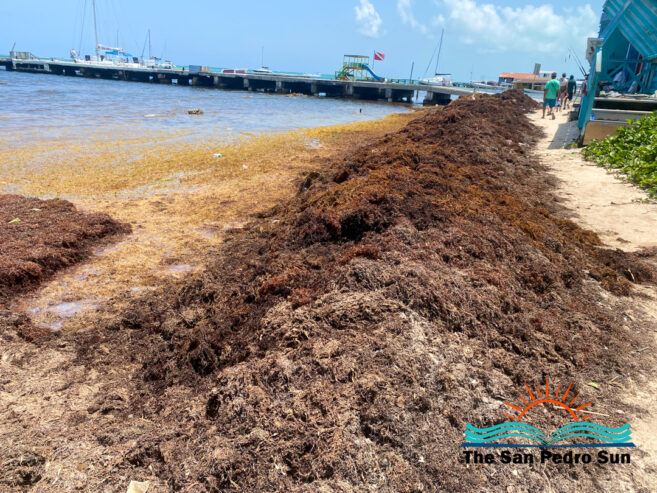
Area Representative Honorable Andre Perez told The Sun that efforts to keep the island’s beaches clear of Sargassum will continue once the harvester machines return. According to Perez, the two machines officially launched in April 2025 have been undergoing maintenance and are expected to resume operations shortly. “We will have the machines back collecting Sargassum again as soon as maintenance is completed,” he said.
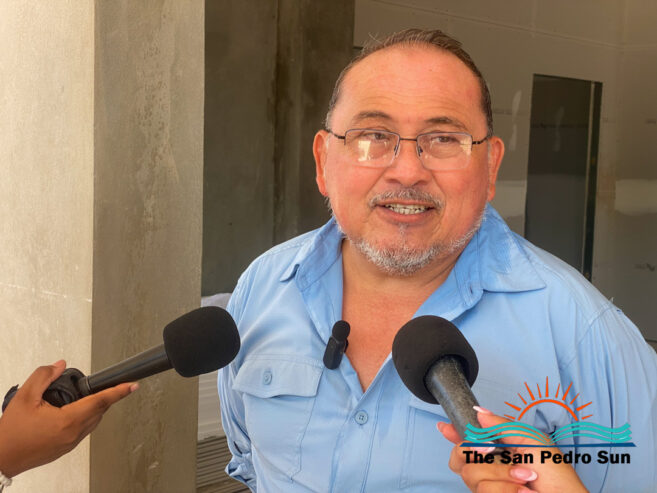
Despite criticism of the machines’ effectiveness, Perez maintained that they have made a significant contribution by collecting seaweed offshore before it reaches the coastline. However, he acknowledged that the scale of the problem is enormous and that additional resources may be needed not only for Ambergris Caye but also for other affected areas of the country.
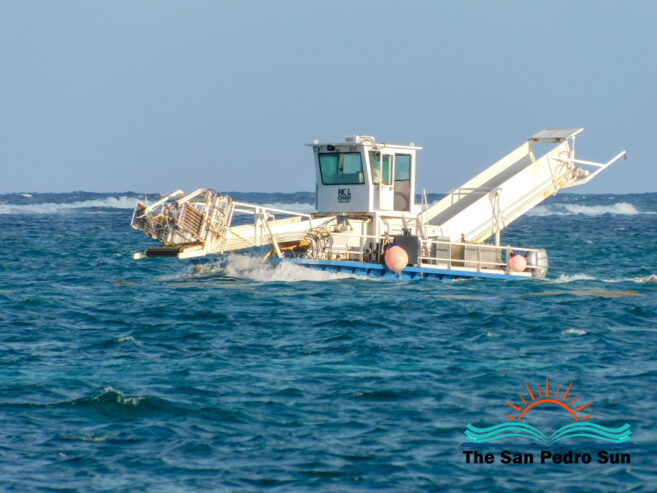
Perez noted that the Sargassum invasion continues to affect both the tourism and fisheries industries negatively. While several stakeholders and international companies have proposed projects to utilize or dispose of brown algae, no long-term solution has yet proven successful.
“There are many plans, many projects, including entertaining so many people coming in to offer us different ways to use Sargassum. But no one has yet found that rightful magic recipe to deal with this issue,” Perez said. He added that the most effective approach remains collecting the seaweed before it reaches shore. “We cannot let it reach the shores,” he stated.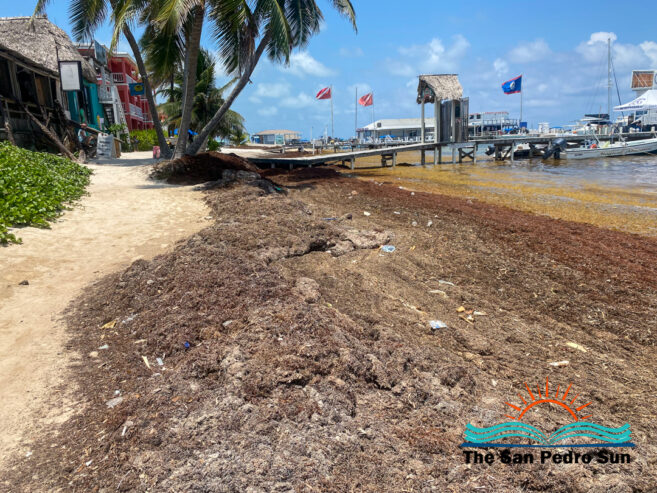
Several pilot programs have been introduced over the years, including initiatives to convert Sargassum into construction blocks, beach nourishment material, and fertilizer. Perez described these projects as promising ideas but said they have yet to produce viable large-scale results.
Without an effective solution, the seaweed continues to wash ashore, where it decomposes, creating environmental and economic challenges. While the multimillion-dollar investment in San Pedro has helped reduce some of the impacts, large quantities of Sargassum continue to drift westward across the Caribbean Sea and into the waters of Central America and Mexico.
The San Pedro Town Council (SPTC) continues its daily cleanup efforts along the island’s most-visited beaches. The municipality has also hired additional workers and allocated extra funding to remove as much of the seaweed as possible. Town officials have repeatedly stated that Sargassum management requires considerable workforce and financial resources.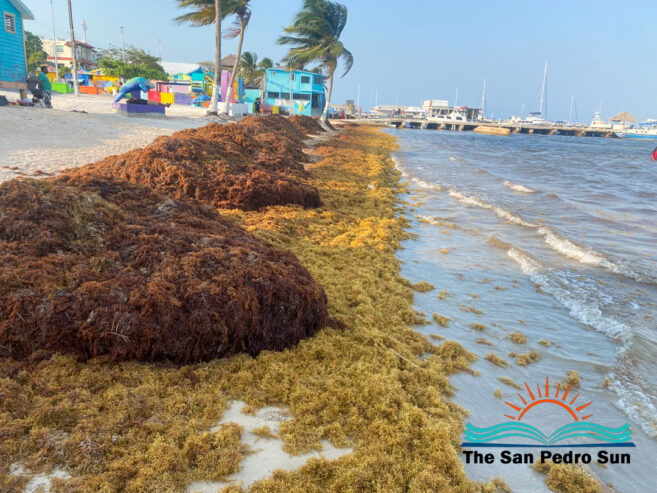
According to the National Meteorological Service’s Sargassum outlook issued on May 25th, additional seaweed arrivals are expected in the coming days.
“There is the possibility that a few more Sargassum mats could drift ashore during the coming days, resulting in moderate impacts on beaches, especially over the northern parts of the country,” the report stated. The probability of Sargassum mats reaching Ambergris Caye and Caye Caulker remains classified as “medium,” with moderate impacts expected.
Meanwhile, other coastal communities, including Hopkins, Seine Bight, Placencia, and Caye Caulker, reportedly have access to up to $10,000 per month in assistance through the Belize Tourism Board to support their Sargassum management efforts.