
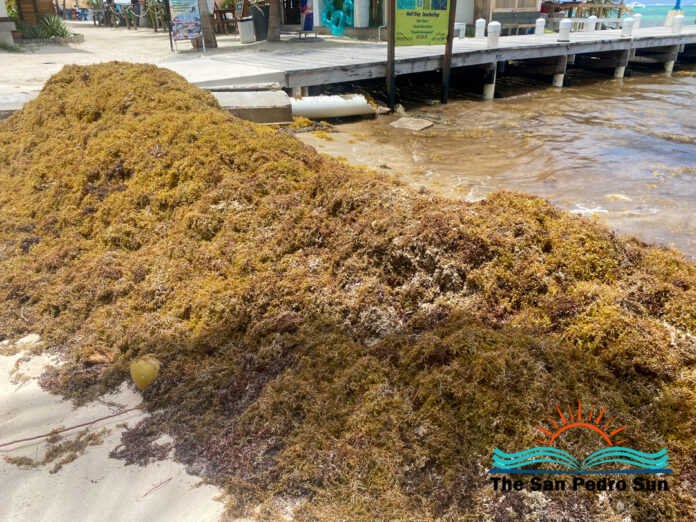

The Sargassum issue continues to affect Belize’s coastal communities. To better respond to this environmental phenomenon that impacts the tourism industry, a BZ$300,000 grant from the Belize Fund for a Sustainable Future has been made available to assist coastal businesses dealing with the buildup of seaweed along their beaches. The grant will support private-sector stakeholders significantly affected by Sargassum influxes, including those in priority coastal destinations such as San Pedro, Ambergris Caye, Caye Caulker, and the mainland communities of Hopkins, Seine Bight, and Placencia.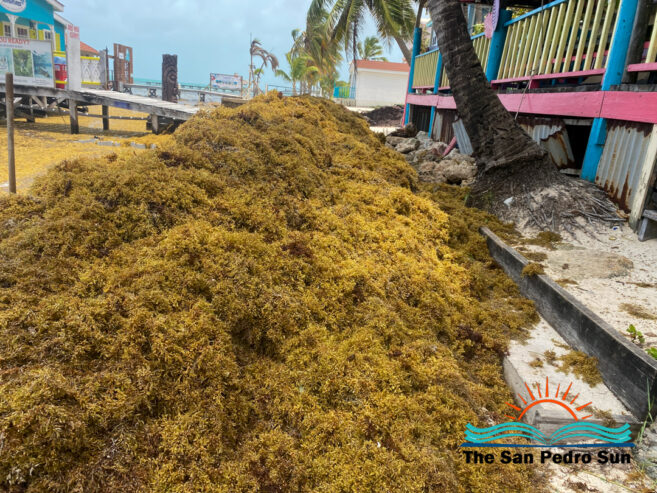
The Belize Fund for a Sustainable Future said the project will be implemented by the Belize Tourism Industry Association (BTIA) in partnership with the Belize Hotel Association. The emergency response grant will support eligible beachfront properties by covering the costs of Sargassum cleanup, beach maintenance, and responsible disposal.
Named the “Rapid Response Support to Coastal Hotels for Sargassum Management and Clean-up,” the six-month emergency response initiative is expected to support about 40 properties across San Pedro, Caye Caulker, Hopkins, Seine Bight, Placencia, and other offshore islands. Funding is being provided through the Belize Fund’s Emergency Response Grant window as immediate assistance for affected coastal businesses and communities.
The Fund stated that while Sargassum requires continued long-term management, this grant is focused on addressing urgent cleanup needs, protecting livelihoods, and reducing the pressure currently facing coastal destinations.
The Fund’s Executive Director, Dr. Leandra Cho-Ricketts, said that when Sargassum overwhelms beaches, the effects extend well beyond tourism. “It affects jobs, families, public health, and coastal communities,” said Dr. Cho-Ricketts. “This grant helps ensure that affected businesses have the support to respond quickly and responsibly.”
Eligible businesses can submit documented cleanup expenses and receive reimbursement through a transparent grant mechanism administered by the BTIA. The application and approval process has been simplified to allow for a quicker response.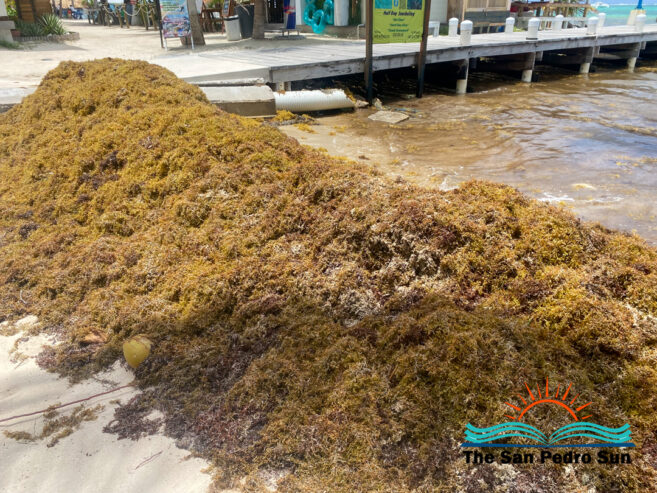
The initiative aims to support the removal of at least 1,250 wet tons of Sargassum per month and to maintain 12,000 linear feet of beachfront. The cleanup effort is expected to help coastal businesses respond more effectively to Sargassum blooms while protecting the beach experience that visitors, workers, and communities depend on. According to the Fund, the project will also create temporary employment opportunities for approximately 200 local workers.
To support the project’s implementation, the Belize Fund is partnering with the Ministry of Blue Economy and Marine Conservation to explore national strategies to address the annual threat. These efforts include supporting the development of a National Sargassum Response Plan and identifying opportunities to convert Sargassum into useful economic products.
Another group addressing the issue is the National Sargassum Task Force (STF), co-chaired by the Ministry of Tourism, Youth, Sports, and Diaspora Relations and the Ministry of Blue Economy and Marine Conservation, headed by Belize Rural South Area Representative, Honorable Andre Perez.
Perez welcomed assistance from the Belize Fund for a Sustainable Future and emphasized that all partners continue to explore every possible solution to address the increasing influx of Sargassum. “It is a constant battle for local municipalities and private-sector stakeholders, such as beach resorts, which spend a significant amount of money every month to keep their beachfronts clean,” he said.
Perez noted that while much of the seaweed accumulates along the shoreline and eventually begins to decompose, its removal can also contribute to beach erosion. As a result, he suggested that the most effective approach is to collect the Sargassum at sea before it reaches the shore.
Meanwhile, to strengthen operational readiness and improve nearshore and shoreline management capacity, the government has expanded its Sargassum response fleet by procuring a Barber Beach Rake and a New Holland Tractor. This specialized equipment is being deployed in Placencia, southern Belize.
The Placencia Village Council and Chairman Warren Garbutt expressed gratitude to the Ministry of Blue Economy and the Ministry of Tourism for providing the much-needed equipment. “We do realize there is no one fixed solution to this problem and stand ready to work together to find effective and efficient ways to improve the quality of our beaches and visitors’ experience,” said Garbutt.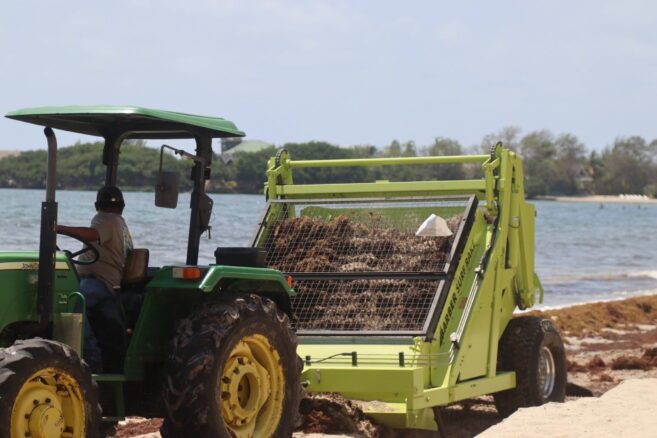
The Ministry of Tourism has also supported tourism stakeholders through financial assistance mechanisms implemented in partnership with multiple organizations, including cleanup support allocations to municipalities in high-priority destinations. Officials indicated that pilot projects involving new machinery are being tested in both inland and island destinations.
The Belize Tourism Board (BTB) has reportedly allocated up to BZ$10,000 per month to assist coastal municipalities, including Ambergris Caye and Caye Caulker, with local cleanup and Sargassum disposal efforts.
However, this figure could not be independently confirmed by the San Pedro Town Council, which continues to address the issue by hiring additional workers to keep downtown beaches clear of the seaweed.
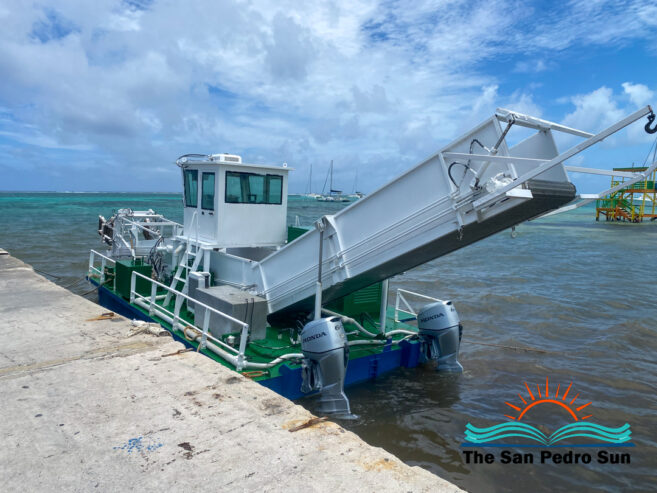
Another approach being utilized on Ambergris Caye involves Sargassum harvesters. Following maintenance work, the machines are being reincorporated into cleanup efforts. Area Representative Perez said that the two harvesters acquired by the Hol Chan Marine Reserve last year will soon resume operations and help relieve portions of the island’s coastline from the brown algae.
While Sargassum challenges are expected to continue, the STF emphasized that proactive planning, sustained coordination, and strategic investments are essential in combating the seaweed invasion. The task force added that collaboration among government agencies, municipalities, tourism stakeholders, and coastal communities remains critical to minimizing impacts and strengthening national resilience.
Stakeholders in the designated coastal communities who wish to apply for reimbursement under the grant are encouraged to contact their respective BTIA branches for eligibility details and application requirements.