
, with more than 20,000 students participating across all districts.)
On June 3rd and 4th, the Ministry of Education, Culture, Science, and Technology (MoECST) administered Belize’s first simultaneous nationwide student assessment. Under the pilot launch of the National Student Assessment System (NSAS), with more than 20,000 students participating across all districts, including schools in San Pedro. Students in Standards 1, 4, and 6 completed the Language Arts assessment on June 3rd, followed by the Mathematics assessments on June 4th.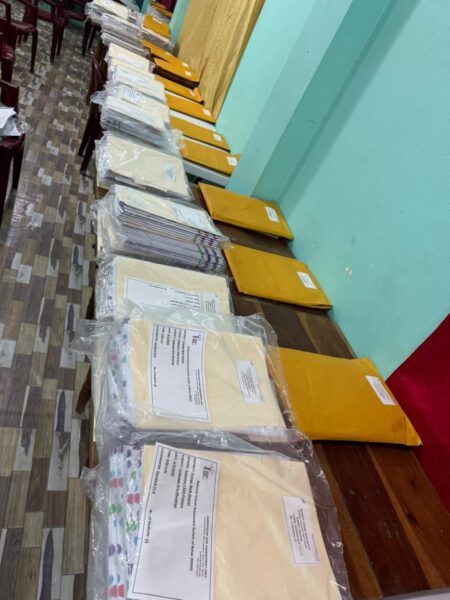
The two-day pilot marks the initial step in a phased rollout intended to reach primary schools in 2027 and secondary schools in 2028. Unlike previous national examinations, the NSAS is explicitly non-high-stakes. Results will not affect grades or promotion, and individual students will not be ranked in national reports. The system uses standardized, competency-based, and computer-adaptive assessments to generate school-level and system-level data that the Curriculum and Assessment Unit and MoECST can use to identify strengths, address learning gaps, and guide improvements in teaching and curriculum delivery.
The pilot was designed to test tools, procedures, and logistics before full implementation. Trained invigilators administered the assessments under standardized procedures to promote fairness and consistency across urban and rural centers, including schools in San Pedro. The Ministry said the pilot phase allows officials to verify that questions are appropriate and reliable, resolve technical issues, and ensure data collection processes meet confidentiality standards. MoECST emphasized that all student data will be managed in accordance with strict data protection rules and used only for educational planning and research. No individual student names will appear in national reports.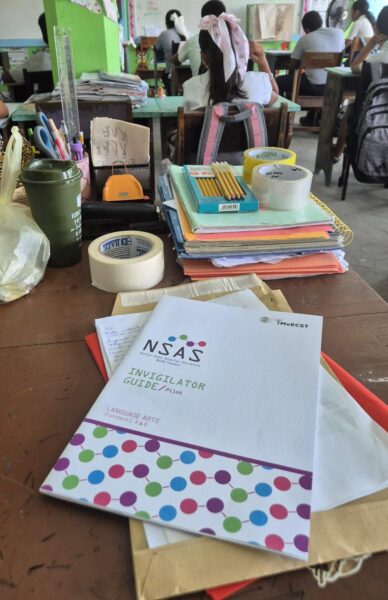
Preparations for the pilot followed months of planning linked to the broader Belize Compact goals of improving literacy, numeracy, and 21st-century skills. The NSAS has been developed by the MoECST through its Curriculum and Assessment Unit, with support from the Special Education Unit, to ensure the pilot is inclusive of students with special needs and disabilities. The framework envisions assessments in Language Arts (English), Mathematics, Science and Technology, Belizean Studies, and 21st-century skills once the system is fully operational.
Local school leaders welcomed the pilot as a valuable diagnostic tool. Wilema Gonzalez, Principal of The Island Academy in San Pedro, said, “I believe it’s a good thing. It’s not a right-or-wrong assessment. It’s a way of being able to see where the students’ levels are and assisting in filling any gaps, which is a good thing.” Her comments reflect the Ministry’s emphasis on using results to tailor support rather than penalize students or schools.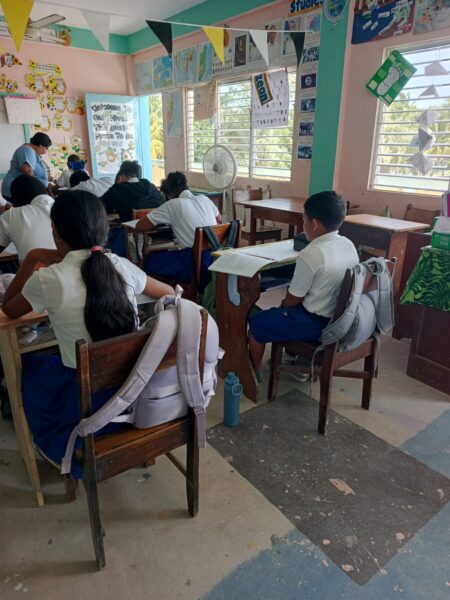
MoECST will analyze the pilot findings to refine logistics and reporting formats before the planned national rollout. If successful, the NSAS could provide policymakers and educators with regular, comparable measures of student learning, resource allocation, teacher support needs, and curriculum effectiveness, ultimately helping to improve learning outcomes across Belize.
The introduction of the NSAS comes at a time when Belize’s education system continues to face several challenges. Educators and policymakers have expressed concerns about learning gaps that widened following the COVID-19 pandemic, particularly in literacy and numeracy. Schools also continue to contend with issues such as student absenteeism, limited access to educational resources in some communities, teacher shortages, and varying academic performance across districts. The Ministry hopes that the data generated through the NSAS will help identify these challenges more precisely and support targeted interventions to improve student achievement nationwide.
Share
Related Articles
Read more