

The ongoing sargassum influx affecting San Pedro’s coastline has been linked to the deaths of 52 loggerhead turtle hatchlings found on a beach on Monday, July 20th. As the current sea turtle nesting season is ongoing, the incident has raised concerns about the impact of heavy sargassum accumulations on vulnerable marine life.
Joshua Seguro discovered the hatchlings in front of beachfront property owned by Scott and Maria Sussman. According to Seguro, the turtles appeared to have become trapped in thick mats of sargassum before reaching the sea. He described the hatchlings as “an entire clutch” and said he believed the seaweed prevented them from reaching the water. Recognizing the hatchlings as loggerhead turtles, Seguro immediately notified the Fisheries Department.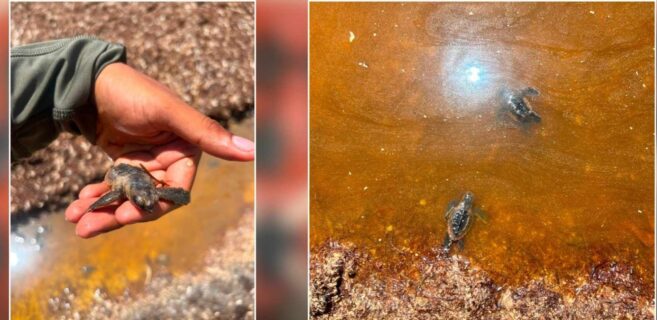
The property owners said they were heartbroken by the discovery. Scott and Maria Sussman said they initially found about 17 hatchlings near the shoreline before locating more on both sides of their pier, where the bodies were caught in the accumulated sargassum. They expressed sadness over the loss while highlighting what they believe is a growing environmental issue affecting sea turtles and other marine life along San Pedro’s coast.
The incident comes as sargassum continues to blanket sections of the island’s eastern shoreline during sea turtle nesting season. According to Hol Chan Marine Reserve, 18 sea turtle nests had been identified on Ambergris Caye as of June 16th, underscoring the importance of protecting nesting beaches as hatchlings emerge. Conservationists note that nesting sites also face other threats, including vehicles driving over nests, artificial lighting, coastal development, and human disturbance.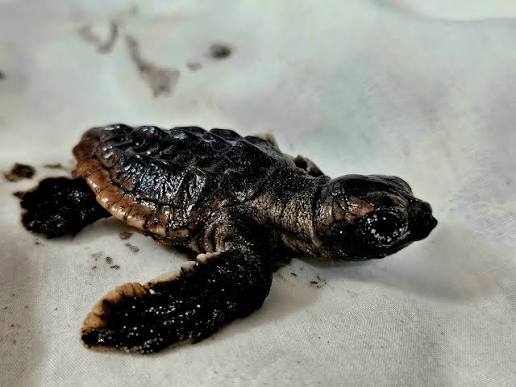
Ambergris Caye has long been recognized as one of Belize’s most important sea turtle nesting areas, particularly for green turtles. Historically, turtles nested along much of the island’s eastern shoreline, including areas that are now heavily developed. As beachfront development has expanded, nesting activity has become concentrated farther north in areas such as Robles Point, Rocky Point, and Basil Jones. Loggerhead and green turtles are the two species most recorded nesting on the island, while hawksbill turtles nest less often, with only a few nests typically documented each year. Conservationists note that female hatchlings can take more than 20 years to return to nest, provided they survive to adulthood, making the protection of each nesting season critical to sustaining future populations.
The discovery has renewed calls for stronger protection of turtle nesting sites, particularly as sargassum continues to wash ashore during nesting season. Conservation groups are encouraging beachfront property owners and residents to remain vigilant, avoid disturbing active nests, carefully manage obstacles along nesting beaches where appropriate, and report stranded or dead hatchlings to the Fisheries Department or Hol Chan Marine Reserve.
Share
Related Articles
Read more