
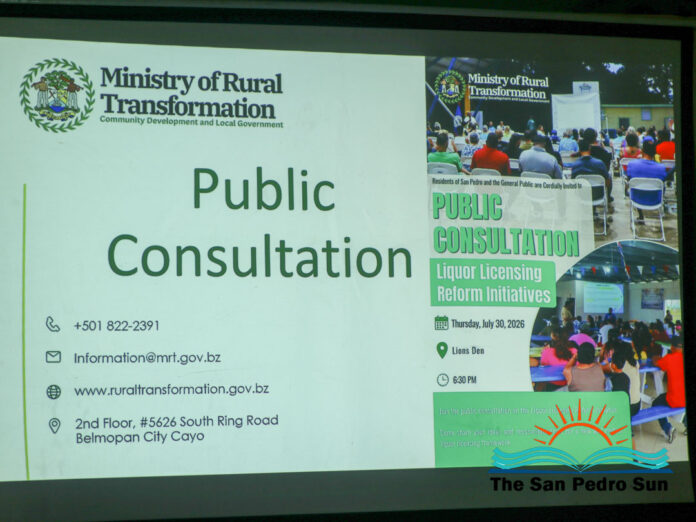

Residents, business owners, and local stakeholders gathered at the San Pedro Lions Den on July 30th for a public consultation on Belize’s liquor licensing reform initiatives. The event, hosted by the Ministry of Rural Transformation in collaboration with the San Pedro Town Council, began at 6:30PM and focused on proposed changes to liquor license categories, operating hours, enforcement, governance, and the digital administration of the licensing system.
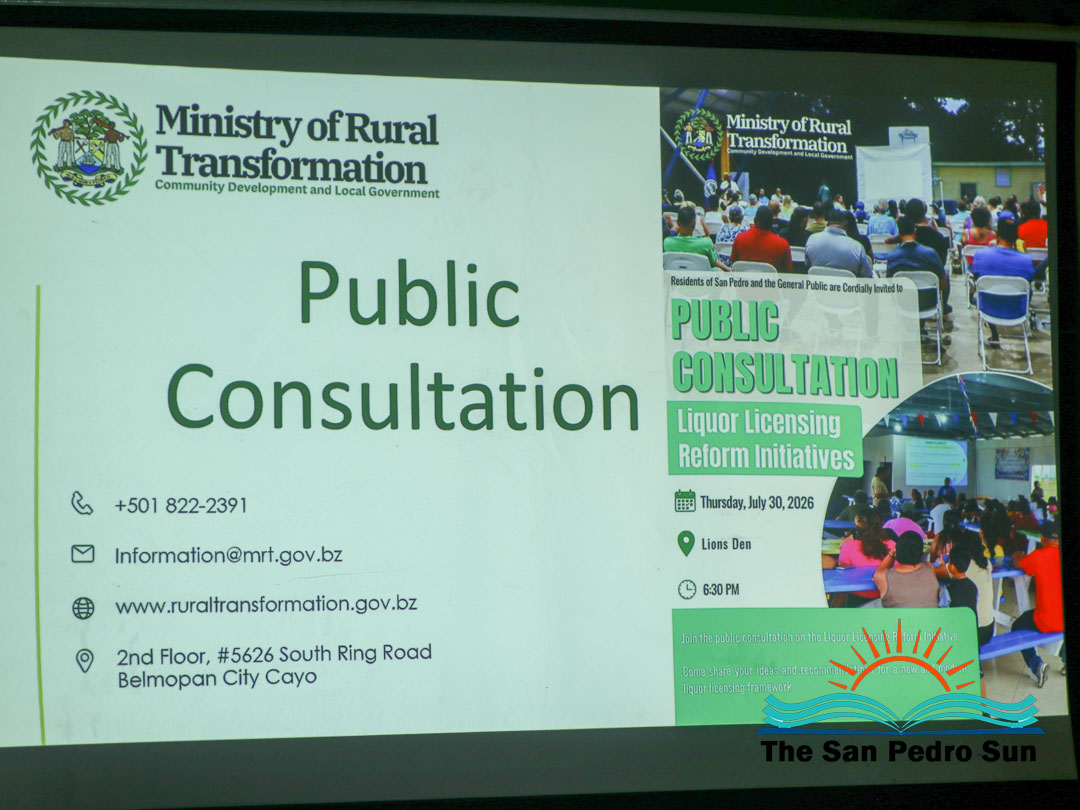
The consultation formed part of a nationwide effort to gather public feedback on how liquor licensing regulations are applied and how they can be updated across Belize. Officials said the reform process aims to create a system that is more practical, easier for business owners to navigate, and better suited to the realities of the tourism and hospitality industries, as well as community life in municipalities such as San Pedro.
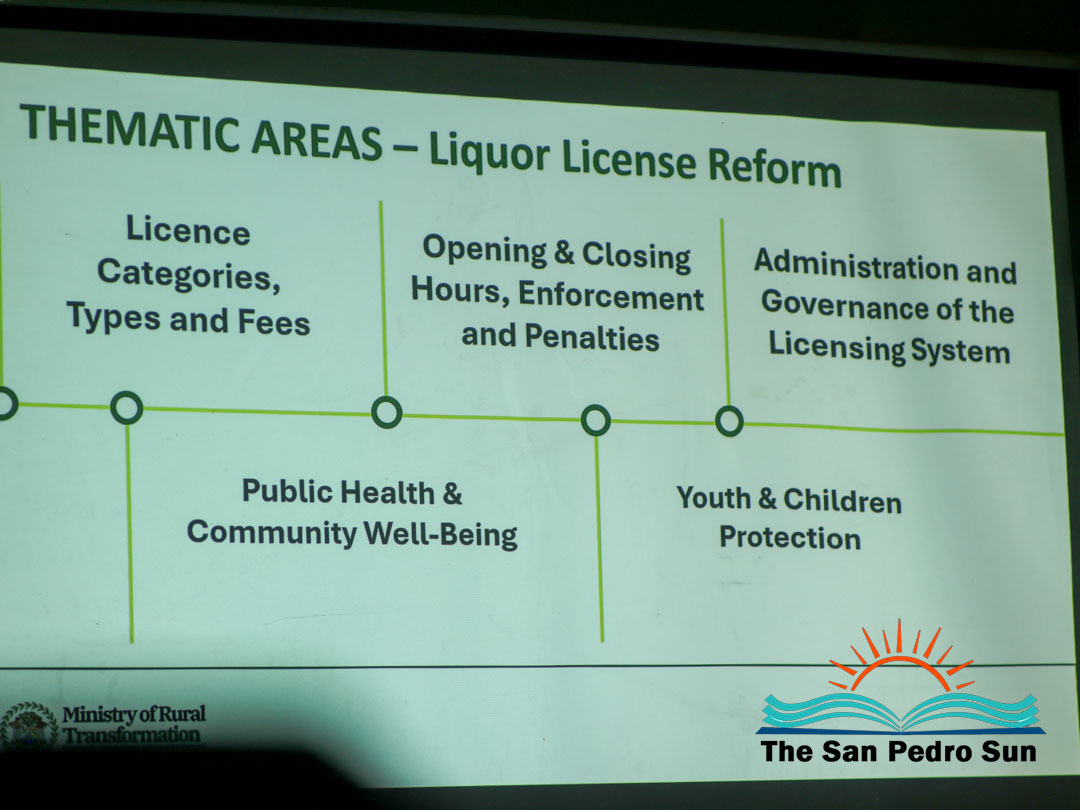
According to officials, the reform discussions were prompted by concerns that the current licensing framework does not always reflect how businesses operate. Key areas under review include license categories and fees, operating hours, enforcement and penalties, administration and governance of the licensing system, the introduction of an online application process, public health and community well-being, and the protection of youth and children. The meeting also provided residents with an opportunity to voice concerns about how existing licensing regulations affect daily life in a busy tourism destination.
San Pedro Town Council Mayor Gualberto “Wally” Nuñez said the consultation was important because it allowed the public to help shape a licensing system that is both practical and effective. He noted that some business categories do not fit neatly within the current regulations, citing casinos as an example of establishments that have had to operate under nightclub-style licenses. According to Mayor Nuñez, this can create confusion regarding operating hours and regulatory compliance, particularly when businesses have different operational needs and responsibilities. He added that the council wanted public feedback on whether current operating hours, extension procedures, and license categories remain appropriate for San Pedro’s commercial environment.


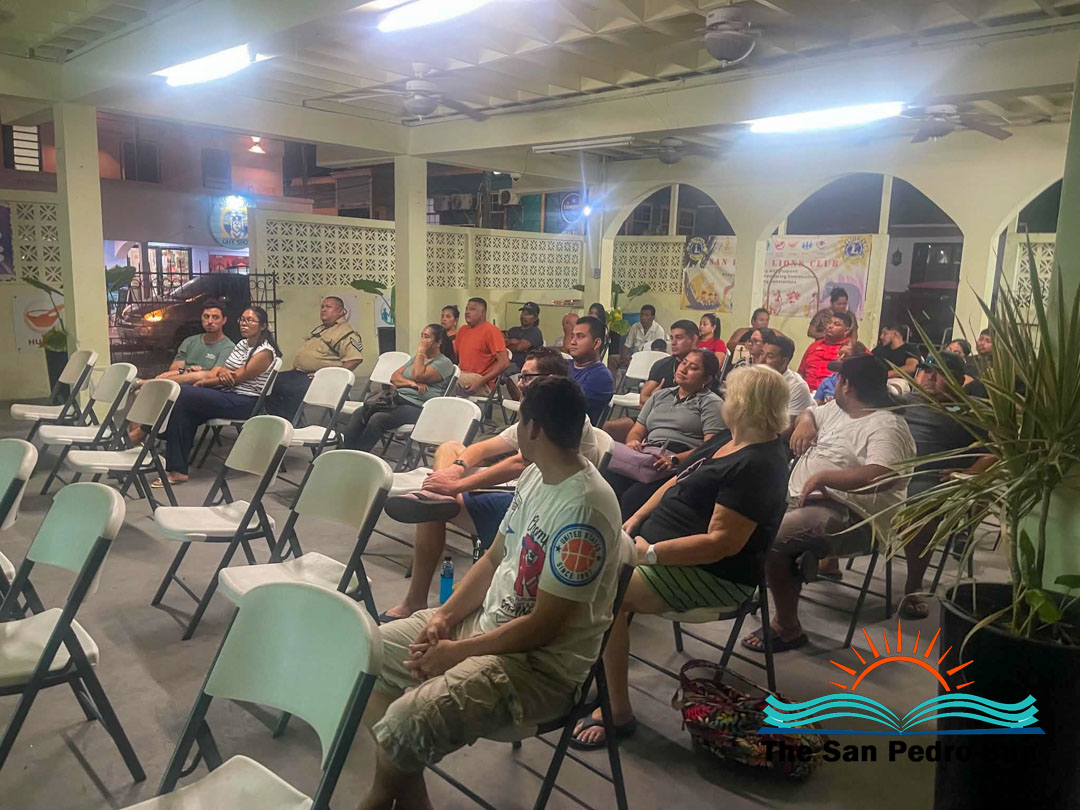
The consultation allowed members of the public to share recommendations and concerns that could help shape future liquor licensing legislation and its administration. If implemented, the proposed reforms could introduce more specific license categories, clearer penalties, stronger enforcement measures, and a digital application process designed to reduce delays and improve record-keeping. Officials also emphasized that any new framework must balance business activity with public safety, noise control, youth protection, and the broader social impacts of alcohol consumption.