

Recent crocodile encounters in San Pedro and Caye Caulker have prompted wildlife organizations and authorities to raise public awareness, urging residents, businesses, and visitors to avoid feeding or interacting with crocodiles and to report any concerning activity to trained personnel.
On August 11th, the Belize Forest Department (BFD), in collaboration with ACES Wildlife Rescue and the Crocodile Research Coalition (CRC), issued an advisory following recent reports and social media posts about human-crocodile interactions. These included an incident in Caye Caulker Village. According to the BFD, no physical contact or injury was observed during that incident, but it underscored the importance of responsible behavior in areas where crocodiles are present.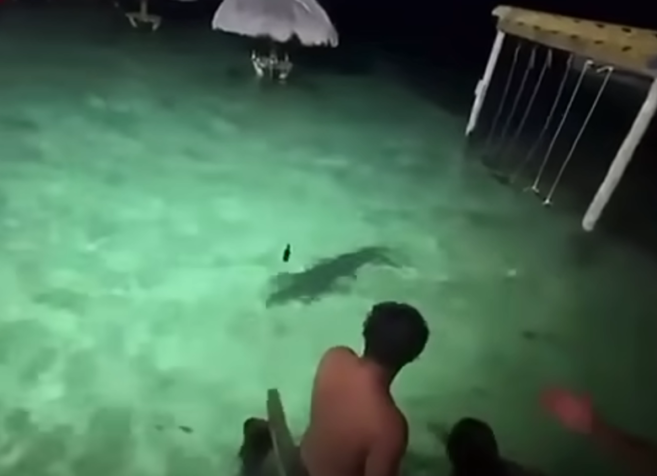
The advisory followed another incident in San Pedro.
On August 5th, ACES responded to reports that community members had captured a crocodile after the animal was said to have attacked a dog. The team assessed and safely secured the crocodile, tagged it, and relocated it to a safer area. The animal was new to ACES’ records and was given the name “Big Jelly.”
ACES stressed that timely reporting is critical in human-wildlife conflict cases. Residents concerned about crocodiles posing a risk to their families, pets, or property should contact trained wildlife personnel rather than attempt to capture or handle the animals themselves. The BFD similarly advised the public to maintain a safe distance and never attempt to capture, handle, or relocate a crocodile.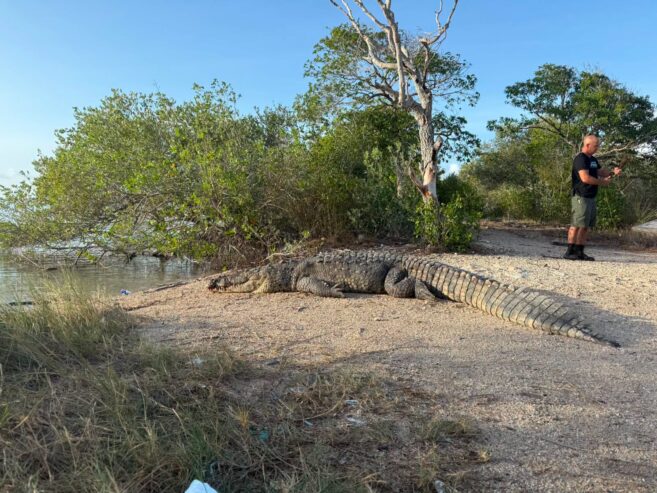
American crocodiles are native to Belize and inhabit mangroves, lagoons, wetlands, rivers, and coastal areas. areas. The species is critically endangered in Belize and protected by law from killing, hunting, feeding, harassment, and unauthorized capture. As development increasingly overlaps with crocodile habitats, authorities said public awareness and responsible behavior are important to reducing conflict.
According to ACES, crocodiles and other wildlife on the cayes face threats including habitat loss, climate change, and persecution. At least two American crocodiles have reportedly been killed on the islands during the past six months, although ACES cautioned that the actual number could be higher.
Wildlife officials are particularly concerned about crocodiles being intentionally fed or encouraged to approach people. The BFD warned that feeding can alter their natural behavior and lead them to associate people with food, increasing the likelihood of negative encounters. ACES also identified limited ocean and wildlife literacy among some sectors of the community as a challenge, noting that social media reactions to recent incidents underscore the continued need for education and greater understanding of the species.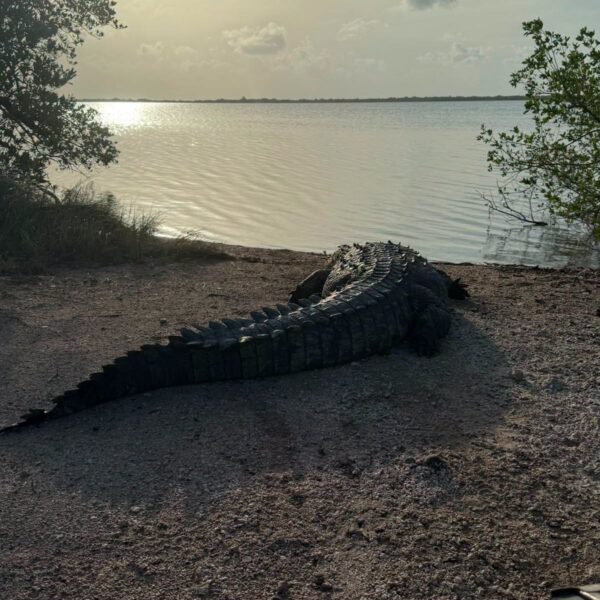
Both ACES and the BFD have issued recommendations to reduce the risk of conflict. Residents and visitors should never feed, approach, touch, or provoke crocodiles and are advised to avoid swimming at night, particularly in mangrove areas and other locations where crocodiles are known to occur. Children and pets should also be kept a safe distance from the water’s edge.
Pet owners are encouraged to keep animals indoors or in secure yards, particularly around dusk, dawn, and during evening hours. Pets should not be chained near the water’s edge and should be kept on a leash when walking in areas where crocodiles may be present. For waterfront properties, ACES recommends installing fencing at least five feet from the water’s edge to create a barrier while leaving shoreline space for crocodiles to bask.
Authorities also emphasized keeping waterways and surrounding areas free of garbage, fish remains, food scraps, and other waste that may attract wildlife. Improperly disposed food waste can draw crocodiles closer to homes in much the same way as directly feeding them.
Residents who encounter concerning crocodile activity are encouraged to report it rather than intervene. Reports can be made to the Belize Forest Department at 610-1524, the Crocodile Research Coalition at 660-3936, or ACES Wildlife Rescue at 623-7920.
The three organizations are also planning additional public education, community engagement, and the installation of crocodile safety and warning signs at strategic locations. Community outreach is planned for Caye Caulker to discuss crocodile behavior, safety, and residents’ concerns.
As island development increasingly overlaps with natural wildlife habitat, authorities continue to emphasize responsible coexistence. Maintaining a safe distance, properly disposing of waste, protecting pets, and promptly reporting concerning crocodile activity can help protect both the public and one of Belize’s endangered native species.
Share
Related Articles
Read more