
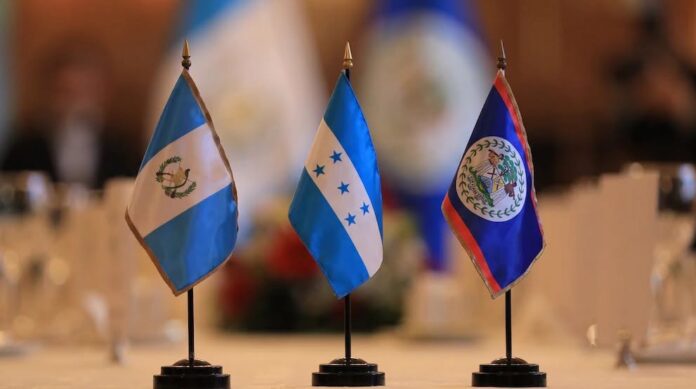
 are moving to the oral hearing stage.)
Belize’s two territorial dispute cases before the International Court of Justice (ICJ) are moving to the oral hearing stage, with proceedings scheduled for February and March 2027. The Ministry of Foreign Affairs confirmed the timeline and communicated the schedule to Belize’s Agent before the ICJ, Ambassador Assad Shoman.
In the case concerning Guatemala’s territorial, insular, and maritime claim against Belize, Guatemala is scheduled to present its first round of oral arguments on February 22nd, with Belize responding on February 24th. A second round of presentations is scheduled for February 25th and 26th.
The second case, concerning sovereignty over the Sapodilla Cayes and involving Belize and Honduras, is scheduled to begin oral hearings on March 1st. Honduras is expected to present on March 2nd. Guatemala, which is participating in the proceedings, is scheduled to present on March 3rd, followed by Belize on March 4th and Honduras on March 5th.
The oral proceedings will take place at the ICJ, which is headquartered at the Peace Palace in The Hague, Netherlands.
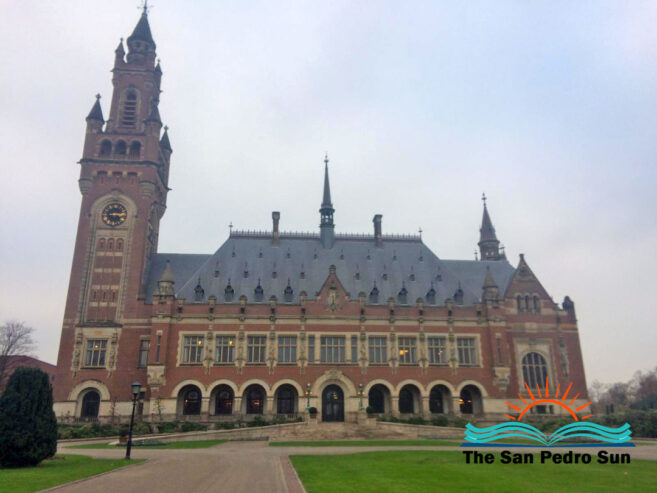
Before the oral hearing stage, Belize and Guatemala submitted their written pleadings in the territorial dispute. Belize filed its final written pleading, known as a Rejoinder, in June 2023. Following the oral hearings, the Court will deliberate before delivering its judgment. The Court has not announced a date for a final ruling.
The journey to the ICJ began in 2008, when Belize and Guatemala signed a Special Agreement to submit Guatemala’s territorial, insular and maritime claim to the international court, subject to approval by citizens of both countries through national referenda. Guatemala held its referendum in 2018, with the “Yes” vote prevailing. Belize followed with its referendum in 2019, when 55.37% of participating voters supported taking the dispute to the ICJ. Belize formally submitted the case to the Court in June 2019.
Historical context of the disputes
The origins of the Belize-Guatemala territorial dispute stretch back centuries and involve competing interpretations of colonial-era treaties, territorial administration and subsequent agreements between Britain and Guatemala.
British settlement in the territory that later became Belize expanded during the colonial period, initially around the logging industry. Spain granted British settlers certain rights to cut logwood through agreements including the Treaty of Paris of 1783 and the Convention of London of 1786, although sovereignty over the territory remained contested.
British settlement subsequently expanded southward, and the territory became the Crown Colony of British Honduras in 1862.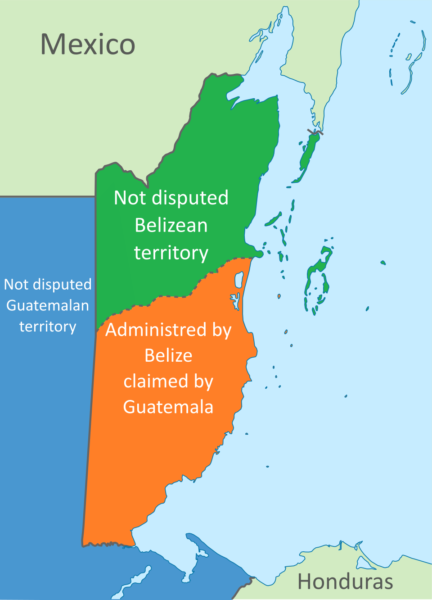
In 1859, Guatemala and Great Britain signed the Wyke-Aycinena Treaty, which defined the boundary between Guatemala and what was then British Honduras. The agreement also included a provision related to improving communications between Guatemala City and the Atlantic coast. Disagreements over implementing that provision later became central to Guatemala’s position on the treaty’s validity and its territorial claim.
The dispute continued through the 20th century as Belize pursued self-government and eventually independence. The United Nations adopted a series of resolutions supporting Belize’s right to self-determination, independence, and territorial integrity. Belize gained independence from Great Britain on September 21st, 1981. Guatemala formally recognized Belize as an independent state in 1991, but the territorial dispute remained unresolved.
After years of negotiations and confidence-building measures, Belize and Guatemala signed the 2008 Special Agreement asking the ICJ to determine Guatemala’s legal claims to land and insular territories and maritime areas and to establish the respective rights and boundaries of the two countries.
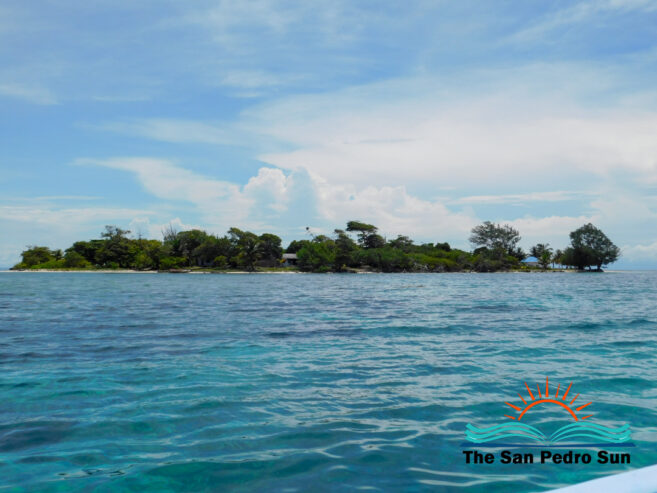
The Sapodilla Cayes dispute is separate. Belize instituted proceedings against Honduras in November 2022, asking the ICJ to declare that, as between the two countries, Belize has sovereignty over the Sapodilla Cayes. Belize maintains that the cayes have formed part of its territory since the early 19th century, first as part of the Settlement of Belize, later British Honduras, and since 1981 as part of independent Belize. Honduras maintains a claim to the cayes through provisions in its Constitution. Guatemala has also asserted an interest in the cayes as part of its territorial claim against Belize.
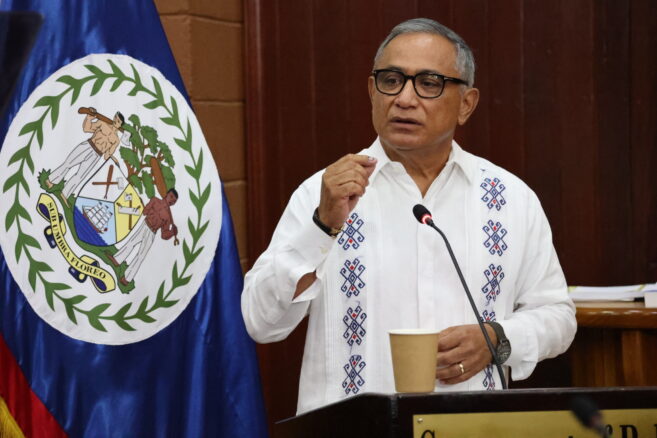
Prime Minister Honorable John Briceño has expressed confidence that the eventual ruling in the Belize-Guatemala case will be respected. He has also said Belize has been conducting diplomatic outreach with international partners in preparation for the Court’s eventual decision.
“It will not be easy because they are hardliners like in every country. But the government will. The government has been very clear. We want a juridical solution to this problem,” Briceño said.
The Prime Minister added that his government has been engaging Belize’s international partners, including the United States, Canada, the United Kingdom, European partners, Taiwan and Japan, regarding the eventual ruling and the assistance that may be required afterward. “I am talking to them. I’m preparing them for the ruling from the ICJ, that we are going to need their help to be able to clean the demarcation of our border,” Briceño added.