

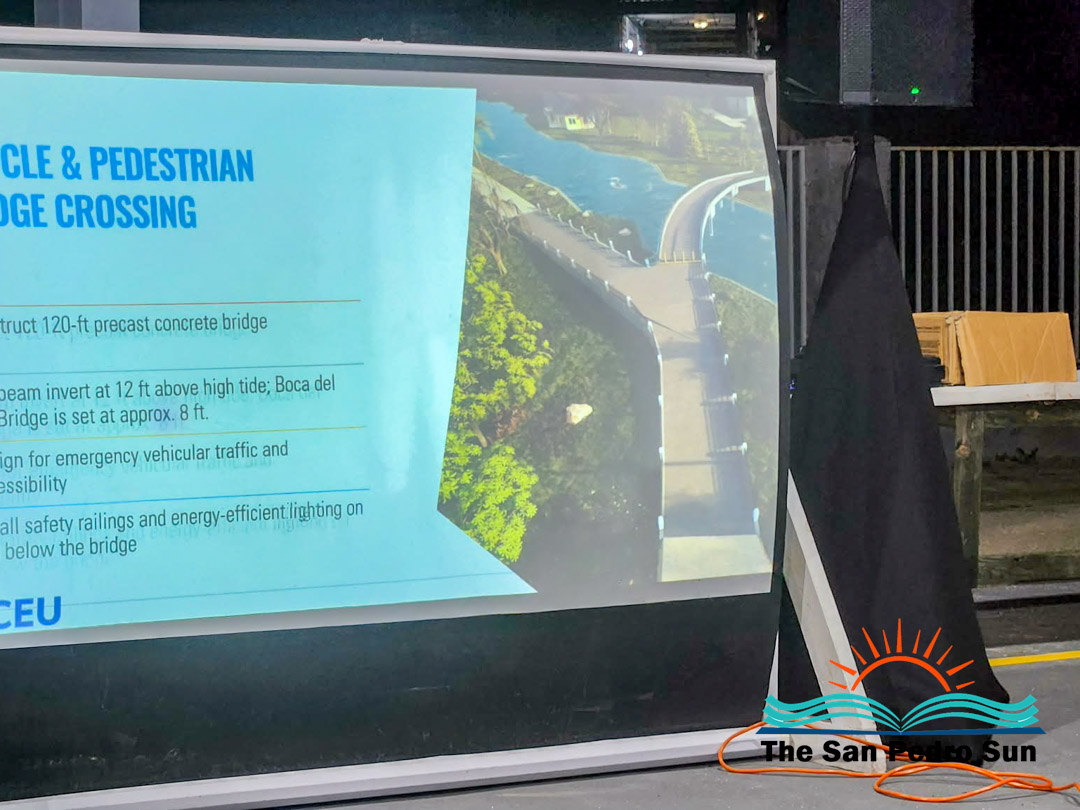
Residents met with municipal officials and project representatives on November 10th at 6:30PM at the Sagebrush Sports Complex in San Mateo for a community information session on the San Mateo Improvement Project. The session followed a groundbreaking ceremony held earlier that day by the San Pedro Town Council at the proposed pedestrian and bicycle bridge site. The evening meeting covered the bridge, street improvements and water access, allowing residents to question the project team about construction schedules, drainage, sanitation and existing water service problems. Representatives of the Ministry of Finance’s Central Executing Unit (CEU), which manages the program, outlined the planned works alongside the Town Council.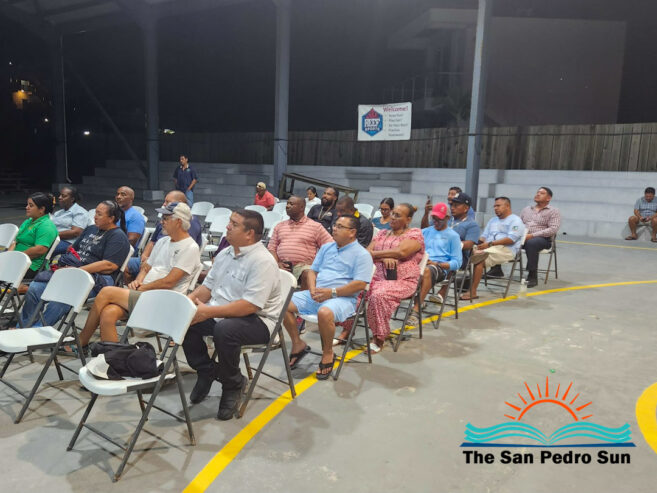
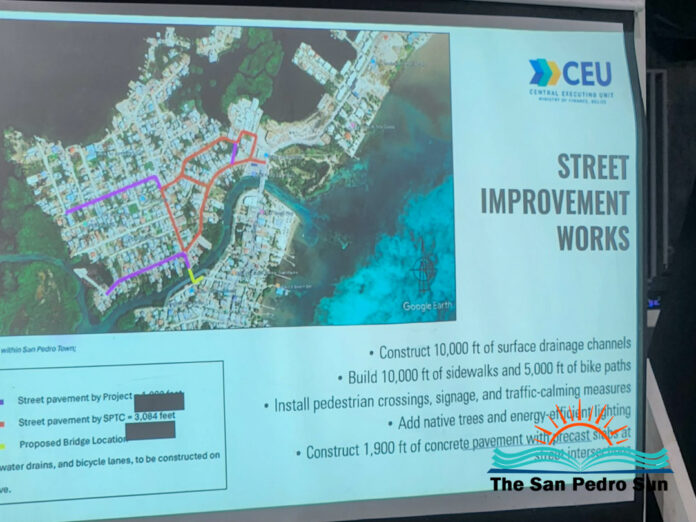
The session aimed to clarify the project’s current scope and gather community feedback before the remaining construction phases begin. Officials reported that Belize Water Services had completed the water network expansion, installing approximately 1,380 feet of distribution lines to serve areas that previously lacked access. That component cost about US$150,000. The bridge contract was signed in February, with construction expected to begin by December 2026. Meanwhile, the street improvement contract, signed in late September, remained in the design phase. Planned work includes about 10,000 feet of drainage channels and sidewalks, 5,000 feet of bicycle paths, and 1,900 feet of concrete pavement, along with pedestrian crossings, traffic-calming measures, native trees, and energy-efficient lighting. Detailed designs and permits are required before street construction can proceed.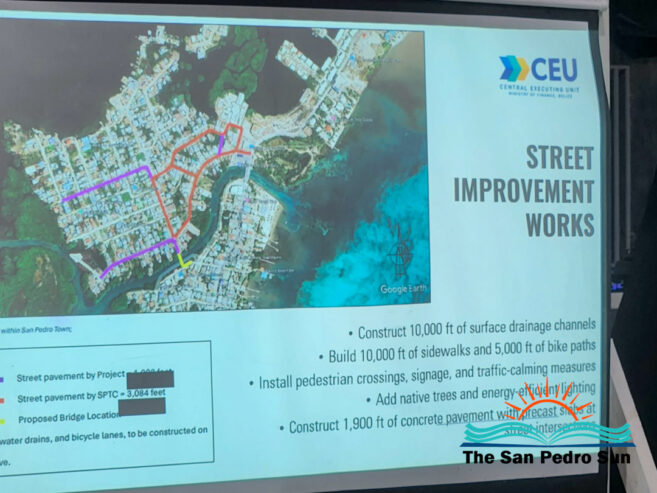
The improvements stem from a 2023 urban study that examined San Mateo’s needs after the Town Council identified it as a vulnerable community. Roads, connectivity, and water access emerged as priorities. San Mateo has US$2.4 million allocated under the Sustainable and Inclusive Urban Development Program, supported by the Inter-American Development Bank (IDB). The broader US$12.5 million program also covers work in Corozal and Orange Walk and combines loans and grants. A previous community update occurred in July. The proposed 120-foot bridge is intended primarily for pedestrians and cyclists, providing another connection between San Mateo and the main town. Presenters also said its design would allow emergency access, addressing the community’s reliance on the existing main bridge.
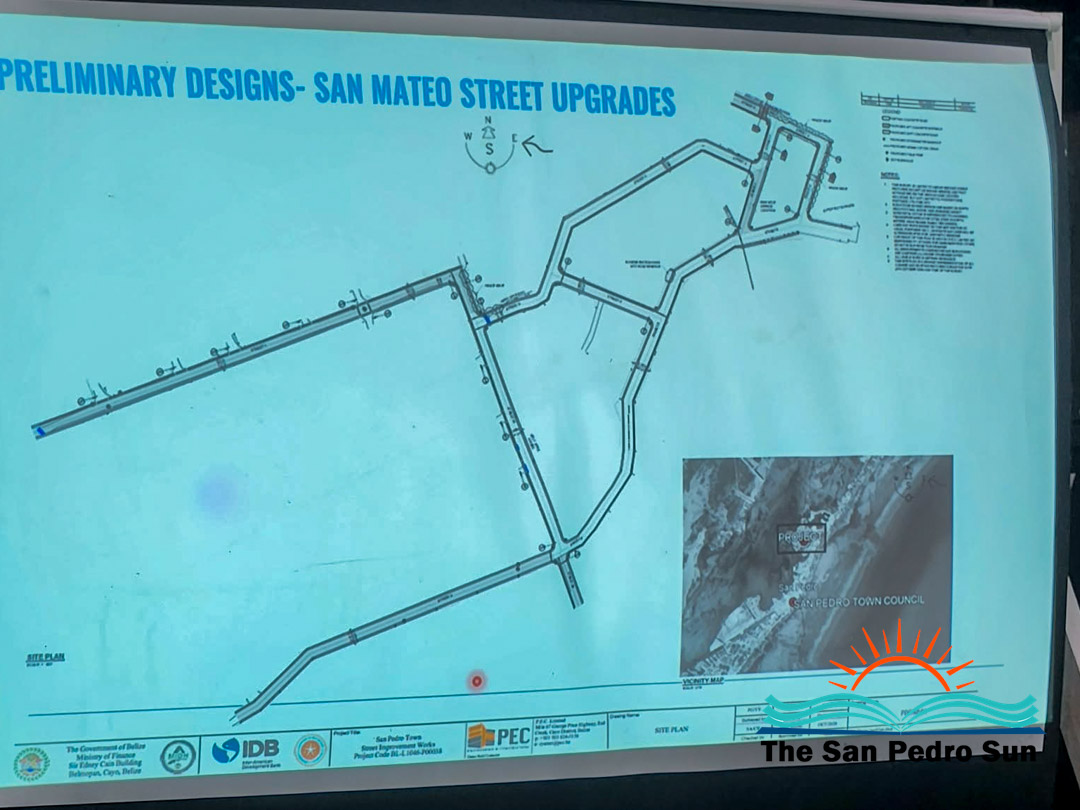
Speaking about the day’s groundbreaking, Mayor Nunez said construction was expected to begin within the next month or so. He explained that design adjustments involved sidewalks on the southern approach, where a section of road also requires pedestrian space. Discussing the wider project, he said, “We were not even considered part of this project, so when they did the studies, that’s where they found out that there were a lot more people living in this section that could benefit from it.”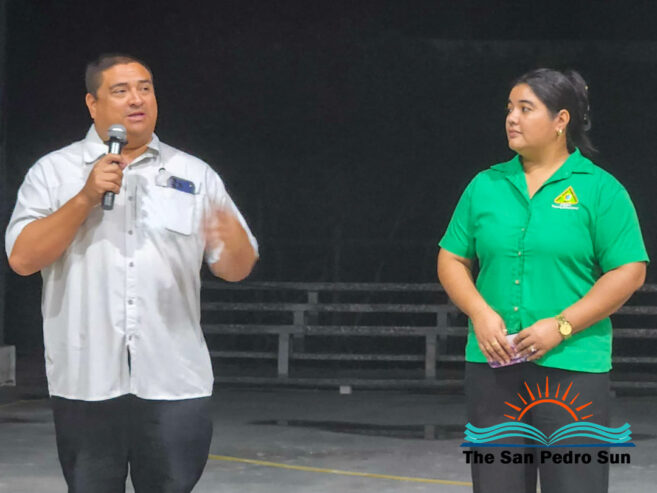
During the session, residents raised concerns about low water pressure, wastewater entering the environment, and the absence of a sewerage system. One resident also questioned the reliance on Facebook to promote the meeting and requested more direct outreach in Spanish.
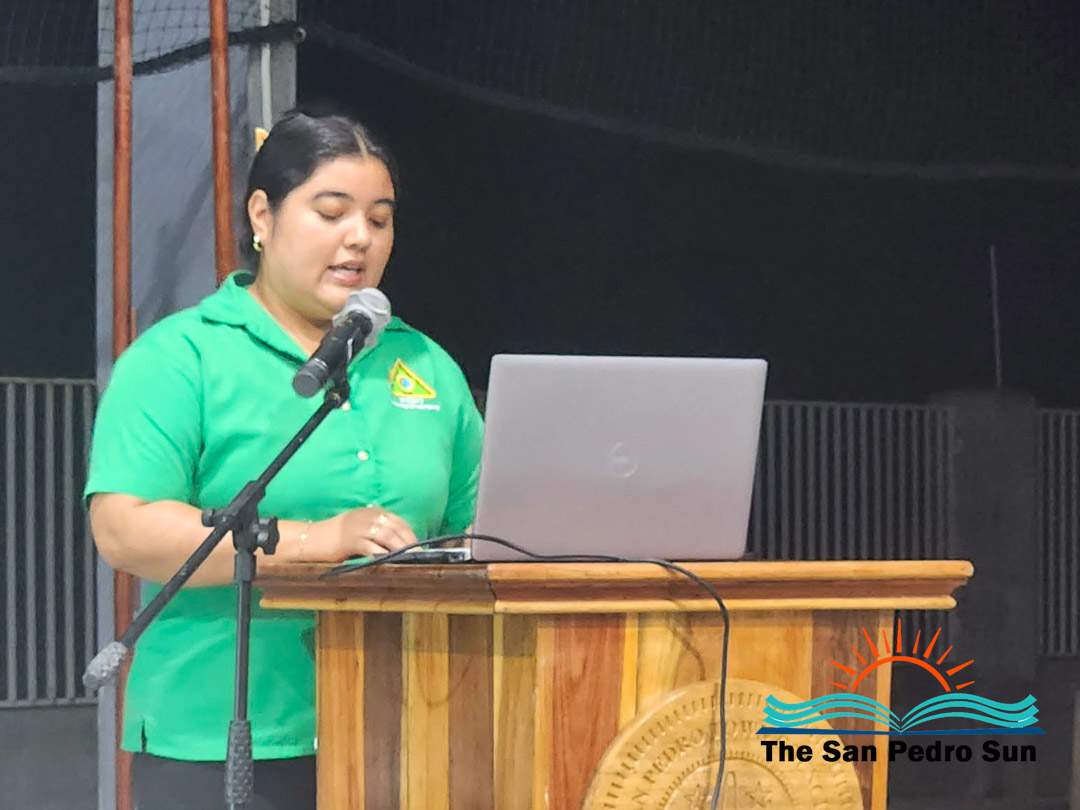
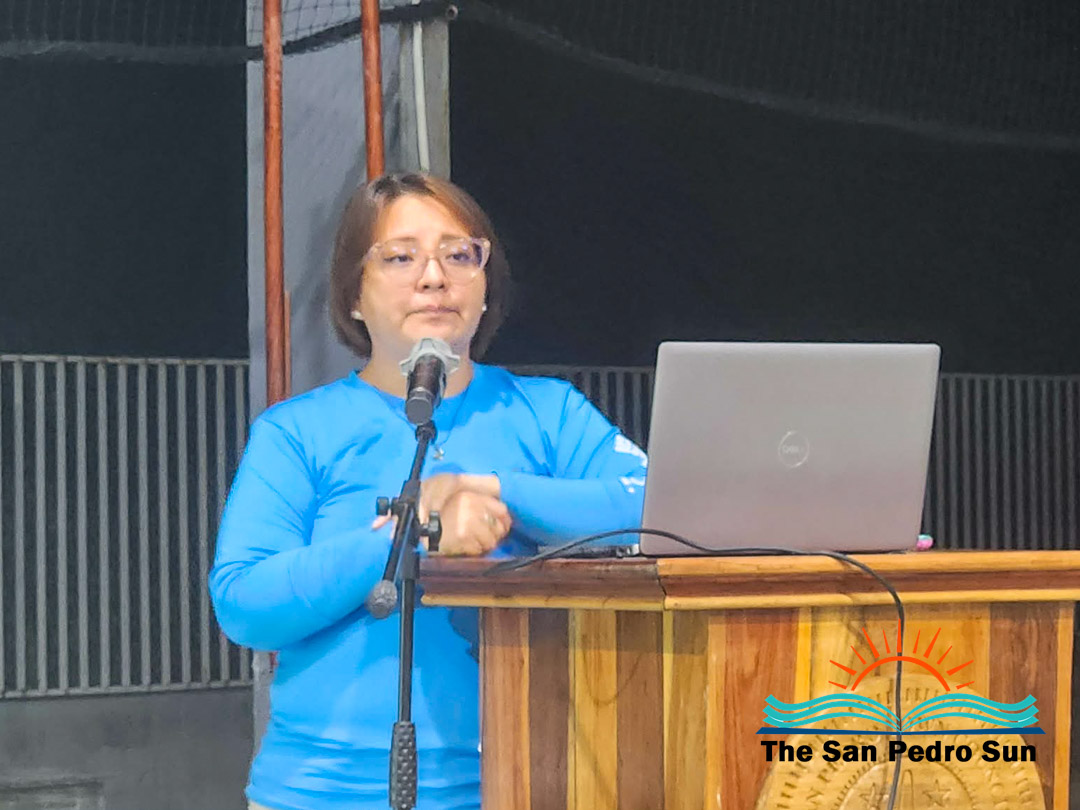
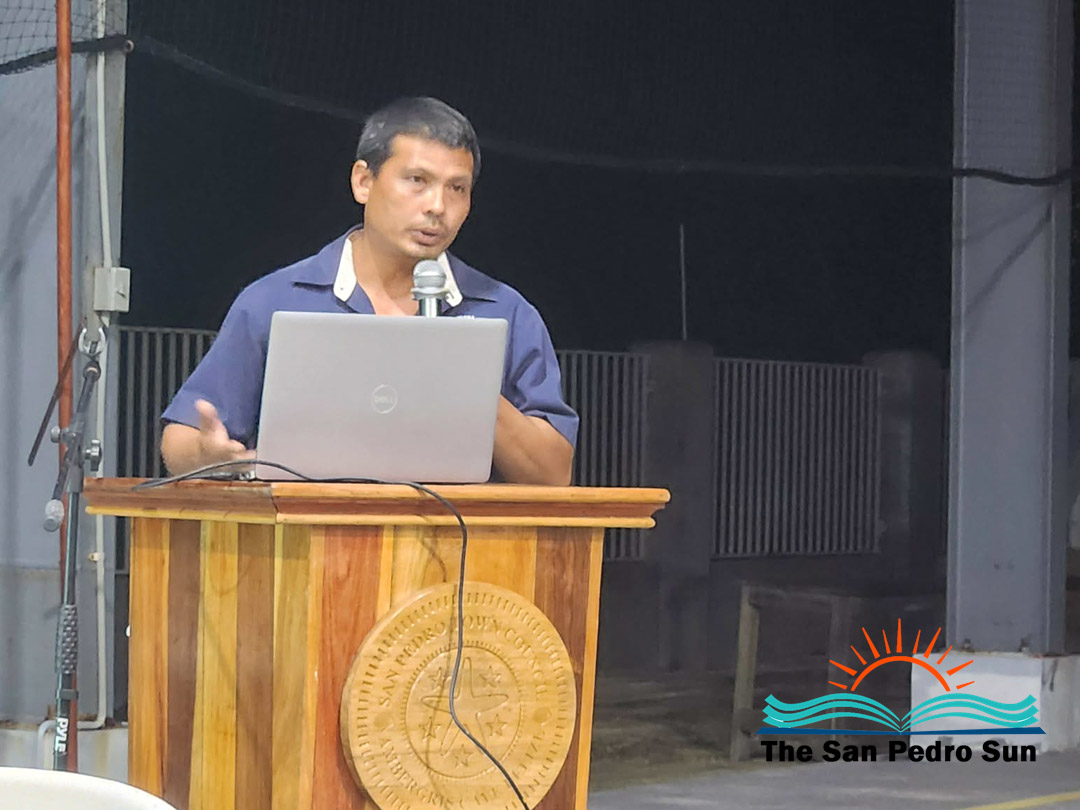
Looking ahead, officials said street construction was expected to begin in the second quarter of 2027, following the design stage, with some possible overlap with bridge works. They outlined plans to coordinate with utility providers to reduce the need to dig up newly completed streets. They said removable sidewalk slabs were being considered to allow future access to utilities.
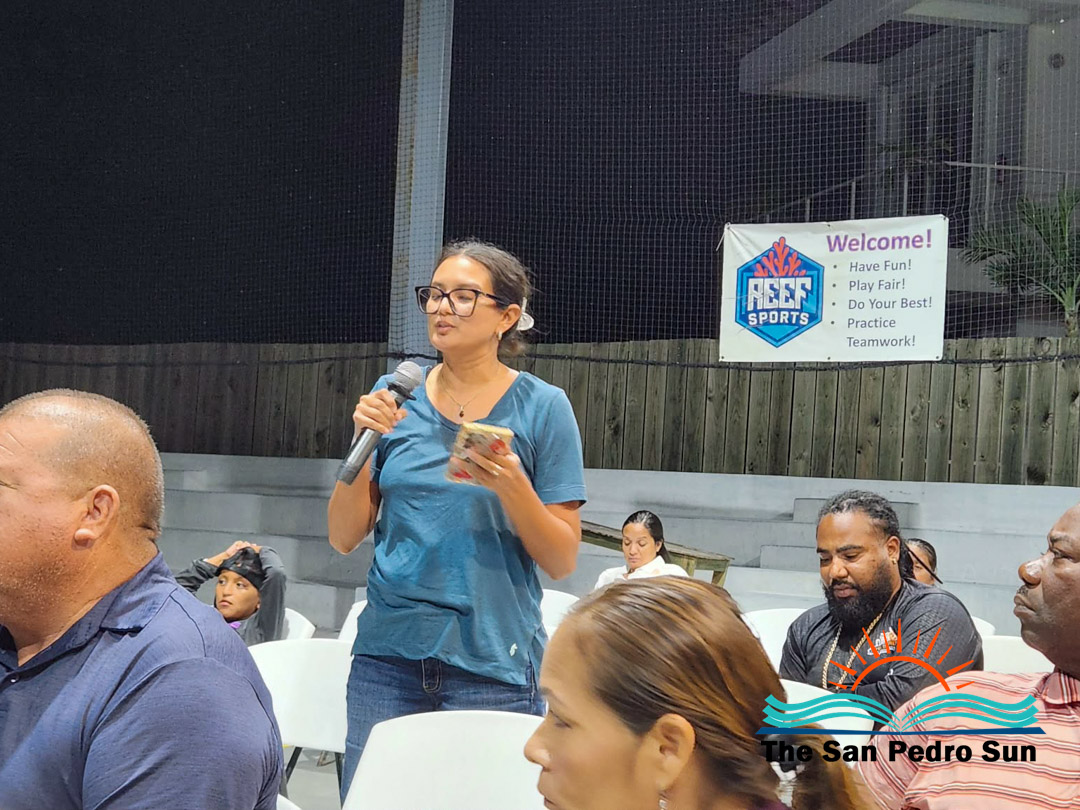
However, sewerage remains outside the funded works. Officials cited costs beyond the available budget and treatment-capacity constraints, with no implementation date provided. The team said drainage designs must account for the surrounding wetland conditions without worsening flooding on residents’ properties.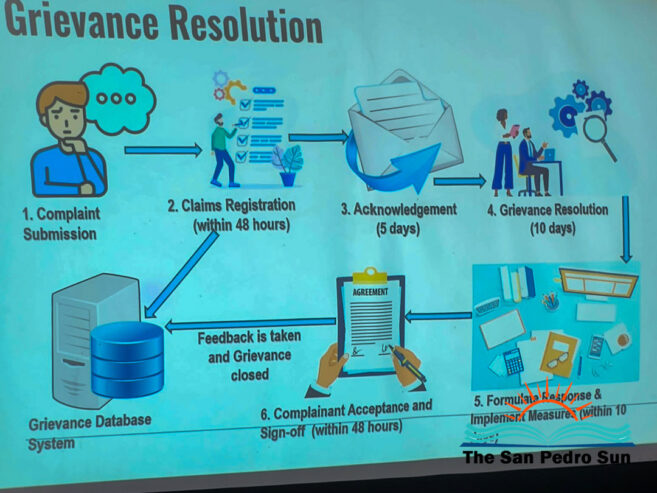
Residents were encouraged to submit concerns through the project’s grievance process using online forms, WhatsApp, email, or paper forms available at the Town Council. Officials also acknowledged the request for smaller meetings and more direct Spanish-language outreach. Next steps include bridge construction, completion of street designs, and continued consultation as the remaining works advance.