
 for January 2026 on February 25th.)
The Statistical Institute of Belize released its Consumer Price Index (CPI) for January 2026 on February 25th. The All-Items CPI rose slightly to 119.86, up from 119.81 in January 2025, reflecting a national inflation rate of 0.04%. The survey measures price levels for consumer goods and services nationwide.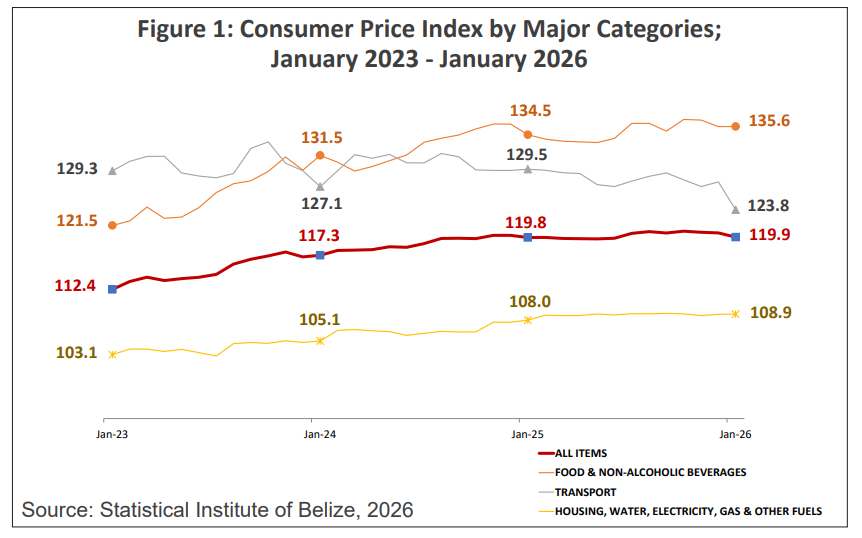
Price increases in several categories contributed to the marginal rise. Food and Non-Alcoholic Beverages rose by 0.9%, led by fresh meats, which increased by 2.3%, and cereals, such as bread, which rose by 1.3%. Housing, Water, Electricity, Gas, and Other Fuels increased by 0.8 percent, driven by higher home rental costs and liquefied petroleum gas (LPG), which rose from BZ$125.83 to BZ$130.63 per 100-pound cylinder. Health costs rose 4.3% due to higher prices for doctor visits and medications, while Restaurants and Accommodation Services rose 1.6%.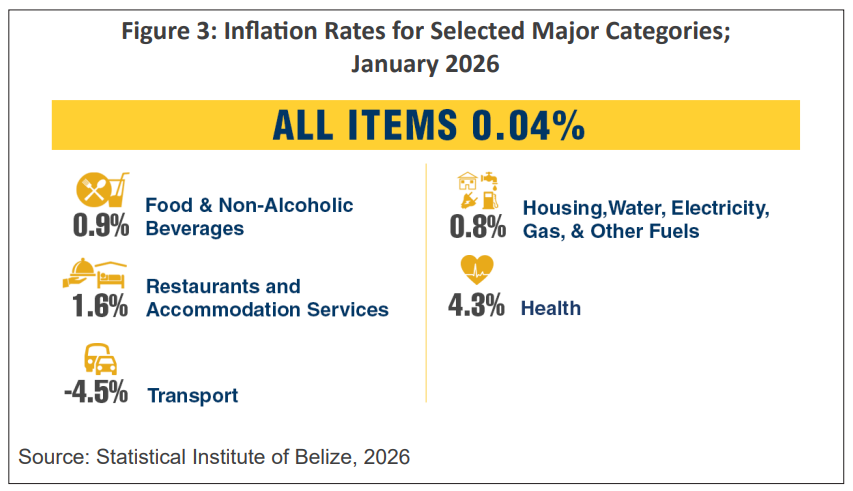
In contrast, fuel prices declined across all categories of motor vehicle fuel. The average price per gallon of premium gasoline fell by $1.12, from $13.49 to $12.37. Regular gasoline decreased by $1.03, from $11.98 to $10.96, while diesel dropped by $0.52, from $11.93 in January 2025 to $11.41 in January 2026.
Historical data show a steady upward trend in inflation. The All-Items CPI increased from 112.4 in January 2023 to 119.86 in January 2026. Monthly inflation rates fluctuated between 0% and 8% from January 2022 to January 2026, with food prices consistently exceeding the national average. On a month-over-month basis, prices declined by 0.5% from December 2025 to January 2026, mainly due to a 3.1% decrease in transport costs.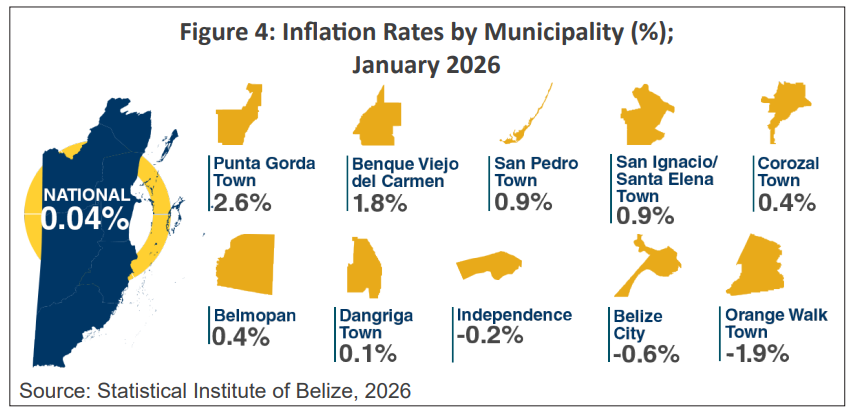
Among municipalities, Punta Gorda Town recorded the highest consumer price increase, with an inflation rate of 2.6% in January 2026. Residents experienced above-average price increases across a range of goods and services, particularly food items. Meanwhile, Orange Walk Town reported the lowest inflation rate at -1.9%, with residents benefiting from reductions in fuel and food prices. San Pedro Town recorded an inflation increase of only 0.9%.
This minimal level of inflation suggests relative price stability, easing pressure on consumers. However, sustained increases in food and healthcare costs may continue to impact low-income households. Future price movements may be influenced by global commodity trends and fuel price fluctuations, with continued monitoring needed to assess developments throughout the year.
Share
Related Articles
Read more