

Belizeans remained cautious about making major purchases in June 2026 despite improving expectations for the year ahead, as consumer confidence remained below the neutral mark while inflation continued to increase the cost of everyday goods and services. New data released by the Statistical Institute of Belize (SIB) showed that the national Consumer Confidence Index (CCI) slipped slightly during the month, while the Consumer Price Index (CPI) recorded a 4.6% annual inflation rate, reflecting higher prices across many essential goods and services.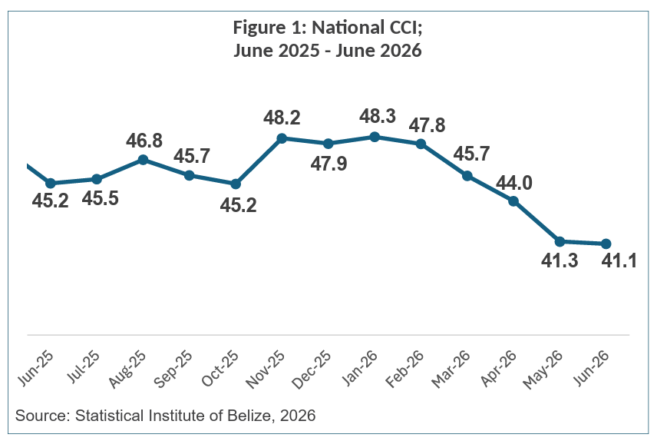
The SIB released its Consumer Confidence Index for June 2026 on July 29, showing the national index edged down to 41.1 from 41.3 in May. The CCI measures consumer sentiment on a scale of 0 to 100, with higher scores reflecting greater optimism. A reading above 50 indicates consumers are generally more optimistic than pessimistic. June’s result remained below that threshold, indicating that Belizeans continue to approach the economy with caution.
The slight decline was driven primarily by weaker sentiment toward durable goods purchases, which fell to 34.4 from 37.6, along with a marginal decline in the Present component from 37.9 to 37.6. At the same time, the Expectations component increased to 51.4 from 48.3, suggesting consumers were more optimistic about economic conditions over the next 12 months, even as they remained less confident about current household finances and the broader economy. The findings suggest many Belizeans are choosing to delay major purchases while waiting for conditions to improve.
District-level results showed mixed trends across the country. Orange Walk recorded the largest decline, with its CCI falling from 39.5 in May to 36.0 in June, while Cayo posted the greatest improvement, increasing from 38.5 to 41.0. In the Belize District, which includes San Pedro, consumer confidence edged down slightly from 41.7 in May to 41.3 in June.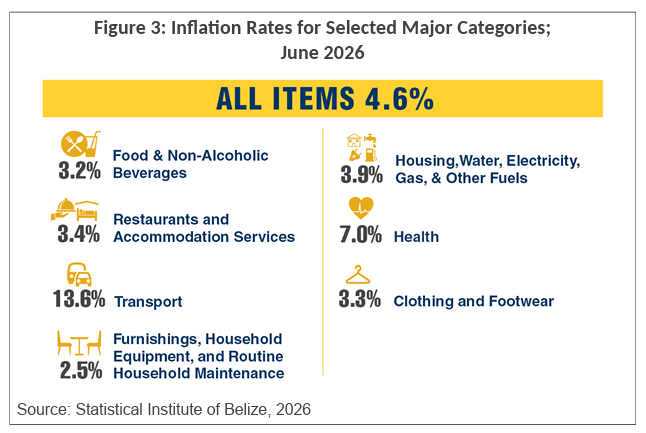
The consumer confidence findings coincided with the SIB’s latest Consumer Price Index report, which showed the All-Items CPI rose to 125.3 in June 2026 from 119.7 in June 2025, resulting in a national inflation rate of 4.6%. According to the report, the Transport category remained the largest contributor to inflation for the fourth consecutive month. Together with Food and Non-Alcoholic Beverages and Housing, Water, Electricity, Gas and Other Fuels, these categories accounted for more than three-quarters of the overall increase in consumer prices. Insurance and Financial Services was the only CPI category that remained virtually unchanged compared to June 2025.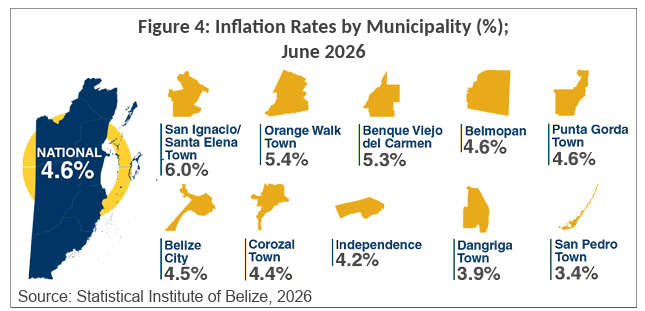
Among Belize’s municipalities, San Ignacio/Santa Elena recorded the highest inflation rate at 6.0%, with above-average price increases across passenger transportation, groceries, electricity, rent, medical services, restaurant and café services, clothing, footwear, and cigarettes. Although the CPI does not provide a separate inflation rate for San Pedro Town, island residents and businesses continue to experience many of the same cost pressures. As a tourism-dependent community where most goods are transported from the mainland, San Pedro remains especially vulnerable to higher freight and fuel costs, which continue to drive up prices for groceries, utilities, restaurant services, and other everyday expenses.
Regional CCI data also showed confidence among urban residents declined from 40.9 to 40.1, while rural residents reported a slight increase from 41.6 to 41.9. Consumer confidence among men remained virtually unchanged at 42.1, while women recorded a slight decline to 40.2. Among age groups, respondents aged 45 to 54 registered the largest improvement, rising to 43.0, while those aged 18 to 24 recorded the steepest decline, falling from 52.2 to 44.4. The report also noted that Maya respondents saw confidence improve to 51.0, while confidence among Garifuna respondents declined to 42.6.
For San Pedro and the wider Belize District, the latest figures suggest that rising living costs continue to influence consumer behavior. While Belizeans expressed greater optimism about the coming year, many households remain hesitant to make significant purchases as they adjust to higher prices. If inflation remains elevated, local retailers, restaurants, and tourism-related businesses could continue to see more cautious consumer spending despite improving future expectations.
Share
Related Articles
Read more