

Higher grocery bills, fuel prices, and utility costs continued to pressure household budgets in September, as Belize’s inflation rate reached 4.7 percent and consumer confidence fell to its lowest level since April 2024.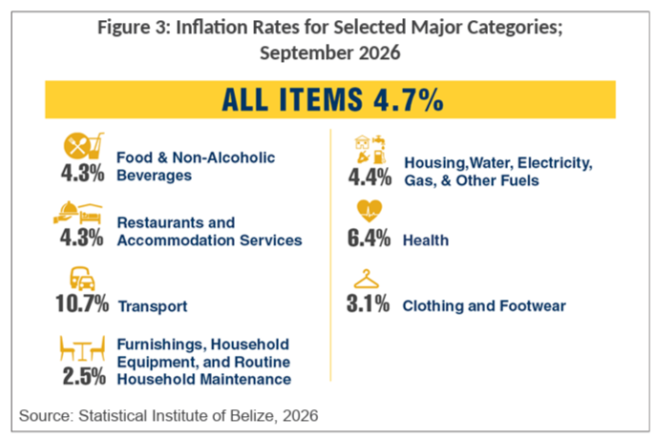
The Statistical Institute of Belize (SIB), in reports released on October 28th, found that transportation, food, housing and utilities accounted for approximately three-quarters of the increase in consumer prices compared with September 2025. Meanwhile, consumers expressed greater pessimism about their finances, the economy and making major household purchases.
Transportation recorded the sharpest increase among these essential expenses, rising by 10.7 percent. Diesel prices averaged BZ$15.69 per gallon, up from BZ$11.92 a year earlier. Regular gasoline increased from BZ$12.01 to BZ$13.78 per gallon, while premium gasoline rose from BZ$13.21 to BZ$14.62. Passenger transportation costs also increased, affecting bus and taxi fares and international airfares.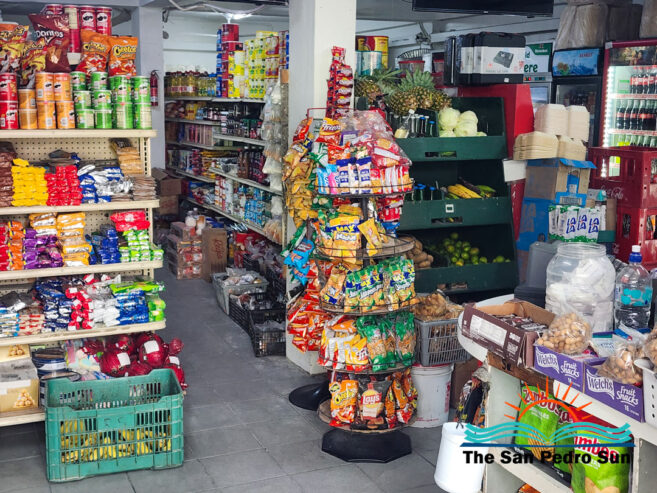
The pressure extended to grocery shopping. Food and non-alcoholic beverages rose 4.3 percent, with higher prices for poultry, vegetables, fruits, sugar, and bakery products contributing to the increase. Food alone was 4.6 percent more expensive than in September 2025.
Households also faced higher costs to maintain their homes. The housing, water, electricity, gas and other fuels category rose by 4.4 percent, driven by electricity charges, water tariffs and rents. SIB attributed the increase in electricity costs to a higher price per kilowatt-hour and the introduction of the Cost of Power Adjustment during the year.
For a household using 4,500 gallons of water monthly, the cost increased from BZ$86.38 to BZ$91.13. Home rental costs were also 2.3 percent higher than a year earlier.
In San Pedro Town, consumer prices rose by 3.3 percent, the lowest inflation rate among the municipalities surveyed. Residents experienced smaller increases in food, passenger transportation, medical services, and household cleaning products than the national average. However, the lower rate means prices increased more slowly; it does not indicate that living costs declined or that San Pedro was the least expensive municipality.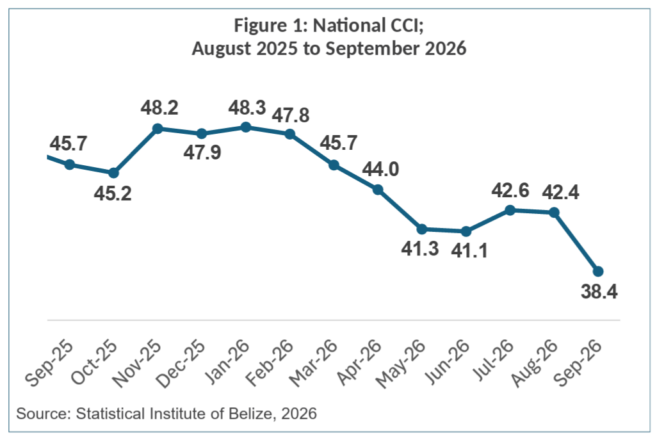
Against this backdrop, the national Consumer Confidence Index fell from 42.4 in August to 38.4 in September, a 9.6 percent decrease. Readings below 50 indicate generally pessimistic sentiment.
The decline affected all three areas measured by the survey: consumers’ assessment of current economic conditions and household finances, their expectations for the next year, and their willingness to make major purchases. Confidence in purchasing durable goods fell the most, down 13.4 percent, while expectations for future economic conditions and household finances shifted from optimistic to pessimistic.
Although the reports do not establish that rising prices caused the drop in confidence, they show households facing higher essential expenses while becoming less positive about their financial outlook.
Nationally, prices increased by a further 0.2 percent between August and September. For the first nine months of 2026, consumer prices averaged 3.1 percent above the same period last year, reflecting the continued increase in the cost of everyday goods and services.
Cost of living climbs as consumer confidence hits lowest level in over two years
Share
Related Articles
Read more