
 is conducting a second round of stakeholder consultations on proposed legislative reforms.)
The Belize Social Security Board (SSB) is conducting a second round of stakeholder consultations on proposed legislative reforms to contributions and pension benefits. The Board consulted San Pedro Town, Ambergris Caye, on Friday, November 6th, at the Sunbreeze Hotel.
SSB Chief Executive Officer Jerome Palma presented seven proposed reforms grouped under four key areas: the contribution model, determining pension benefits, pension adjustments, and automatic triggers and provisions. The proposals remain under consultation and have not been approved.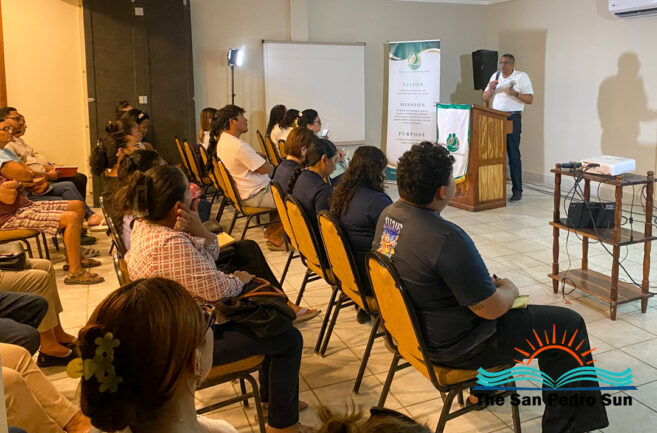
Under the proposed contribution model, payments would be calculated as a percentage of actual earnings rather than through fixed wage bands, subject to an insurable earnings floor and ceiling. The weekly floor would increase from BZ$55 to BZ$130, while the ceiling would rise gradually from BZ$520 to BZ$600 in 2028, BZ$700 in 2029, and BZ$800 in 2030. These amounts represent the earnings used to calculate contributions, rather than the contributions payable.
The combined contribution rate would remain at 10%, with revised employee and employer shares. For employees earning below BZ$340 weekly, the proposed split would be 3% from the employee and 7% from the employer. For those earning BZ$340 or more weekly, employees would contribute 4.5% and employers 5.5%.
The pension proposals include standardizing eligibility for the non-contributory pension at age 65 for both men and women, lowering the qualifying age for men from 67. Palma said the change would promote gender equality and improve financial support for older men.
For contributory pensions, the proposals would increase the maximum replacement rate from 60% to 65% and change the earnings period used to calculate benefits from the best three years to the best seven years.
Under the current system, the maximum replacement rate is reached after 1,750 contributions, equivalent to 35 contribution years. The replacement rate determines the proportion of average insurable earnings paid as a pension, while the earnings averaging period determines the income figure used in that calculation. Reaching the maximum rate does not require every contribution to have been made at the earnings ceiling.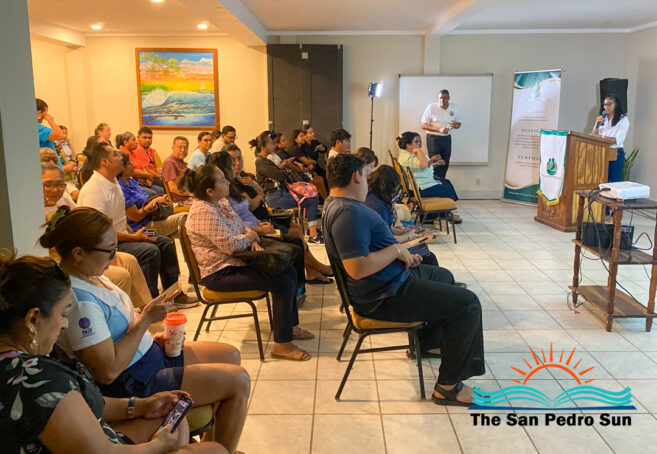
For existing pensioners, SSB proposes adjustments based on retirement year to address inflation. A separate measure would establish reviews of cost-of-living increases every three years, with increases capped at 2% and subject to affordability.
Palma also outlined proposed automatic triggers and provisions intended to allow earlier corrective action when the fund faces financial pressures. He said these mechanisms would help reduce delays, improve predictability, and support long-term sustainability.
The consultation also addressed refunds of overpaid contributions. Under existing SSB procedures, contributors may apply for refunds when payments were made in error or by two or more employers for the same contribution week. Applications are subject to deadlines and review.
Palma said the reforms aim to improve benefit adequacy while strengthening the fund’s ability to meet its long-term obligations. Feedback from workers, employers, pensioners, and other stakeholders will help inform consideration of the proposals.
Further consultations are scheduled throughout November, including sessions in Punta Gorda, Placencia, Dangriga, and Corozal.
Share
Related Articles
Read more