
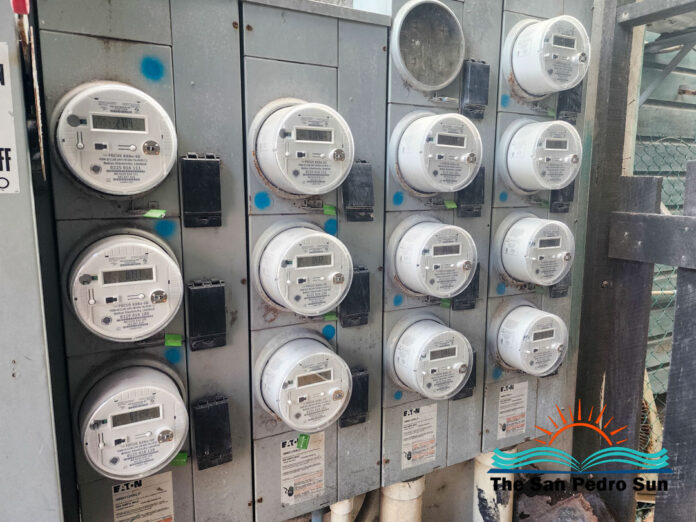

Prime Minister Honorable John Briceño has indicated that his government will intervene to prevent Belize Electricity Limited (BEL) from passing increased power costs on to consumers. In late October, BEL asked the Public Utilities Commission (PUC) to raise the monthly limit under the Cost of Power Adjustment (COPA) mechanism from 5% to 10% of the approved Reference Cost of Power. The adjustment could increase electricity bills. BEL said the request was necessary because of high diesel prices and a shortfall in electricity supplied by Mexico.
On November 11th, Briceño told the media that BEL was operating at a loss, with electricity costing approximately $0.80 per kilowatt-hour while consumers pay approximately $0.60 per kilowatt-hour. Although he described the situation as unsustainable, the prime minister said his government could not allow the additional burden to fall on Belizeans. “We, as a government, cannot allow BEL to pass that on to the consumers,” he said. He added that the government was exploring ways to contain electricity costs as part of its response to the country’s high cost of living.
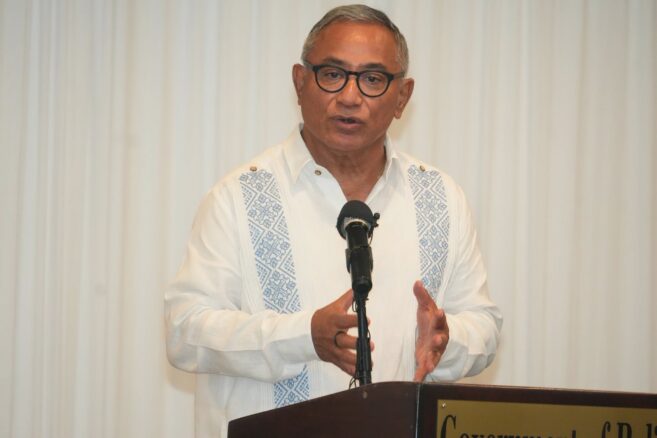
Briceño also said BEL was working with several companies to introduce solar generation and battery storage. The batteries would store electricity generated during the day for use at night. “With the batteries, during the day, we can charge it, and then at night, put it onto the system when the price is highest,” he explained.
The PUC has not yet decided whether to approve BEL’s request to double the monthly COPA limit.
Meanwhile, Minister of National Security, Energy and Ports Honorable Michel Chebat and a delegation met with energy officials in Mexico City, Mexico. According to a government report issued on November 10th, the parties agreed to establish three working groups focused on electricity planning. The agreement aims to strengthen institutional coordination, gather the technical information needed to assess planning alternatives, and follow up on matters of mutual interest. The government’s release did not identify who would serve on the groups.
Chebat described the meeting as successful after Mexico’s Comisión Federal de Electricidad (CFE) assured Belize that it would continue supplying electricity to the country. “We wanted to express to them our situation in Belize and for them to have an understanding of how important the supply we are getting from them is,” Chebat told the media.
Chebat said Belize currently receives 55 megawatts from CFE. “We have opened the discussion to perhaps increasing that amount. This is something that they are looking at because they are intending to put in some new generation plants by 2028 in southern Mexico,” he added.
CFE Director General Emilia Esther Calleja Alor emphasized the importance of close coordination between Mexico and Belize to identify infrastructure needs and assess the current and future conditions of both electricity systems. She said CFE’s generation and transmission projects on the Yucatán Peninsula would continue to meet growing demand in southeastern Mexico.
In addition to securing electricity imports from Mexico, Belize is pursuing efforts to expand domestic generation and battery storage capacity. These efforts aim to meet growing electricity demand, strengthen energy security, and reduce reliance on costly diesel-fired generation.