

By Anne Marie Thompson, Attorney-at-Law and former Labor Commissioner
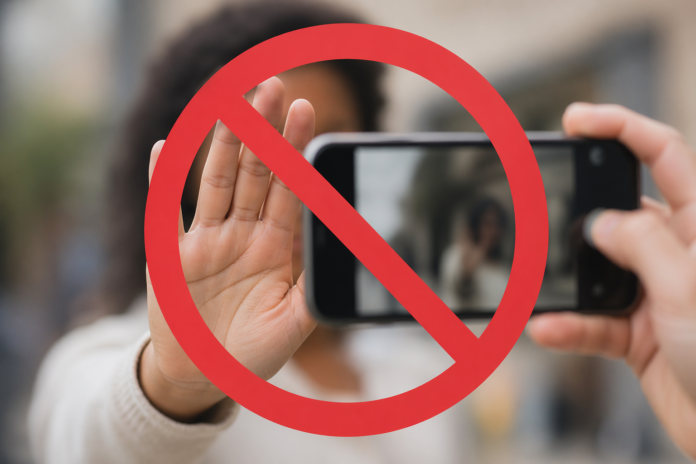
These days, it seems to be more common for persons to record you without your knowing and without your permission – at work, at church, on the streets, or just about anywhere. And let’s be honest, most of us are walking around with a mobile phone glued to us. Some people even have two or more phones: one for “work,” one for “personal,” and sometimes one quietly collecting evidence you never intended or agreed to give.
It truly just feels like it’s becoming more common for families, friends, and even strangers to use their handheld mini-computers, commonly known as mobile phones, to tap, swipe, record, and then upload a secret recording you never even realized was being made to social media. No warning. No consent. You only become aware when the clip or video becomes viral. Too late. The damage has already started. The whole wide world is now privy to your secret or your business, and all of a sudden, you become the butt of jokes, harassment, workplace drama, family upheaval, or even professional consequences you never expected from one moment to the next. It spreads fast, too, via group chats, reposts, screenshots, reactions, and commentary. It’s like watching your private life turn into public drama in real time. Your stomach turns. You wish you could disappear. You wish you could undo the past. And you are angry.
Unfortunately, in Belize, no law clearly states that a secret recording is automatically illegal in all circumstances. However, and this is where people often misunderstand it, you can still pursue legal action if the recording was made without your consent and then used improperly or fraudulently; for example, if it were weaponized, taken out of context, edited to mislead, or shared to cause harm. You may also have grounds for legal action if an unconsented recording exposes confidential information, invades your privacy, or damages your reputation. Just because someone hits record, it doesn’t mean they automatically get the right to hit “post,” “forward,” or “ruin your life.” Based on this, legal action may still be possible on grounds including violations of constitutional privacy rights, nuisance, defamation, harassment, misrepresentation, and copyright issues. Our Constitution, existing laws, and the common law can still step in depending on the harm caused and how far things have gone.
Now, what really ticks off most people is not the secret recording itself. It is the breach of trust, and the fact that you never got the chance to say or act differently, as our words and actions have consequences – good or bad. You trusted that person. You were comfortable with them, thinking it was just work, play, or life – not content. You were acting normal, maybe even vulnerable, thinking you were in a safe space. It never crossed your mind that you were being secretly recorded.
Sometimes, a secret recording is brushed off as “an innocent joke”. Sometimes it’s done out of spite and is part of a plan. Other times, it’s just reckless behavior with no thought of consequences. We all know of revenge porn. We also know of information leaks. But whatever the reason, the outcome is often the same: embarrassment, anxiety, harassment, job loss, loss of contract, and long-term reputational damage.
We are all aware that some world-renowned celebrities have gained great financial success and notoriety from unconsented recordings, including leaked private or sexual videos. These videos go viral, they trend, they become “internet history.”
But these are the exceptions. And even then, behind the headlines and clicks, those people are still humans. They still feel, they still hurt, and they still deal with regret, loss of control, and emotional fallout. Fame and money don’t erase harm.
And this is important: our courts treat these matters seriously, especially where sexual recordings are involved. But it’s not limited to that. Secret recordings at work, in schools, in private conversations, or anywhere people reasonably expect privacy can also carry serious legal and professional consequences depending on how they are used.
So, here’s the simple message: if you are going to record someone, audio or video, you must get their consent. Also, consent must be clear and voluntarily given before the recording starts, not after. Do not assume consent. And consent should not be implied because “they did not say no” or “they did not object”.
It is also important to note that even if consent is given before recording, further consent must be given before posting or forwarding those recordings. Remember, once a recording leaves your device, you do not control where it goes or how it gets used.
And as a word of warning: if you receive incriminating recordings, especially sexual ones, do not share them. They are not content with laughs. Don’t forward them. Don’t repost them. Because in that moment, if you do, you too could be criminally culpable for sharing, posting, or exploiting the recordings. That audio or video recording might feel harmless in a group chat, but it can look very different when it’s being replayed in a courtroom with your name attached to it. If you wouldn’t want the recording played in court, printed on a public billboard, and explained by your beloved and respected grandmother or pastor … then don’t press send.
At the end of the day, this is really about one thing: respect. Respect for people; respect for boundaries; and respect for the fact that not everything in life is meant to be content. Yes, we live in a digital world where everyone has a mobile phone camera and can share everything in seconds. This comes with responsibility. The tap of a “record” button is easy; the consequences are not. What feels funny, dramatic, or harmless in the moment can become someone else’s humiliation, loss, or lasting damage tomorrow. Even when consent is given, let’s be responsible to know when to record, when to stop, and when to simply put the phone down. Because once privacy is gone, no amount of likes, shares, or “it was just a joke” can bring it back.
Anne Marie Thompson
Attorney-at-Law
Sandonaconsulting@yahoo.com