

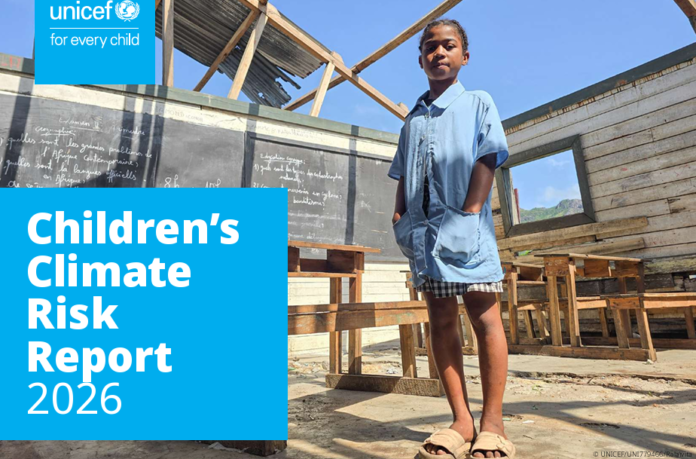
On June 16, UNICEF launched its Children’s Climate Risk Report 2026, a global assessment indicating that nearly half of the world’s children—approximately 1.1 billion—are exposed to at least three overlapping climate and environmental threats that affect their health, education, and overall well-being. Belize is among the countries identified as facing multiple climate-related risks.
According to the report, Belize’s child climate risk profile is shaped primarily by tropical storms, flooding, and rising temperatures. UNICEF noted that the climate threat facing children is not typically a single hazard, but rather a combination of interconnected risks that can occur simultaneously and overwhelm the systems designed to protect them.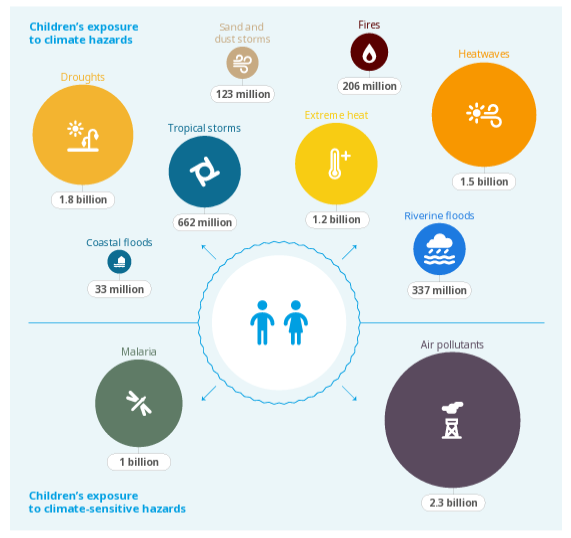
The report states that these overlapping threats place increasing pressure on homes, schools, healthcare facilities, and water systems. In Belize, such hazards can disrupt education, damage critical infrastructure, and harm children’s health, particularly given the country’s coastal exposure to hurricanes and flooding.
UNICEF’s assessment assigns Belize a hazard exposure score of 3.98 and a child vulnerability score of 3.5. Individual hazard scores include 7.56 for tropical storms, 6.42 for air pollution, 3.5 for heatwaves, 3.37 for extreme heat, 3.35 for riverine flooding, 2.89 for wildfires, 1.35 for coastal flooding, 1.34 for vector-borne diseases, and 0.25 for sand and dust storms. Belize received a score of zero for drought exposure.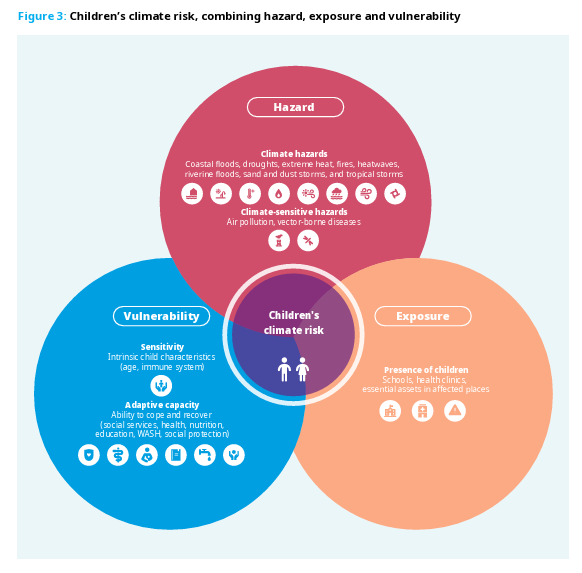
The report also evaluated sectors affecting children’s well-being. Belize recorded scores of 5.81 for child mortality, 5.49 for child poverty, 2.96 for child protection, 2.79 for health, 1.79 for water, sanitation, and hygiene (WASH), 1.19 for education, and 1.11 for nutrition.
Alongside the global report, UNICEF Belize is using a Climate Landscape Analysis for Children Plus (CLAC+) assessment to understand better how climate-related pressures affect children’s daily lives, including their education, health, and access to water and essential services.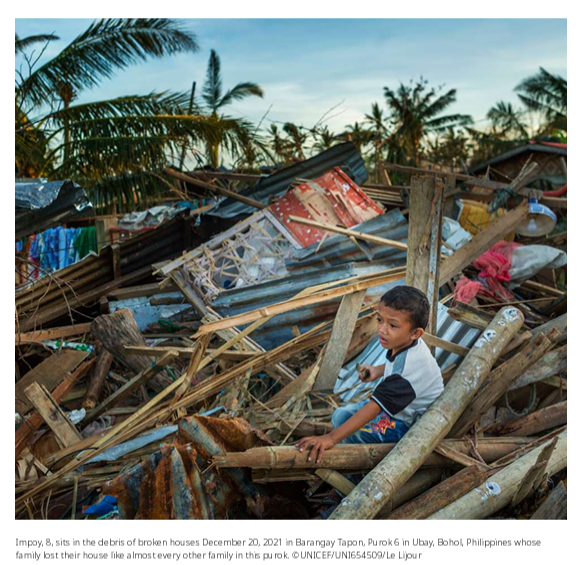
Jenna Hoare, Emergency and Disaster Risk Reduction Officer at UNICEF Belize, explained that the Climate Landscape Analysis serves as an evidence-based tool to help governments identify climate-related impacts on children and evaluate gaps in existing systems.
“The Climate Landscape Analysis is a UNICEF evidence-generation tool that was developed in 2016. Through our partnership with the Ministry of Sustainable Development, Climate Change and Solid Waste Management, we wanted to better understand the major climate impacts, environmental challenges, and energy vulnerabilities affecting children in Belize,” Hoare said.
She noted that Belize expanded the traditional CLAC approach to include consultations with youth, Indigenous communities, persons living with disabilities, and pregnant and lactating women.
“Belize wanted to take a different approach to the CLAC. We incorporated youth, involved Indigenous communities, and looked at the experiences of persons living with disabilities as well as pregnant and lactating women,” Hoare explained. “We wanted to focus on vulnerable communities and used a participatory approach that included consultations with adolescents from high schools across the country and focus group discussions with vulnerable groups.”
The Children’s Climate Risk Report 2026 suggests that Belize will need stronger child-focused climate planning to reduce the impacts of storms, flooding, and extreme heat. UNICEF says the findings from both the global assessment and Belize’s CLAC+ study can help guide disaster preparedness strategies, education protocols, and resilience planning to ensure children’s needs are prioritized in future climate and development policies.
1.1 Billion Children Face Climate Risks Worldwide; Belize included in UNICEF Assessment
Share
Related Articles
Read more