
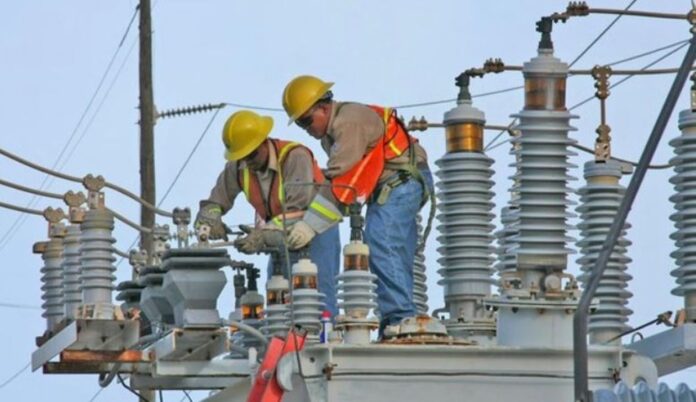
warned that increased planned power outages may become necessary after CFE advised that electricity exports to Belize could be reduced.)
On July 14th, Belize Electricity Limited (BEL) warned that increased planned power outages may become necessary after Mexico’s Comisión Federal de Electricidad (CFE) advised that electricity exports to Belize could be reduced. The utility first implemented load-shedding in late April 2024 and has since cautioned customers that interruptions could return if CFE supply declines further while domestic electricity demand remains high.
The immediate concern is a gap between Belize’s electricity demand and the country’s available generation capacity. CFE, which typically supplies up to 55 megawatts (MW) to Belize’s national grid, has informed BEL that it is experiencing constraints and may have to curtail exports. With national electricity demand recently ranging between 85 MW and 125 MW, and local generation capacity estimated at 84 MW to 95 MW, BEL says it may need to temporarily disconnect power in selected areas to maintain the stability of the national grid.
The issue is not new. In September 2025, a major system failure on Mexico’s Yucatán Peninsula caused Belize to suddenly lose its CFE supply, forcing BEL to implement nationwide load-shedding until electricity was restored later that night. The latest warning also comes as communities in Mexico’s Bacalar municipality continue to experience repeated power outages.
BEL Executive Chairman Lynn Young said the utility is taking steps to prepare for both possible supply interruptions from Mexico and reduced hydroelectric generation should dry conditions persist. “All indications are that we could be facing drought conditions, although we don’t yet know how severe they will be,” Young said. “BEL and Hydro Belize have been working together to conserve as much water as possible, and at this point, we have the water levels we would normally expect for this time of year. However, if the rains don’t come during the latter half of the year, we could face challenges.”
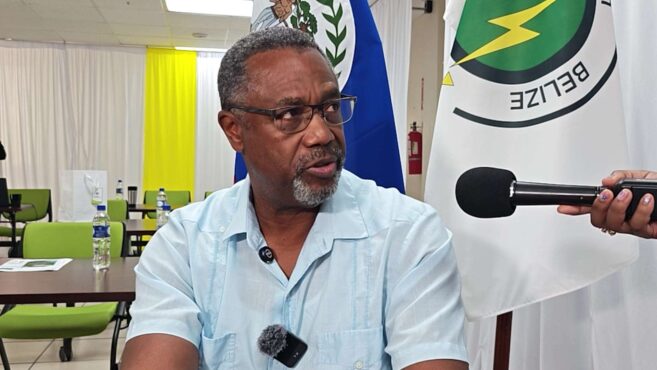
Young said BEL has also applied to the Public Utilities Commission (PUC) for approval to install 24 MW of emergency mobile generation at its Westlake substation at Mile 8 on the George Price Highway. The units would provide backup power if CFE reduces exports or if drought limits hydroelectric production, helping to avoid widespread blackouts.
He acknowledged that the project comes at a high cost but described it as a necessary safeguard. “It’s like insurance,” Young said. “You pay for it hoping you never have to use it, but with the uncertainty surrounding CFE, the possibility of drought and increasing electricity demand driven by climate change, we believe it’s something the country needs.”
BEL expects continued pressure on the national grid, particularly if El Niño-related dry conditions reduce hydroelectric generation. Young said maintaining the emergency generation units will cost approximately $4 million per month. If electricity demand continues to increase while CFE supply remains constrained, customers could experience additional planned outages until more local generating capacity becomes available.