
The Belize Tourism Board (BTB) presented proposed amendments to the regulations governing tour guides and tour operators during a stakeholder consultation on November 10th at 5:30PM at the Sunbreeze Hotel conference room. Lloyd Enriquez, Director of the BTB’s Cruise and Capacity Development Department, led the session, which focused on updating the regulatory framework for the tourism guiding sector.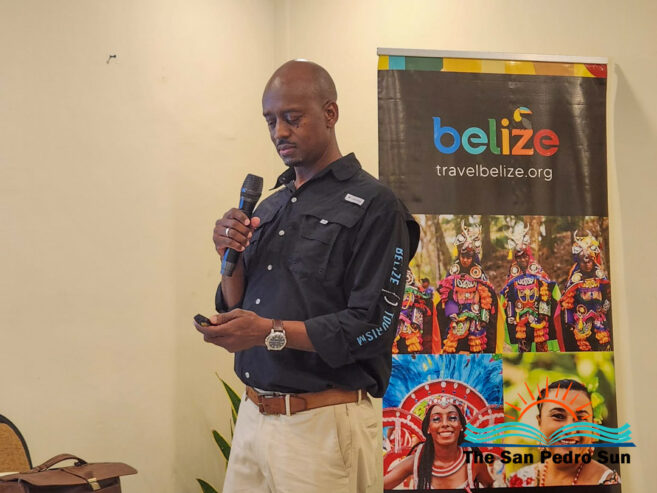
The meeting allowed tour guides, tour operators, and association representatives to question the proposals, raise concerns, and provide feedback. BTB officials said the amendments are intended to modernize a framework that has not received a substantial update in approximately 20 years while improving safety, professionalism, and accountability across the industry.
Enriquez said the current regulations are outdated and no longer fully reflect how the tourism industry operates. The proposed changes aim to improve visitor safety, strengthen professional standards, clarify the responsibilities of guides and operators, and give regulators better tools to address misconduct.
“The last substantive update was 20 years ago,” Enriquez said. “It’s time… to modernize it, and we take this more into a profession, as opposed to a pastime or thing we do on the side.” He emphasized that the proposals are not final and that the BTB is seeking written feedback from individuals and associations before finalizing the amendments. Participants were told that the session was intended to explain the proposals and help them prepare formal submissions.
The existing regulatory framework distinguishes between tour guides, who lead or accompany visitors, and tour operators, who arrange, sell, and manage tours. Enriquez explained that some guides have taken on responsibilities associated with operators, including arranging tours without holding a tour operator license.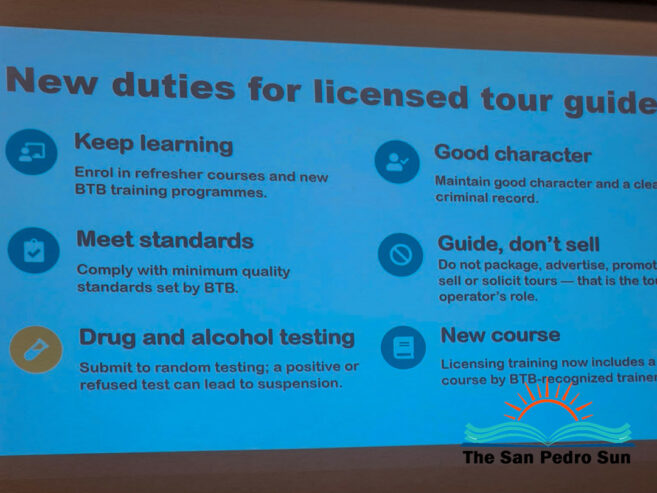
The existing regulations also require tour operators to maintain passenger liability and public liability insurance. Enriquez said these requirements help protect guests and operators if an accident or incident occurs. Tour guide licenses are currently renewed annually, with a July 31st deadline, and applicants must submit a letter from a tour guide association as part of the licensing process.
One proposed amendment would move the tour guide license renewal deadline from July 31st to October 31st, which the BTB described as a slower period for tourism. Guides would also be able to choose between one-year and two-year renewals. The BTB said the two-year option would reduce the administrative burden of annual applications and indicated that the current license fee of $75 would remain unchanged.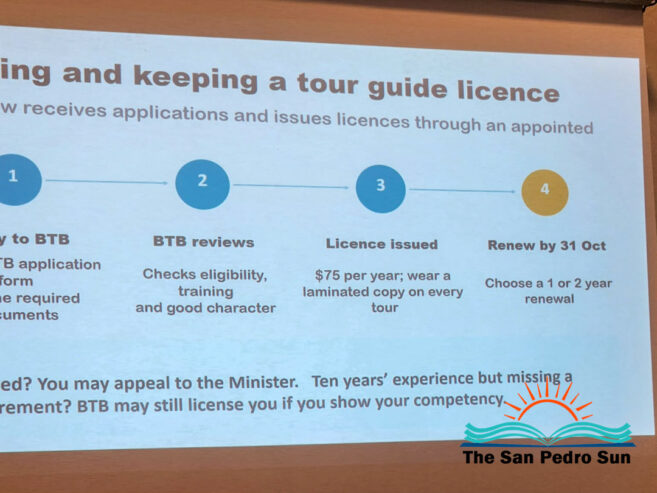
Another proposal would introduce specialized guide certifications in areas such as archaeology, diving, snorkeling, fly fishing, and rappelling. Certifications would appear on guides’ licenses, while those who do not wish to specialize could continue working as general guides.
The BTB plans to use its Elevate training institute to deliver training for these programs. Enriquez said the courses would not be free, but the BTB would subsidize part of the cost. Depending on the course, participants would pay approximately 25% of the actual cost.
The proposals also include a violation-ticket system for certain regulatory breaches. Enriquez described the tickets as administrative penalties rather than court-imposed fines. The BTB is considering penalties ranging from $100 to $5,000, although the amounts and applicable offenses remain open to feedback.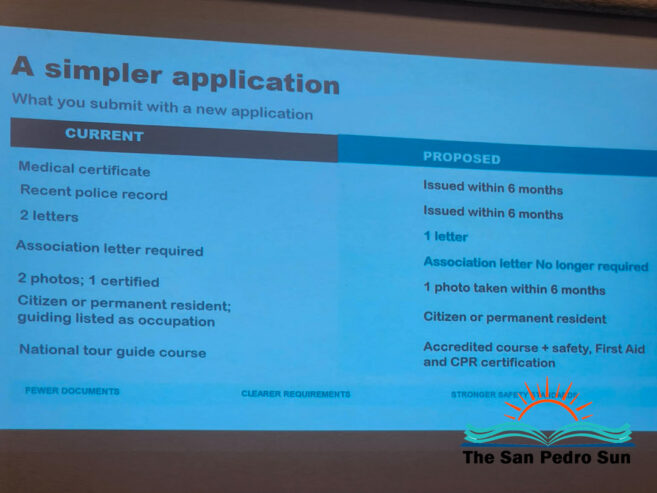
One of the most debated proposals concerned alcohol and drug testing. Enriquez said the measure is intended to address guides or operators who conduct tours while impaired. He explained that testing would not be random but would be based on credible reports, video evidence, or an ongoing investigation. Cases could then go before the tour guide committee, which could recommend suspension or revocation of a license, depending on the seriousness of the matter.
“This is not meant to be grabbing people off the street,” Enriquez said. “It is meant to deal with persons where there is a credible report, an investigation, and evidence.” Enriquez also addressed the distinction between the decriminalization of marijuana in certain circumstances and impairment while working. He said guides and operators should not consume alcohol or marijuana while on duty or before conducting a tour, noting the potential risks to guests and Belize’s tourism reputation.
Some attendees questioned whether the testing provision could conflict with constitutional rights. One participant called for clearer wording to prevent potential abuse in enforcement.
The proposed removal of the mandatory association letter also generated strong discussion. Enriquez said legal advice received by the BTB indicated that requiring the letter may conflict with the constitutional right to freedom of association. Under the proposal, applicants could instead submit a reference from an association, a former employer, or another suitable source, while the BTB would conduct its own vetting.
Several guides and association representatives opposed removing the requirement. They argued that association letters provide an important check on professional conduct because associations can document complaints and help hold guides accountable. “That letter from an association to renew your license, I believe it is very important to keep it in place,” one participant said.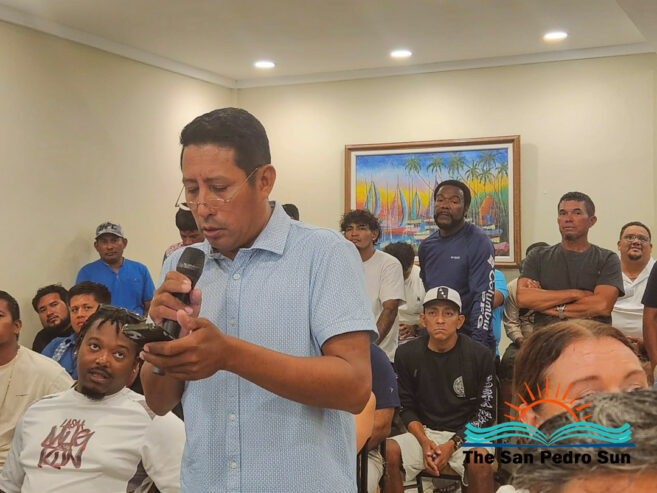
Speakers also highlighted associations’ roles in advocacy, support, and assistance with licensing applications. One attendee recalled how the San Pedro Tour Guide Association supported members during the COVID-19 pandemic, when guides were unable to work.
Another proposed amendment would reduce the tour guide committee from nine members to seven. The BTB said the change would remove some government departments from the committee and place greater emphasis on private-sector representation, while allowing government expertise to be sought when needed.
The proposals would also make licensing an administrative function rather than a committee-based process. Enriquez compared it to obtaining a driver’s license, saying applicants who meet the requirements should be able to receive a license without appearing before a committee.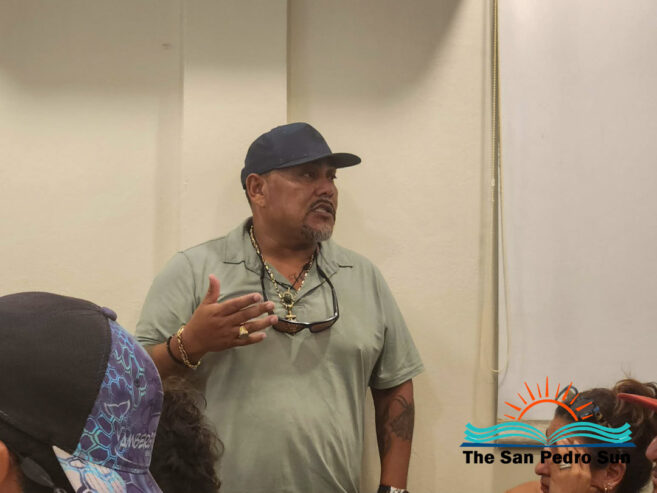
Some industry representatives opposed these changes. One participant argued that a smaller committee could reduce representation across the tourism sector, while another questioned the minister’s authority to select the committee chairperson.
Participants also called for a clear appeals process. One speaker said the current regulations do not provide for an appeal and argued that any new ticketing or disciplinary system should allow affected guides and operators to challenge decisions.
Throughout the meeting, guides and operators emphasized that enforcement remains a major concern. They said unlicensed individuals continue to sell and conduct tours, creating competition for licensed businesses.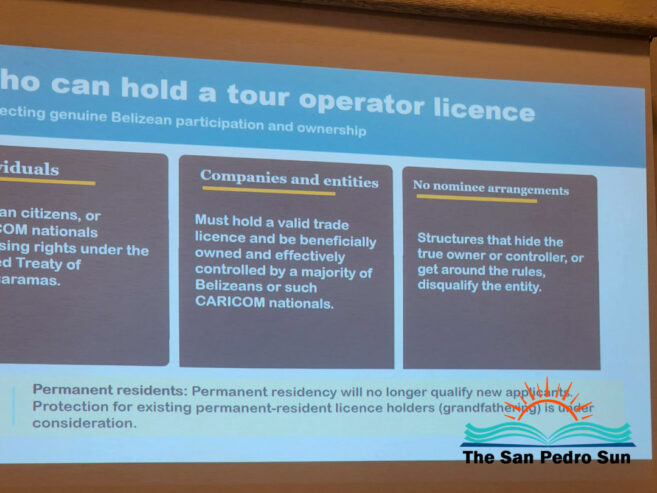
One participant asked how many unlicensed operators had been taken to court. Enriquez acknowledged limitations in enforcement capacity and said San Pedro needs more tourism police officers and patrol boats to cover the island.
“Our ability to enforce is weak,” Enriquez said. “But that is not what is at stake here. Our ability to enforce and what we put in regulations are two different things.”
The BTB will accept written feedback from individuals and associations using a template distributed electronically after the meeting. Enriquez reiterated that the proposals remain open to revision based on the comments received.
While participants supported higher professional standards and stronger enforcement, several called for clearer legal protections, adequate representation, and practical enforcement measures as the amendments are developed.
Share
Related Articles
Read more