
The Belize Tourism Board (BTB) brought industry partners, government representatives, and local authorities together in San Pedro on November 12th for a Sargassum Mitigation Technology Showcase at Sagebrush Church. The session let stakeholders learn about BTB’s research and investments in sargassum management, examine equipment firsthand, and speak directly with DESMI representatives.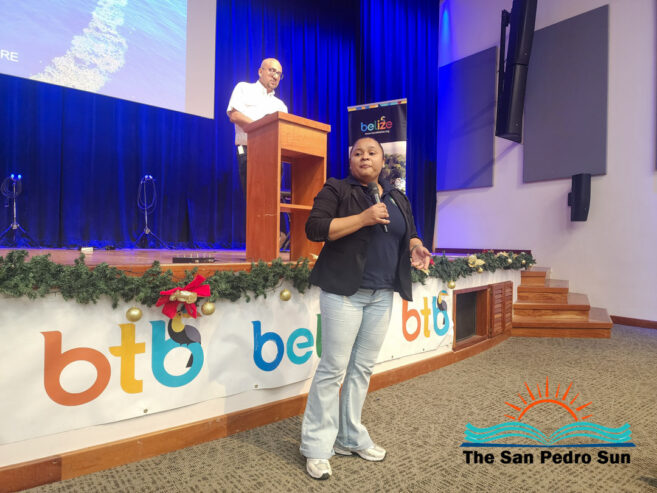
Andrew Usher, BTB’s Director of Industry Development and Guest Experience, said the event was designed to move the discussion beyond beach clean-ups and towards practical, coordinated systems. “Sargassum continues to affect our shorelines, communities, businesses and, ultimately, the experiences we offer our visitors,” Usher told attendees. “Rather than focusing primarily on cleaning up sargassum after it lands, we wanted to better understand the available technologies we could utilize to intercept, collect, and remove it before it accumulates on our shores.”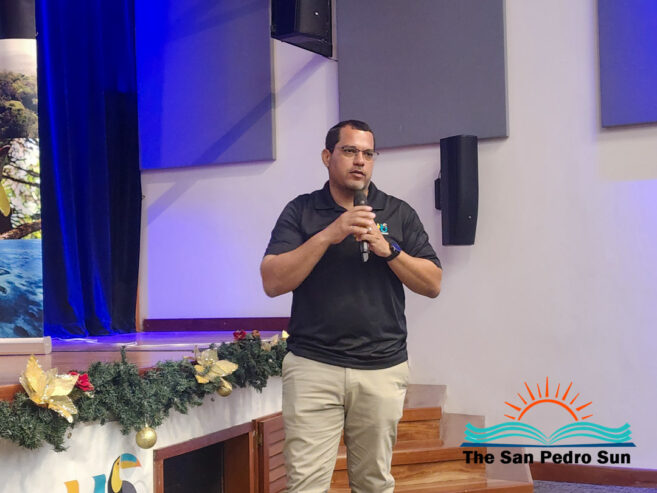
The showcase followed years of sargassum arrivals that have placed growing pressure on Belize’s tourism sector, coastal communities, and beachfront properties. Usher explained that BTB and its partners had concluded that removing seaweed after it reaches the beach was costly and inefficient and that a more effective response required action before the material reaches shore.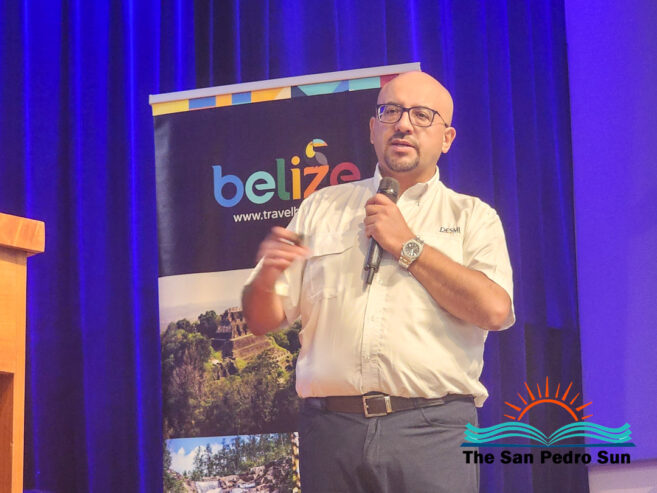
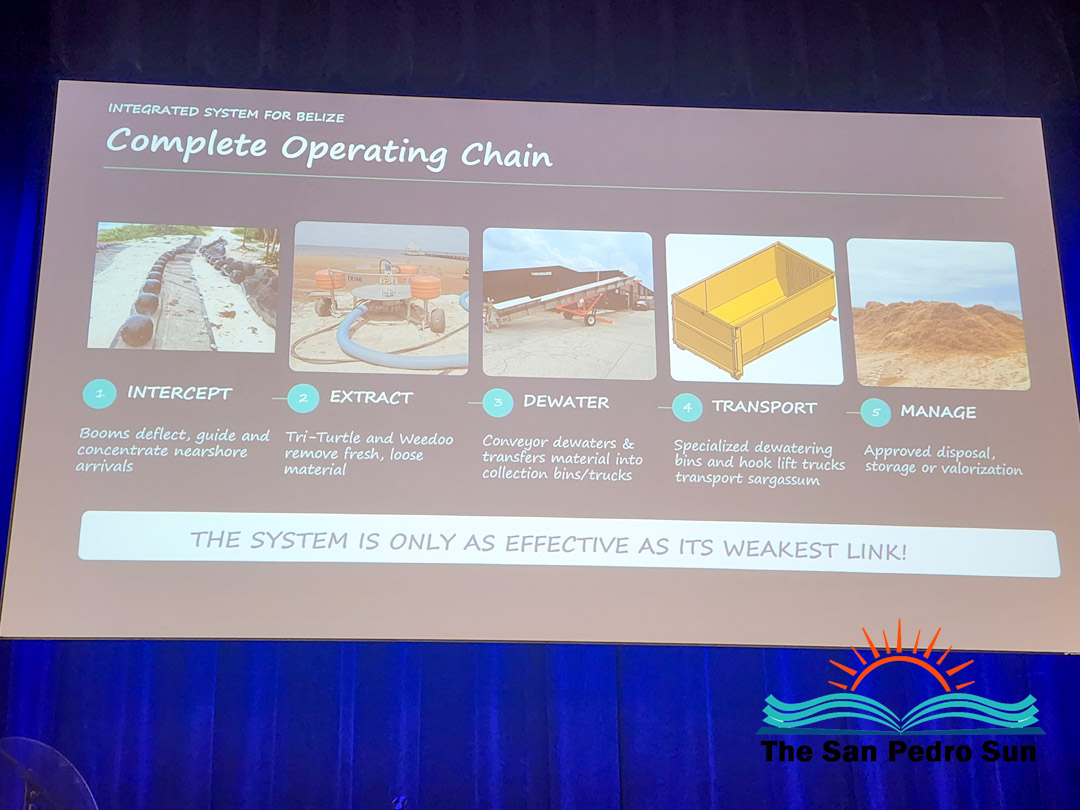
With funding support from the central government, BTB identified and invested in specialized equipment for different stages of sargassum management: containment, collection, dewatering, and removal. The board established a demonstration system in San Pedro to test and refine the technology, aiming to create a model that could be adapted for other coastal destinations.
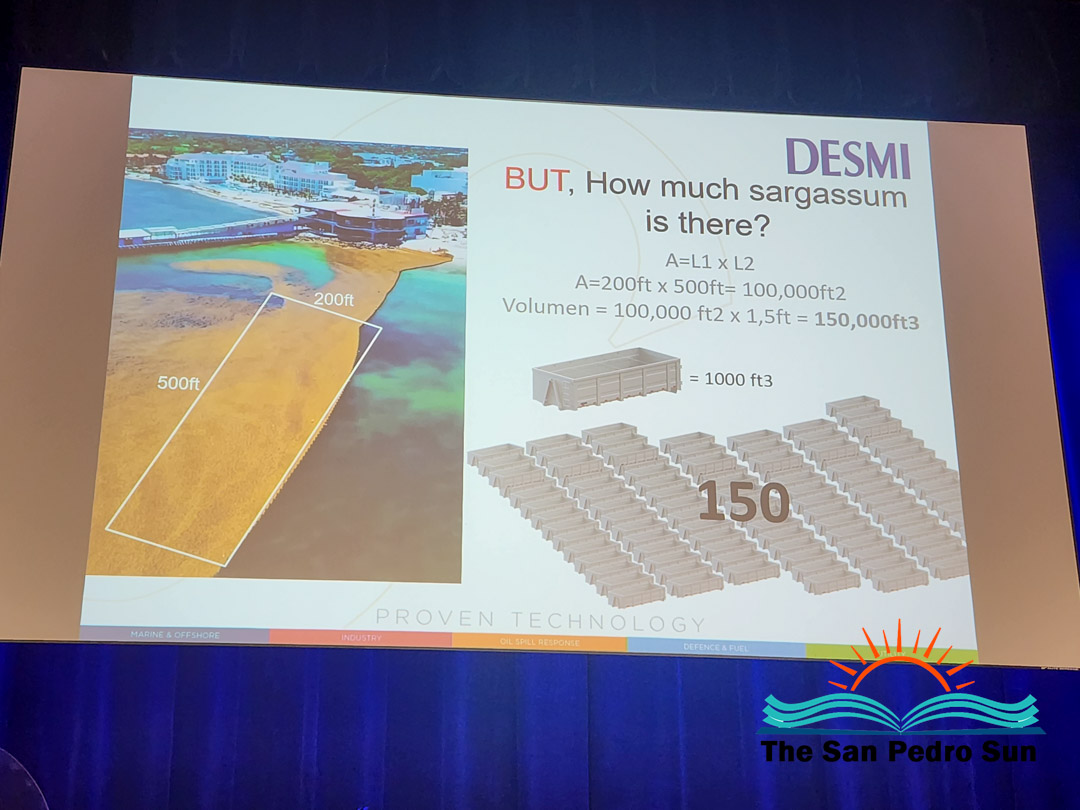
Usher stressed that the system is still being developed. “We have done the research, made investment and acquired the equipment, tested individual components and are now working toward integrating them into a fully functional system,” he said. “While further testing and adjustments are needed, we are confident in the direction we are taking.”
BTB’s approach was shaped by research, consultations with manufacturers, and site visits to destinations already using similar systems. Usher said a visit to Punta Cana in the Dominican Republic was particularly useful because it allowed the delegation to speak with private-sector operators and maintenance personnel responsible for deploying and maintaining booms.
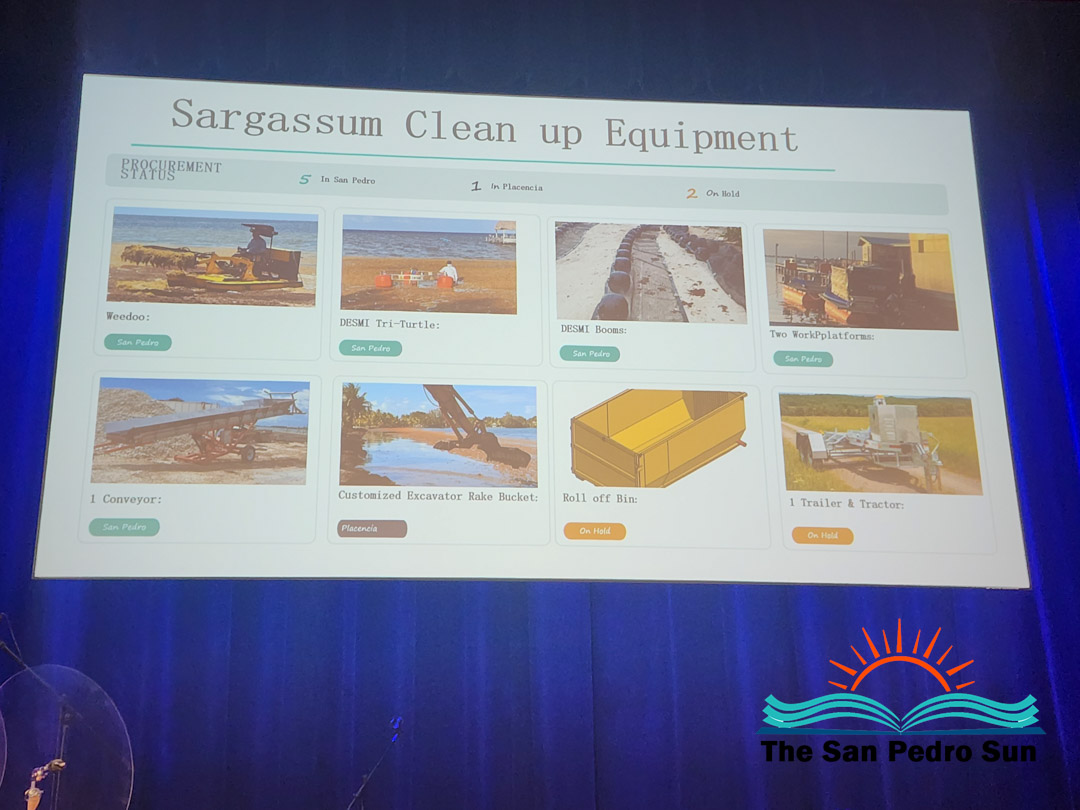
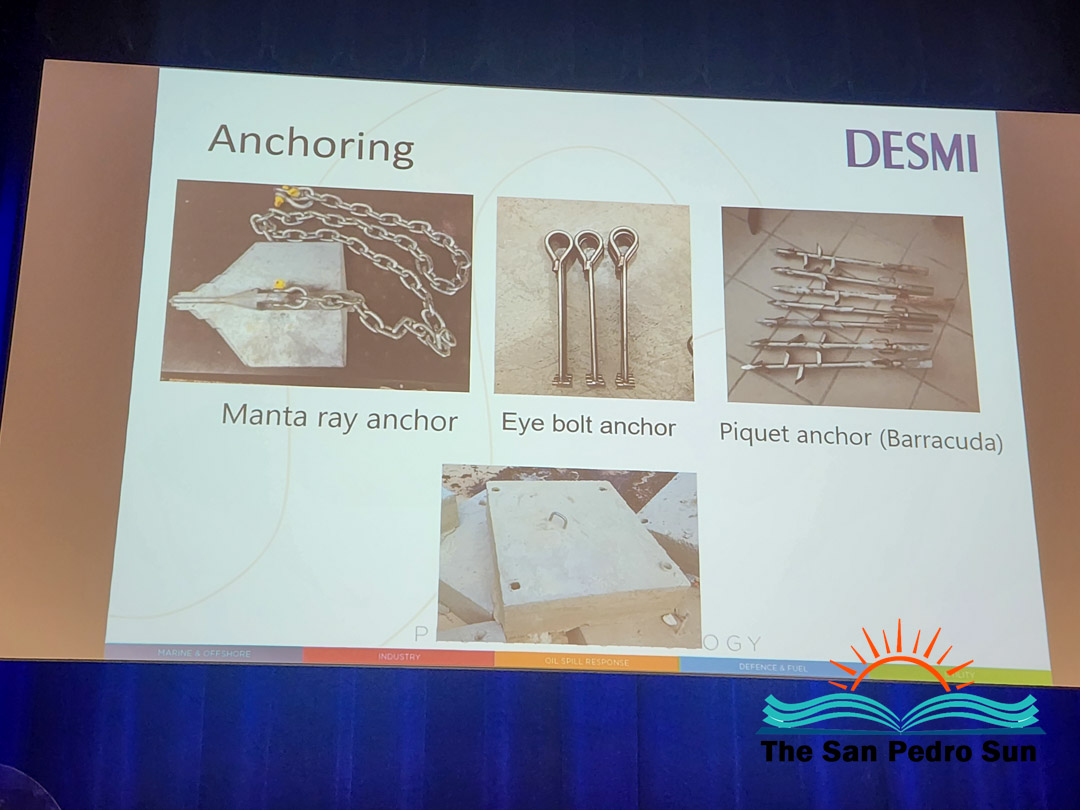
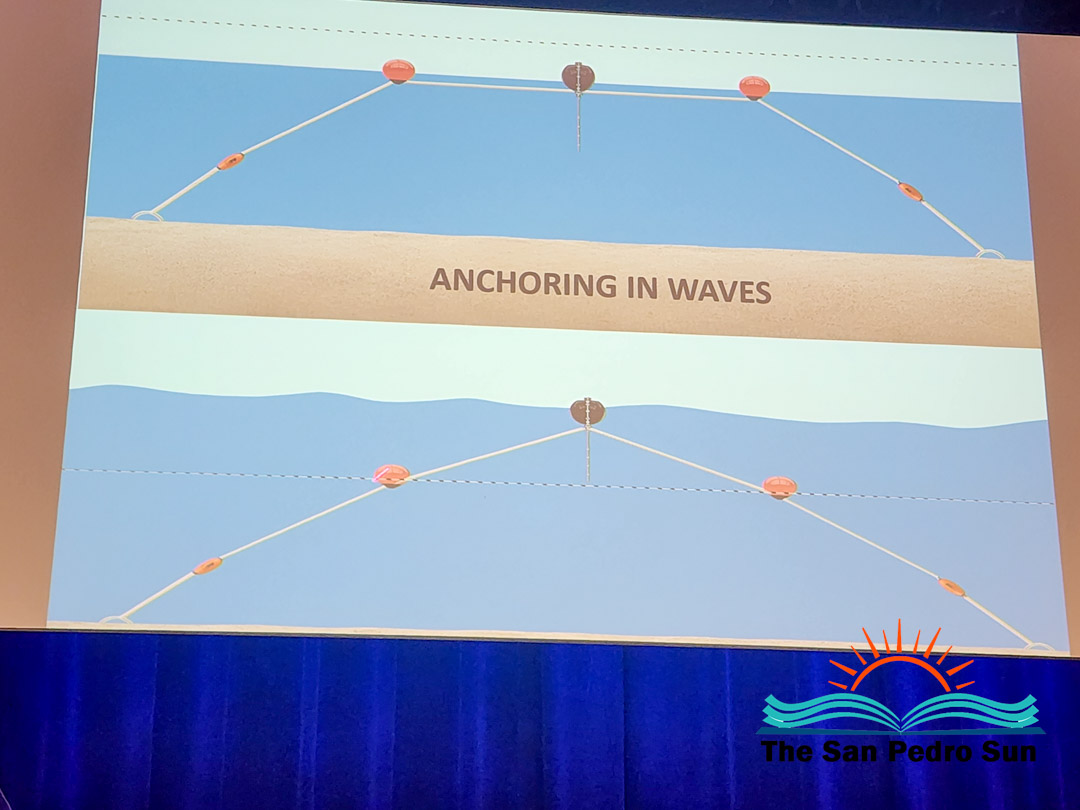
The technology presented at the showcase forms part of an integrated system. Booms intercept and guide sargassum towards a collection point; extraction equipment removes it from the water; and conveyors, bins, and other systems assist with dewatering, transport, and storage.
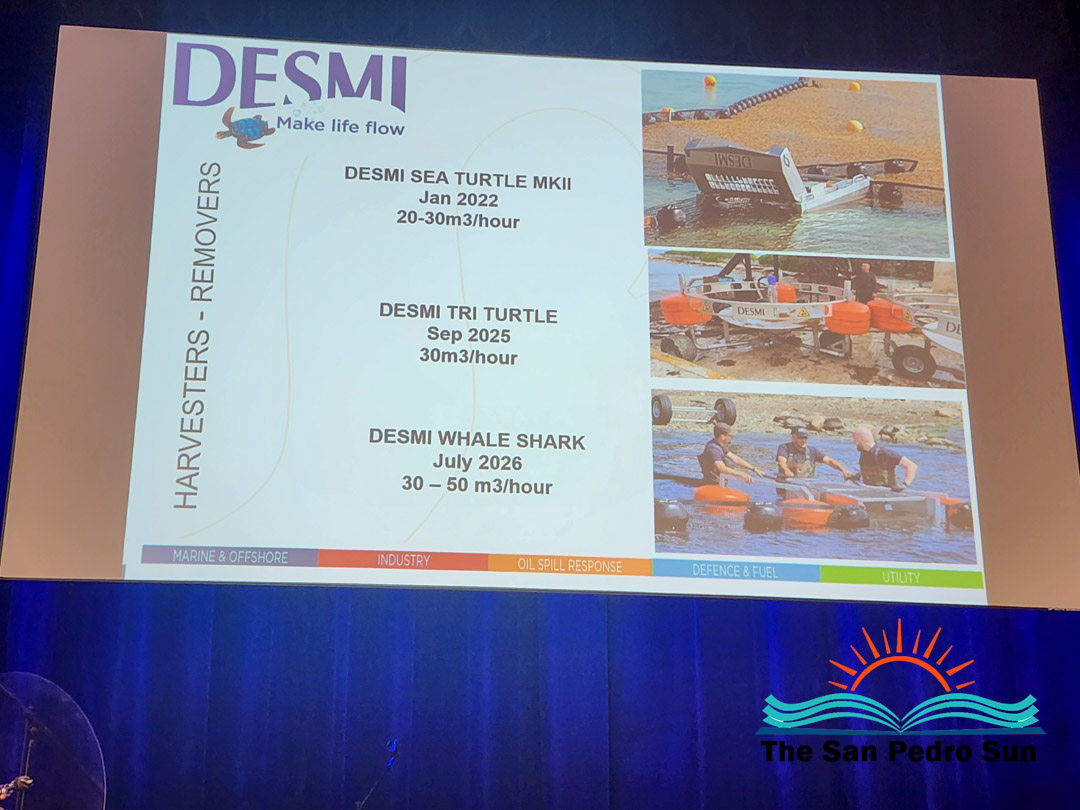
Among the equipment shown was a specialized amphibious tractor, or “Weedoo Workboats,” used to direct and load sargassum into the extraction system. Usher said early testing indicated the equipment increased the volume of sargassum that could be pumped, though he emphasized it is only one component of a larger operation.
The extraction unit uses a vortex-based system that draws in sargassum mixed with water and transfers it to a receiving station. Usher described it as operating similarly to a dredge pump, moving a slurry of water and seaweed rather than collecting dry material.
BTB also displayed tritoon platforms for moving equipment along the coast, conveyor systems for receiving the sargassum-and-water mixture, and custom transport bins. Usher said the system was designed to be scalable but acknowledged that San Pedro’s beach access, reef conditions, and boat traffic create challenges that require site-specific planning.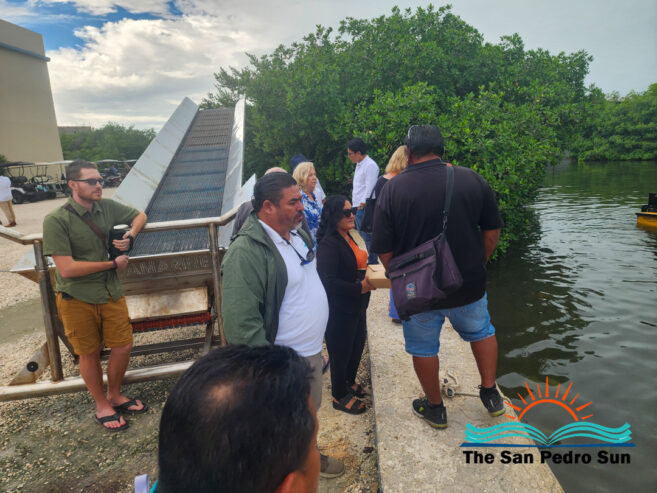
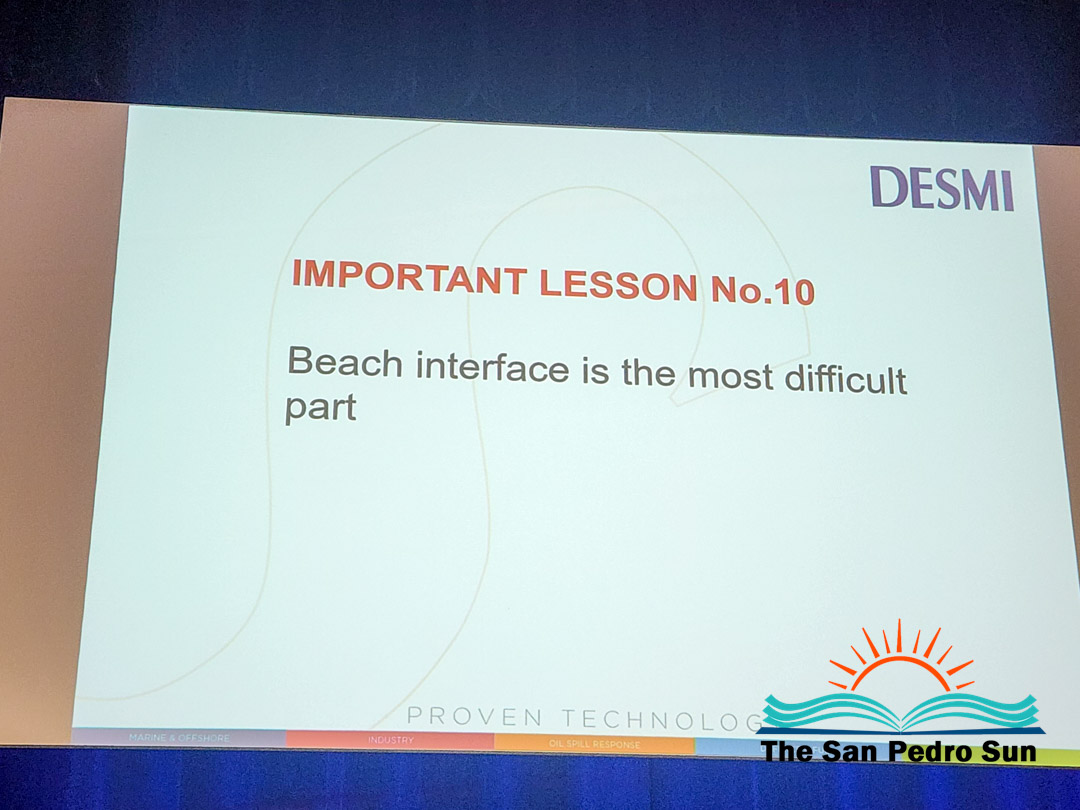
DESMI representative Rolando Chavez told attendees that booms alone cannot solve the sargassum problem. He explained that the company began its research in 2014 after the government of the Dominican Republic invited it to examine the issue. Early attempts to contain sargassum showed that it had to be removed rather than held in place.
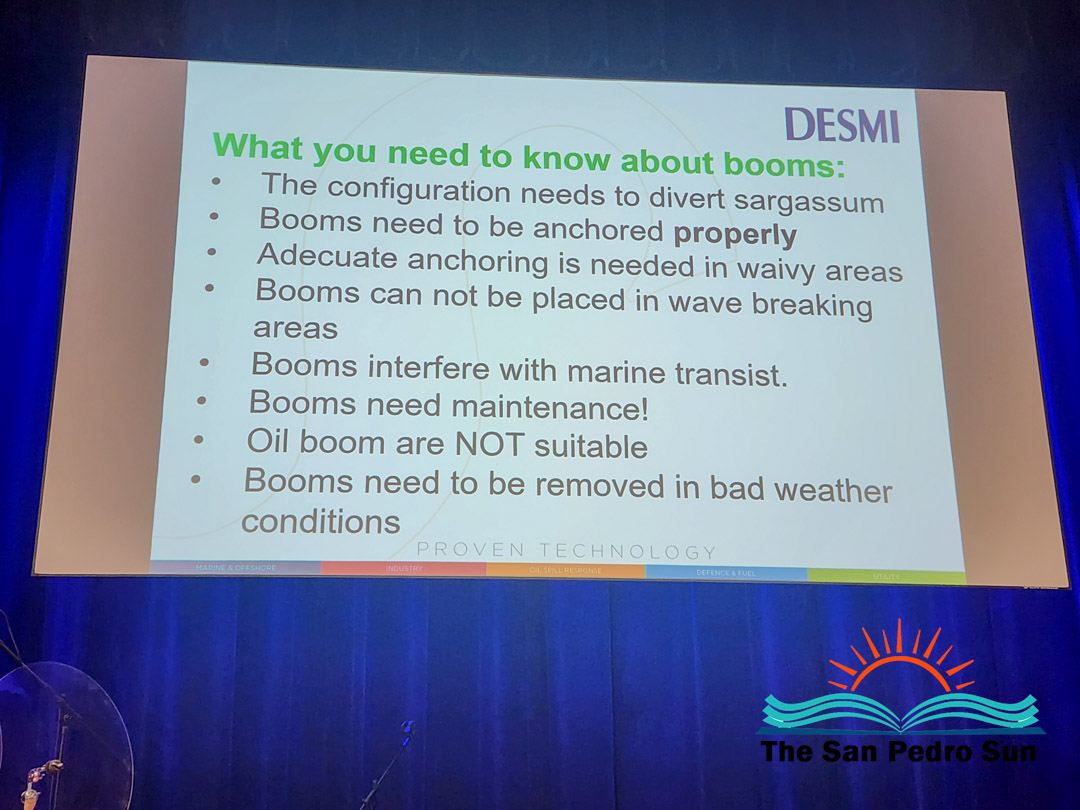
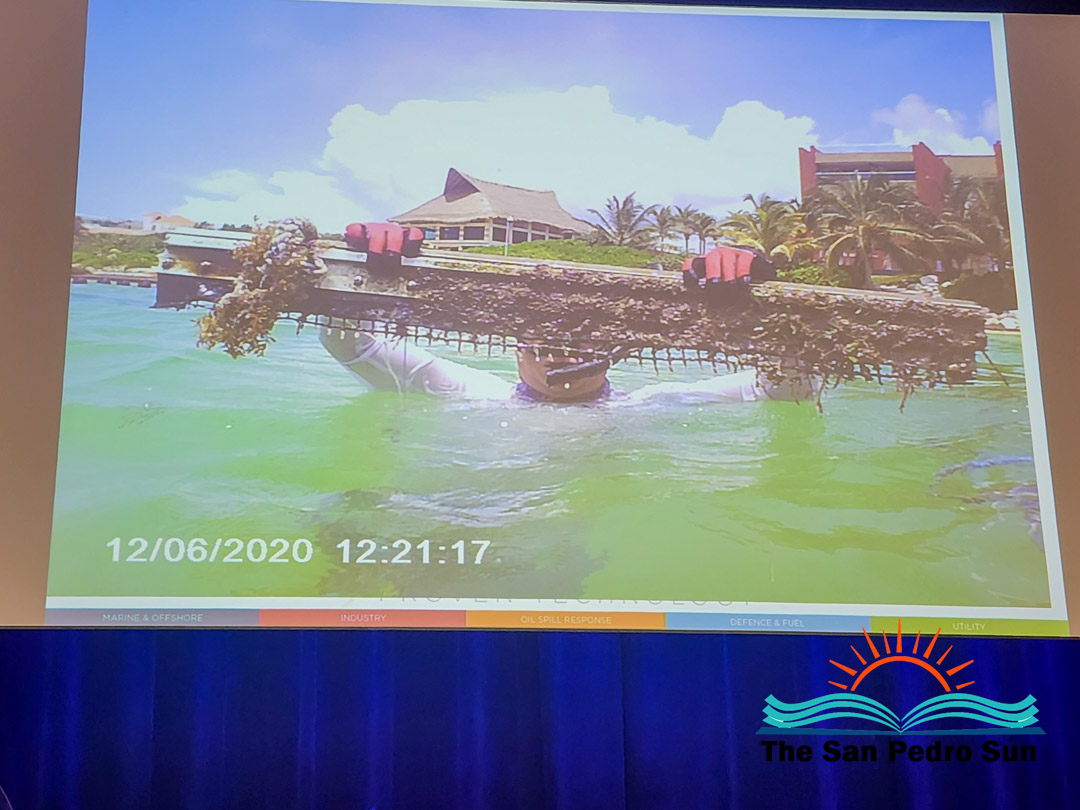
“Booms cannot contain sargassum. It is meant to be a diversion,” Chavez said. He explained that waves, currents, and sargassum’s buoyancy can push material under or around barriers, which is why a collection system must be placed at the end of the configuration.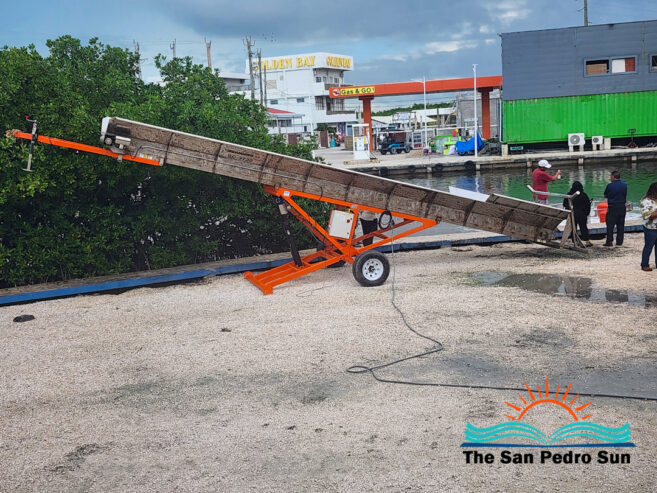
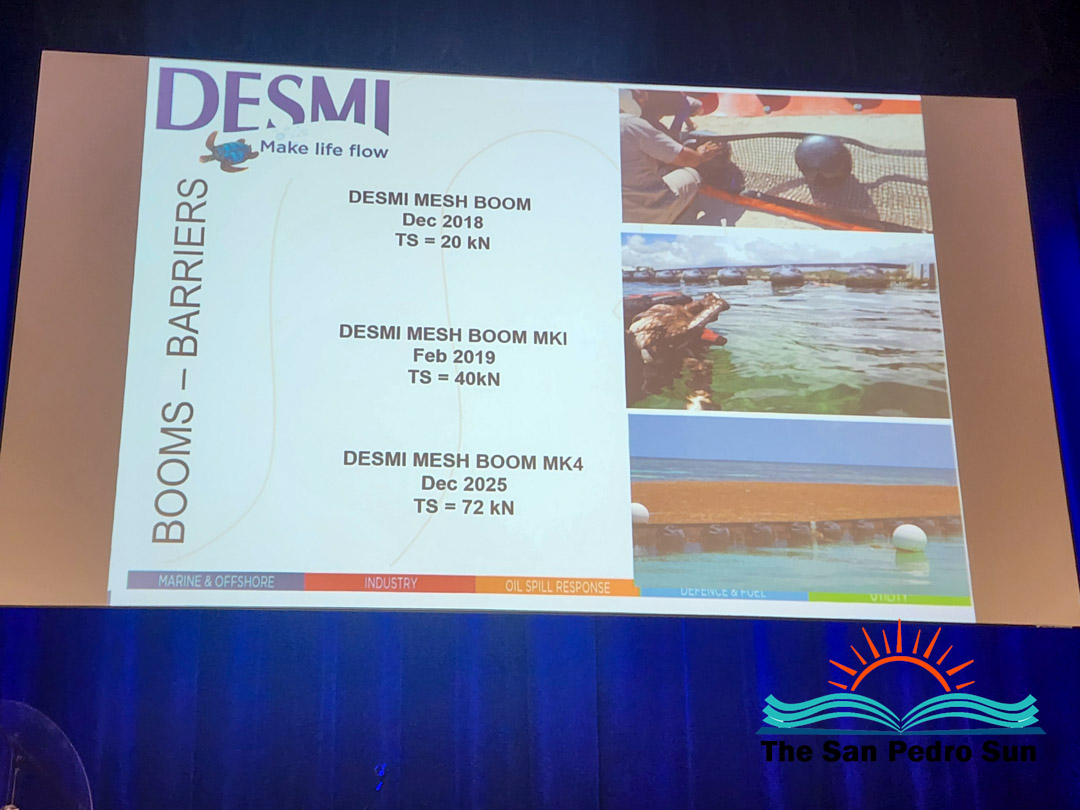
Chavez said DESMI has deployed approximately 52,000 meters, or about 32 miles, of boom in the Caribbean and that its systems are now used in 12 countries. He said the company has continued improving the strength and design of its materials, including developing heavier mesh systems for areas with stronger waves.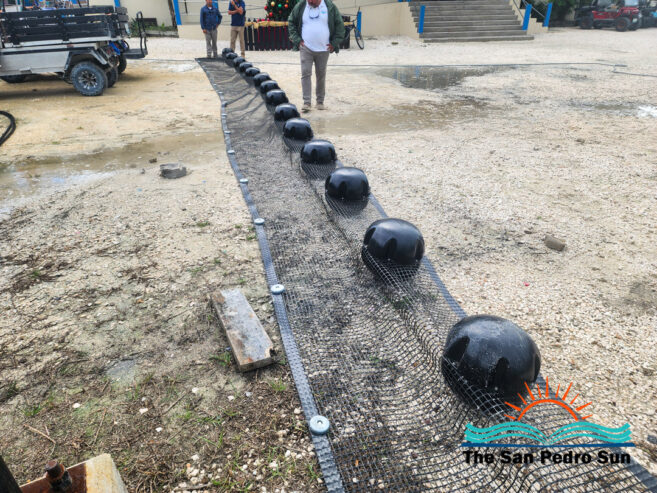
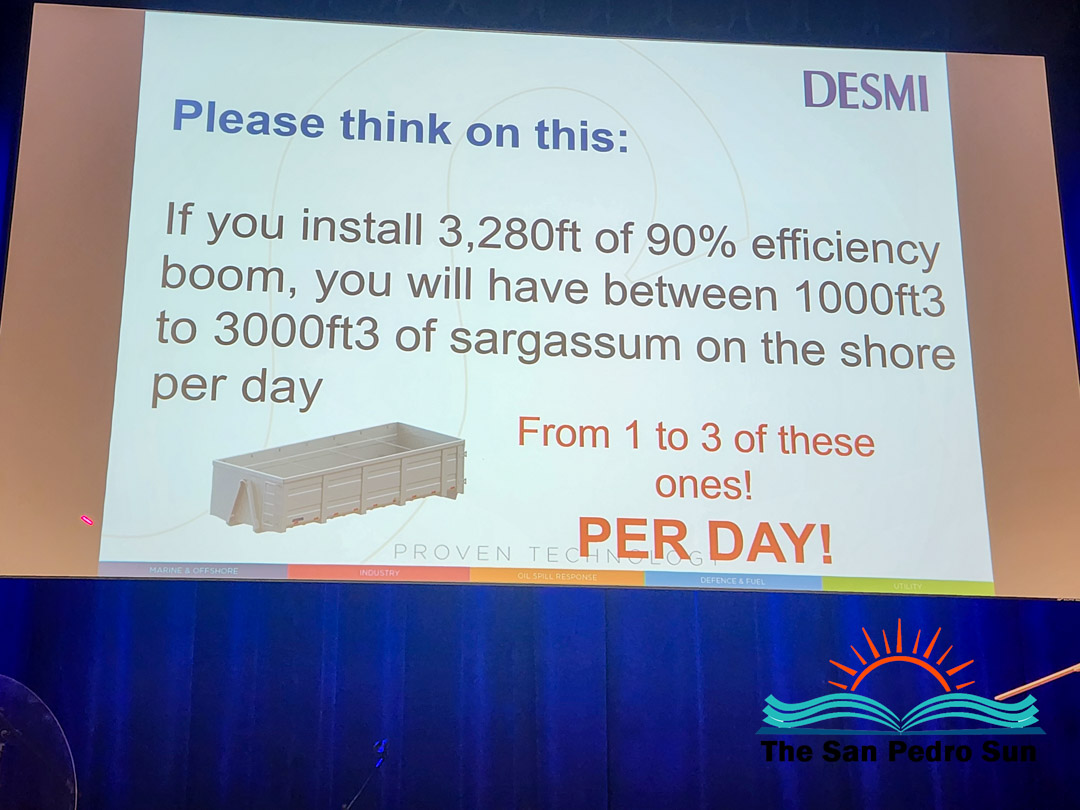
Chavez also cautioned that success depends on maintenance, coordination, and realistic expectations. “The booms are not a magical solution,” he said. Even with a boom operating at 85% to 90% efficiency, some sargassum will still reach the shore and must be removed.
Both presenters emphasized that individual properties cannot solve the problem alone. Chavez said neighboring properties need to coordinate boom placement and collection arrangements because a gap in one section can allow sargassum to accumulate and eventually reach the beach.
Usher said BTB is working with the Sargassum Task Force and several ministries to distribute resources across destinations. He said the goal is to establish at least one showcase area in each destination where the system can be tested and demonstrated.
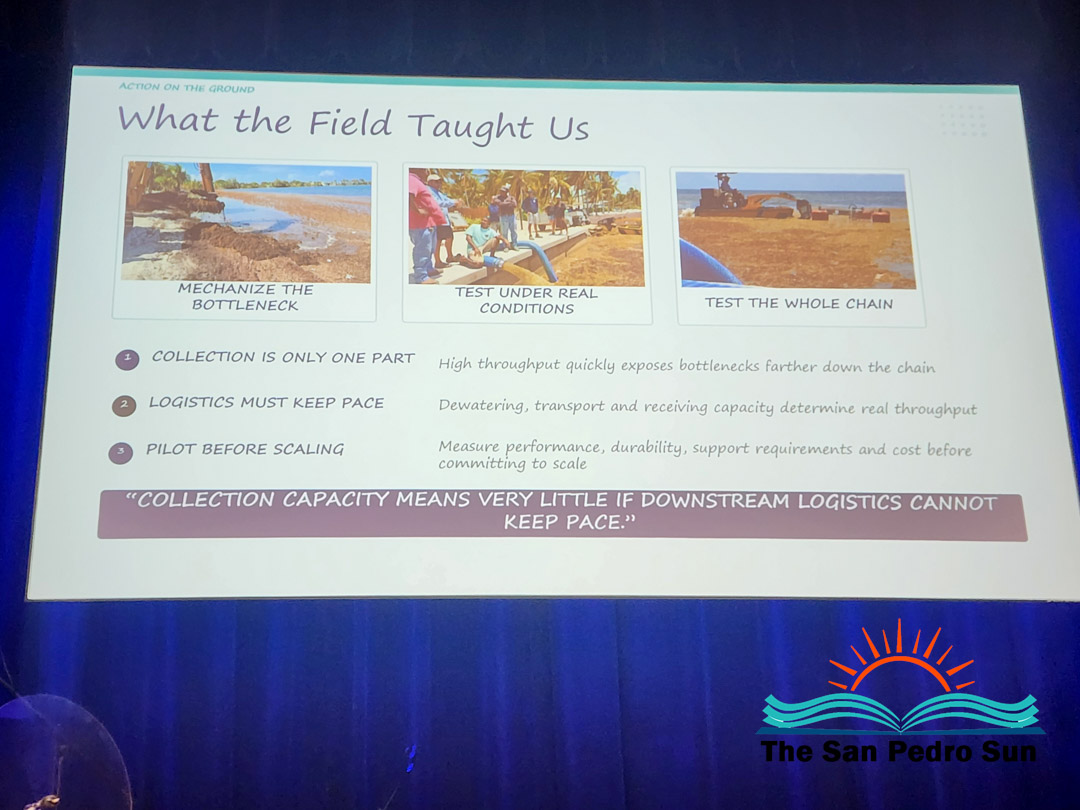
The event also highlighted the need to plan for what happens after collection. Usher said dewatering, transport, storage, and the possibility of turning sargassum into a usable product must all be considered if the system is to be sustainable. “Every single thing is connected,” Usher said. “Collection is only one part; logistics is another piece, and pilot before scaling.”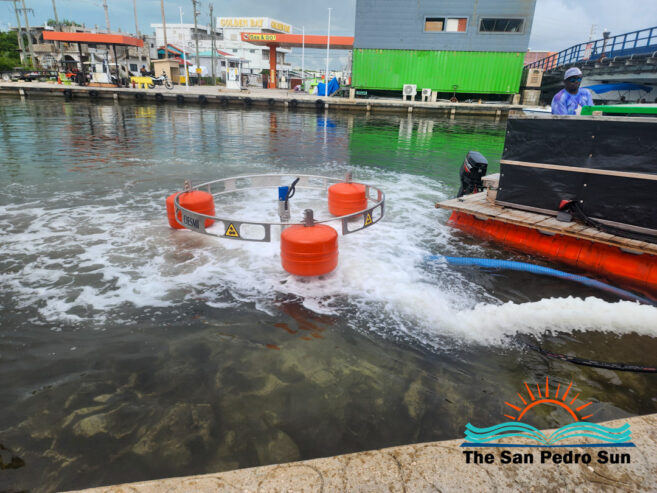
With the next sargassum season approaching, Usher urged stakeholders to begin procurement discussions. He said equipment lead times can range from three to four months, making early planning important for both government and private-sector operators.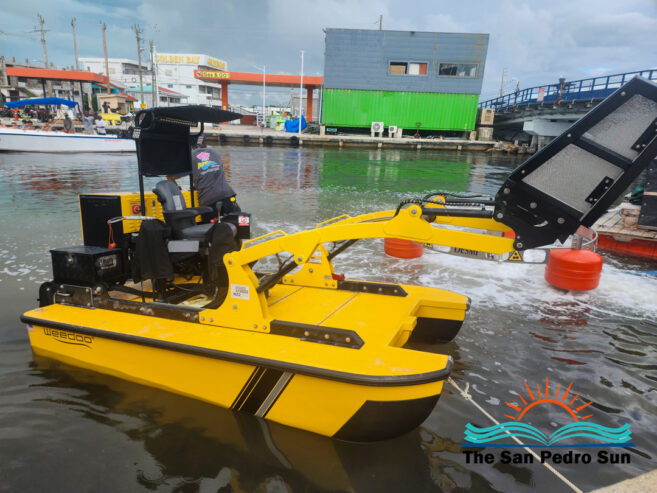
BTB plans to continue testing the system demonstrated in San Pedro and expand engagement to other destinations, including Placencia and Hopkins. Usher said a live pumping demonstration is expected in February 2027, when sargassum is more likely to arrive.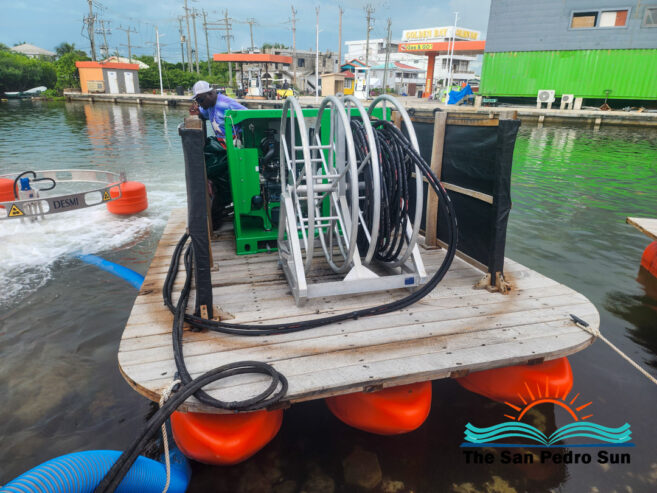
The showcase signaled a shift toward coordinated, evidence-based planning, treating redirection, extraction, dewatering, and disposal as parts of one system. For San Pedro and other coastal communities, the next test will be whether those components can work together effectively when the sargassum returns.