

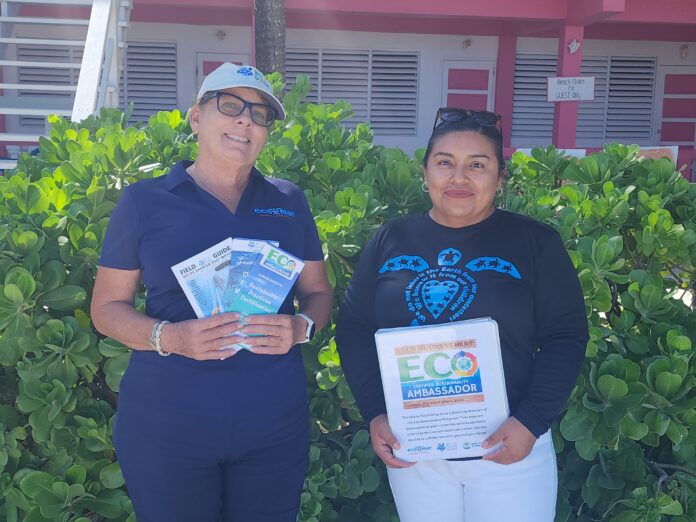
Eco Mar, a long-standing marine conservation organization, visited San Pedro Town, Ambergris Caye, from April 22nd to 24th, to promote its newly launched Eco Ambassador Program. Executive Director Linda Searle and Outreach Coordinator Bianca Chan met with local businesses during the visit, highlighting the certification initiative designed for tourism operators and coastal enterprises committed to sustainability.
The program recognizes businesses that adopt practices aligned with the United Nations Sustainable Development Goals (SDGs), aiming to foster conservation education and environmental stewardship within Belize’s tourism sector.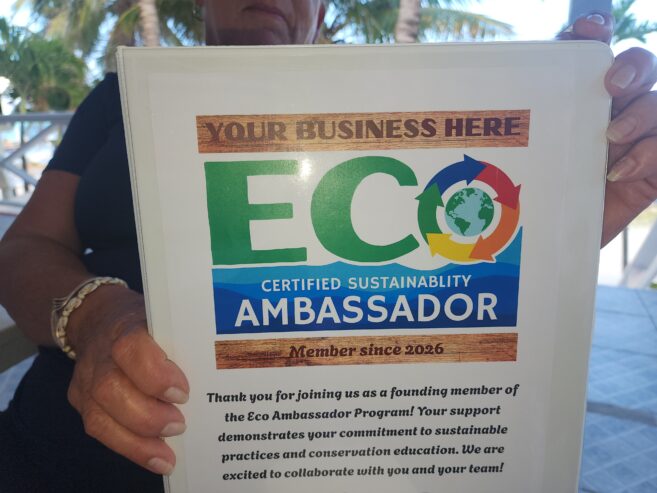
The visit focused on engaging San Pedro’s business community and encouraging enrollment in the Eco Ambassador Program. During meetings on April 22nd and 23rd, Searle and Chan distributed informational materials outlining ways businesses can incorporate sustainable practices into their operations. Applicants are required to detail their contributions to the 17 SDGs through an application process that includes a review and verification stage supported by evidence, such as community initiatives or disaster relief efforts.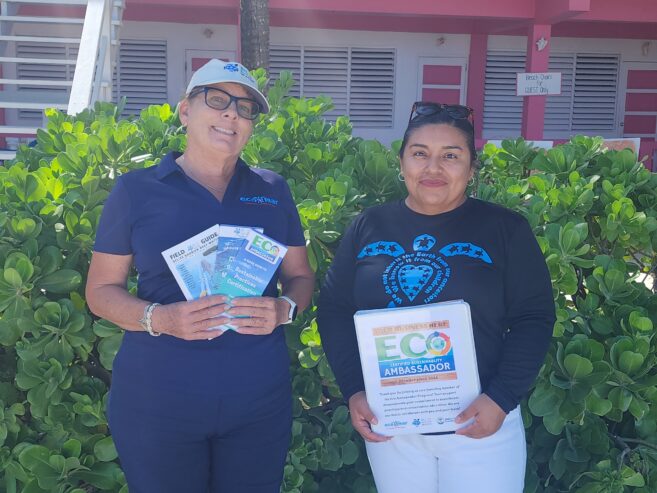
A membership fee, scaled according to business size, will help fund Eco Mar’s conservation education materials and outreach. Certified businesses will be able to showcase their sustainability efforts and access training opportunities, including in-person sessions, presentations, and an e-learning course narrated by Chan. For tour operators, this also includes access to water-resistant marine life field guides for staff and guest education.
Eco Mar has operated since 1996 and is primarily funded by grants from organizations including the World Wildlife Fund for Nature (WWF), The Nature Conservancy, Protected Areas Conservation Trust (PACT), and the Global Environment Facility Small Grants Program. Its work includes the Coral Watch program, launched in 2008; lionfish response initiatives in 2009; Turtle Watch efforts; and the revitalized Belize Barrier Reef Watch program, introduced in 2022.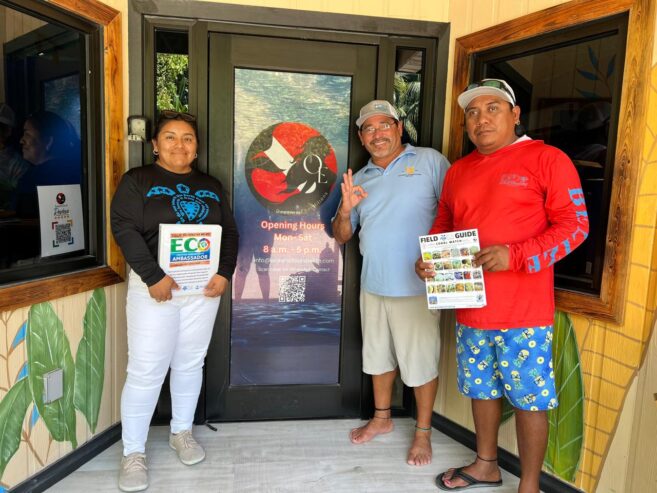
The citizen science program has expanded beyond coral monitoring to include reports on stranded marine mammals, sargassum influxes, discarded fishing gear, sharks, rays, lionfish culls, and whales. According to Searle, the shift was necessary to engage the public better, as coral-focused reporting alone proved less accessible. Data collected is compiled into a database used by protected area managers to identify critical habitats, including pillar coral sites and manatee areas at the North Cut of Caye Caulker, which fall outside designated protected zones.
Additional initiatives include Reef Champion memberships for individuals such as tour guides and fishers, enabling them to submit observations, adopt beaches or reef areas, and participate in conservation challenges. Eco Mar also supports action camera programs for fishers, sea turtle rehabilitation, and the creation of 12 Turtle Watch community groups. The organization collaborates with the Belize Fisheries Department, Hol Chan Marine Reserve, and the Caribbean Coral Reef Monitoring Network to help address research gaps.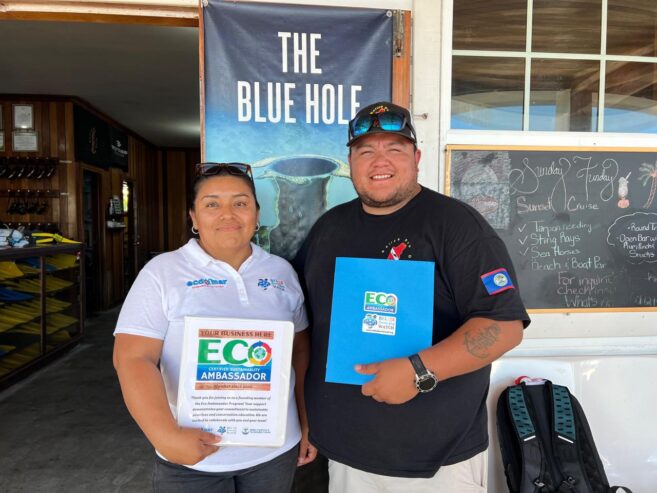
In an interview on April 23rd, Searle emphasized the importance of highlighting sustainable efforts already taking place. “A lot of people are implementing sustainable practices, but many are not showcasing them on their social media channels,” she said. “It’s important to highlight these efforts and continue conservation education so we can build more environmental stewards together.”
Chan added that the program offers recognition for businesses, training for staff on reef knowledge and sustainability, and increased visibility among eco-conscious travelers. She noted that membership fees also help sustain outreach efforts, retain full-time staff, and produce educational materials.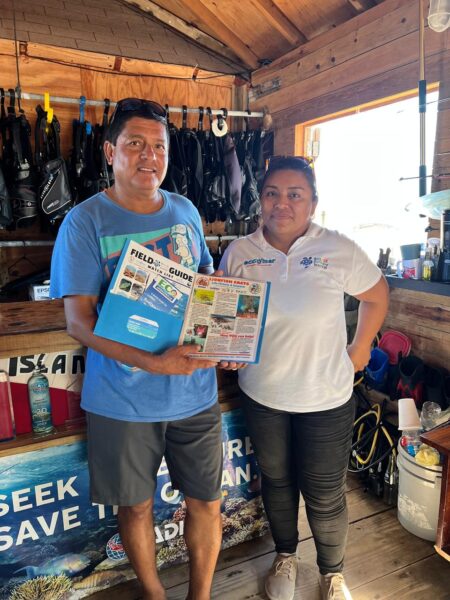
Eco Mar aims to recruit at least 50 new Eco Ambassadors within six months, doubling its current network and strengthening operations beyond grant dependency, including support from initiatives such as the Belize Fund project. The expansion is expected to enhance reef monitoring, youth engagement at the Saint George’s Caye interpretive center, and turtle conservation efforts, particularly by addressing challenges such as artificial lighting affecting hatchlings and sargassum accumulation along shorelines.
If successful, the initiative could further encourage sustainable tourism practices in San Pedro, support informed decisions on protected area expansion, and contribute to the long-term health of Belize’s reef system, one of the country’s most valuable natural resources.
Share
Related Articles
Read more