

A skinned permit (Trachinotus falcatus), one of Belize’s protected sport fish species, was discovered on June 22nd within a quarter mile of a fish trap in waters off Ambergris Caye, raising concerns about the illegal harvesting of a species considered vital to the country’s catch-and-release sport fishing industry. The Belize Flats Fishery Association (BFFA) reported that a fly-fishing guide photographed the remains while on a fishing trip near one of the island’s fish shops and alerted both the association and the Belize Fisheries Department.
According to the BFFA, the permit had been intentionally skinned and showed signs of being deliberately butchered rather than dying accidentally. The association said the fish’s proximity to a known fish trap and the condition of the carcass suggest it may have been illegally captured and processed. BFFA officials have called on the Fisheries Department to investigate the incident and are urging members of the public to report anyone caught killing, selling, or possessing these protected species.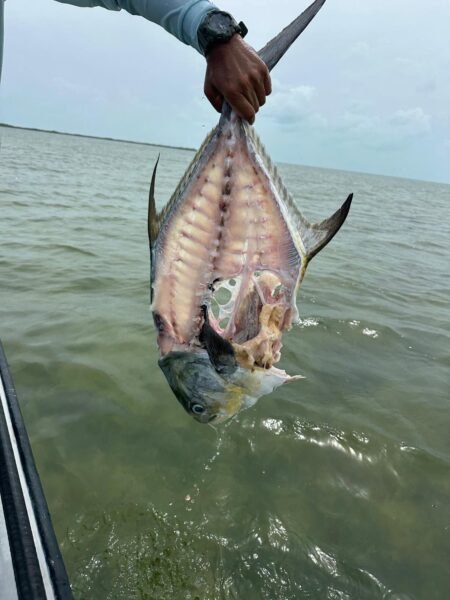
Permits are protected under Belizean law because of their ecological importance and their value to the country’s catch-and-release sport fishing industry. The species attracts international anglers and supports a wide range of tourism-related businesses, including fishing guides, lodges, charter operators, and other local enterprises. According to the BFFA, Belize’s flats fishery contributes significantly to the coastal economy, with permit among the most sought-after species by visiting fly fishers.
BFFA President Eworth Garbutt said stronger enforcement and public education are needed to prevent similar incidents. “It’s detrimental to see that our very bread and butter—the resource we depend on—is being extracted. A lack of enforcement is one of the main causes of situations like this,” Garbutt said.
He added that the association is working to install educational signage throughout San Pedro and is meeting with Coastal Zone authorities to address increasing reports of permit, tarpon, and bonefish being illegally harvested. “This sport fishery generates more than two hundred million dollars annually,” Garbutt said, referencing previous economic studies. He also emphasized proper catch-and-release practices, noting that the permit should remain out of the water for “no more than three seconds” when being photographed before being released.
Speaking exclusively to The San Pedro Sun on June 24th, the BFFA’s San Pedro office manager said the fly-fishing guide who discovered the fish documented clear evidence that it had been intentionally filleted and butchered.
The office manager also highlighted the long-term economic value of preserving permit populations. “That permit has probably been caught and released multiple times by fly-fishing guides, generating repeated trips, tips, and income for the local economy,” the manager said. “One illegally harvested fish represents much more than a single loss—it affects an entire sustainable industry.”
The manager added that the incident also underscores enforcement gaps, noting that San Pedro currently lacks a dedicated Fisheries Department officer stationed on the island.
The BFFA said it will continue to press the Fisheries Department to investigate the incident while expanding public awareness efforts about the importance of protecting permit and other flatfish species. Association leaders warned that without stronger enforcement and greater community education, illegal harvesting could threaten the long-term sustainability of Belize’s flats fishery and the tourism economy that depends on healthy populations of permit, tarpon, and bonefish.
Protected Permit Found Skinned Prompting Calls for Stronger Fisheries Enforcement
Share
Related Articles
Read more