

The Sargassum situation in San Pedro Town, Ambergris Caye, has reached a level that has prompted the San Pedro Town Council (SPTC) to issue a Red Phase warning. Mats of seaweed continue to drift ashore daily. While authorities are doing their best to remove it from the beaches, some experts suggest that the most effective approach is to collect Sargassum before it reaches the shoreline.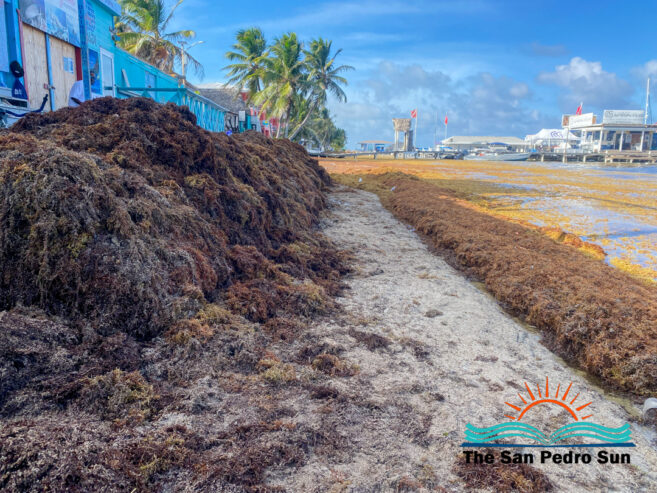
A few months ago, the Hol Chan Marine Reserve deployed Sargassum harvesters to collect some of the seaweed at sea. However, the equipment is not currently in operation, leaving beach clean-ups as the primary response. The SPTC continues efforts to keep beaches clear, particularly in the downtown area.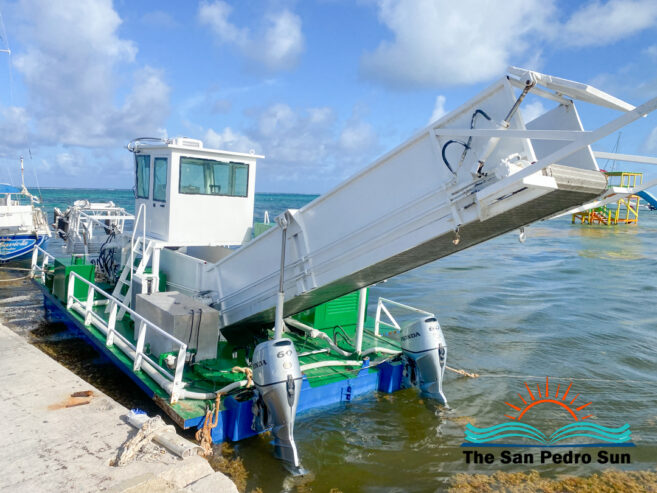
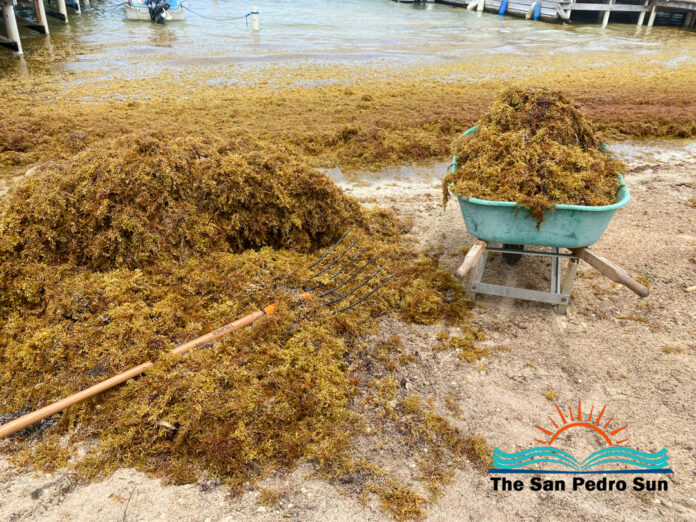
Science Advisor Valentine Rosado told the media that the increasing volume of Sargassum is demanding more labor and resources to keep up with the influx. He said the Red Phase declared by the SPTC signals that the community needs all available assistance to tackle the issue. “We need external support; we need as many people as possible to assist with the clean-ups,” Rosado said. “At the moment, there is no alternative to clean-up. We just need to get it out of the water.”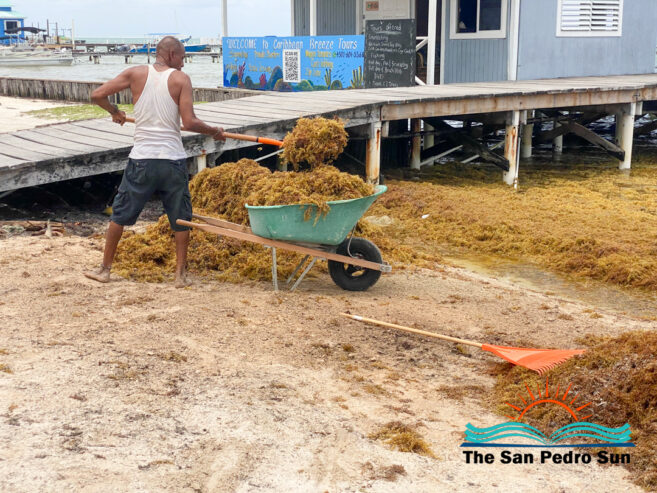
He added that the council is in discussions with private landowners to establish composting and disposal sites. Beachfront property owners are also being encouraged to assist with clean-up efforts, as Sargassum often accumulates and decomposes in areas not reached by municipal crews. The rotting seaweed releases hydrogen sulfide gas, which can pose health risks to residents and visitors.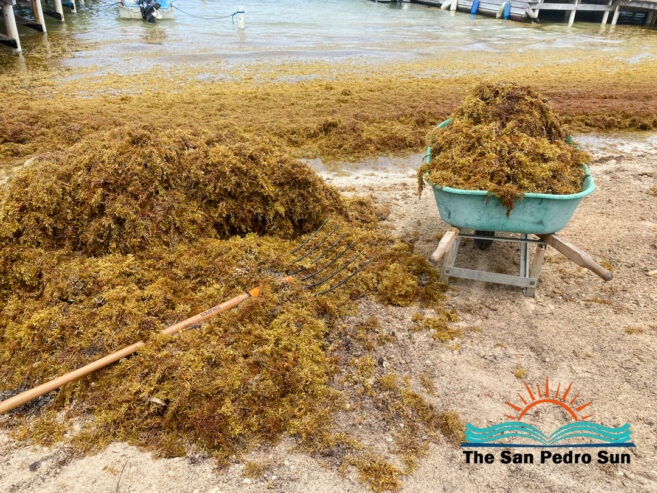
Chief Meteorologist Roald Gordon said several large mats of Sargassum continue moving toward the northern cayes. According to Gordon, recent satellite models indicate that Ambergris Caye and Caye Caulker could experience significant impacts in the coming days. “San Pedro and Caye Caulker are looking at possible major impacts,” Gordon said.
Speaking with The San Pedro Sun, Mike Hawkins, author of the book The Ocean Doesn’t Care About Politics, said he has followed the issue for years and believes alternative approaches should be considered. His book examines challenges facing the world’s oceans, including coral reef decline, fisheries pressure, and the rapidly expanding Sargassum crisis, while exploring why many current response strategies have fallen short.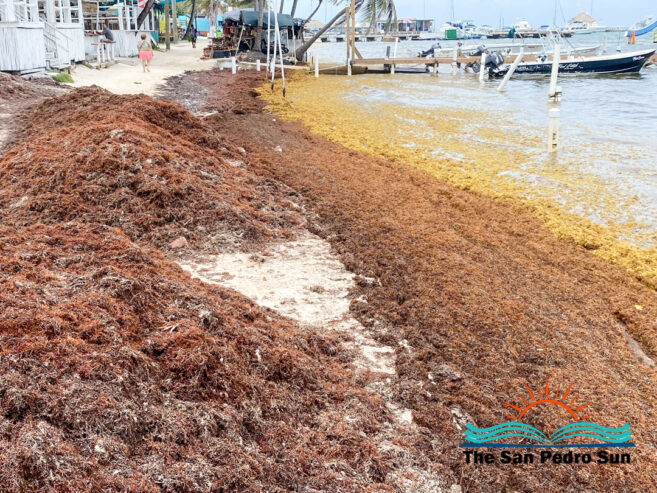
Hawkins noted that governments and organizations spend substantial amounts of money each year on heavy equipment, maintenance, clean-up operations, and disposal costs. “But the spending never ends because the problems never stop,” he said. “At the same time, new research shows beach clean-up workers are being exposed to hydrogen sulfide gas released by decomposing Sargassum, creating serious health concerns. Meanwhile, beaches continue to erode.”
According to Hawkins, beach clean-up efforts are not a long-term solution but rather a form of damage control. He argued that the ocean does not respond to press releases, budgets, or political talking points but instead to environmental systems. “Until we begin treating Sargassum as a systems challenge rather than a beach clean-up challenge, we should expect costs to continue rising while results continue to disappoint,” Hawkins said.
He pointed out that most studies and response efforts begin only after the Sargassum has already arrived on shore. By that stage, reefs may have been affected, seagrass habitats stressed, tourism disrupted, communities burdened with additional costs, and workers exposed to potentially harmful gases.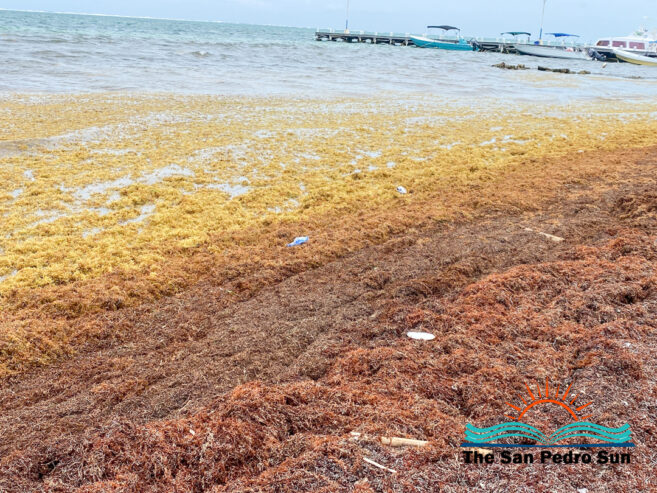
While these suggestions have sparked discussion, local authorities maintain that the most practical approach at present is to remove the seaweed from beaches as quickly as possible after it arrives. The task remains challenging due to a limited workforce, and despite ongoing efforts, officials acknowledge that some days the volume of incoming Sargassum overwhelms clean-up operations.
Minister of Tourism, the Honorable Anthony Mahler, said on June 9th that Belize must address Sargassum as a regional issue. “I do not think we have worked on this collectively and with the science behind it to see how we can deal with it,” Mahler remarked.
Share
Related Articles
Read more