

The Government of Belize is seeking an initial US$10 million from the World Bank to address the sargassum problem, which has significantly affected coastal communities and the tourism sector. Discussions are also underway with the Inter-American Development Bank (IDB) on potential support for sargassum management and opportunities to use the seaweed for electricity generation and other commercial purposes.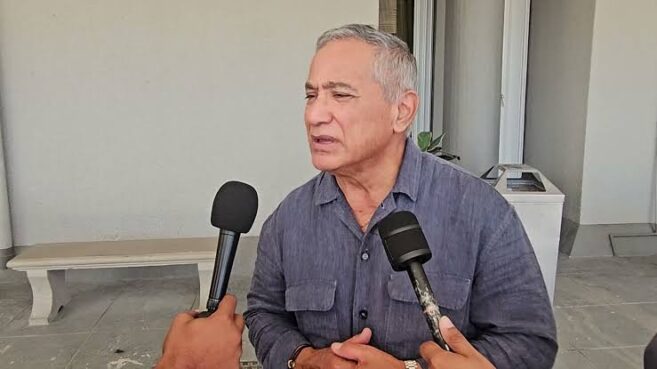
Prime Minister Honorable John Briceño announced the World Bank funding efforts on October 20th, as sargassum arrivals along Belize’s coastline begin to decrease. He told reporters that the overall goal is to secure approximately US$20 million.
“We are working on getting the first US$5 million, and then we are hoping to get an additional five million,” Briceño said. The prime minister, who had been on a working visit abroad, said sargassum was one of three key issues he raised with World Bank officials.
Briceño explained that sargassum is affecting Belize and other Caribbean countries. He identified climate change as one factor contributing to increased blooms in recent months. “I pointed out to all these officials that we did not create this problem,” he said.
The government is seeking low-interest financing and longer repayment periods to support efforts to address the problem.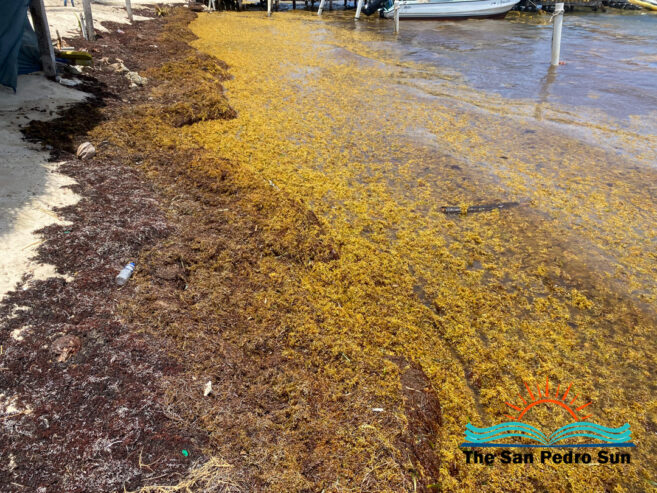
According to an October 13 government press release, Briceño also discussed sargassum with IDB President Ilan Goldfajn during a bilateral meeting held on the margins of the World Bank-International Monetary Fund Annual Meetings in Bangkok, Thailand.
During those discussions, Briceño described sargassum as a national and regional crisis with health, environmental, and economic consequences, particularly for tourism destinations such as San Pedro and Hopkins. Belize called for greater recognition of sargassum as a disaster risk and highlighted ongoing and planned investments in offshore collection, renewable energy solutions, carbon-credit opportunities, and by-product development.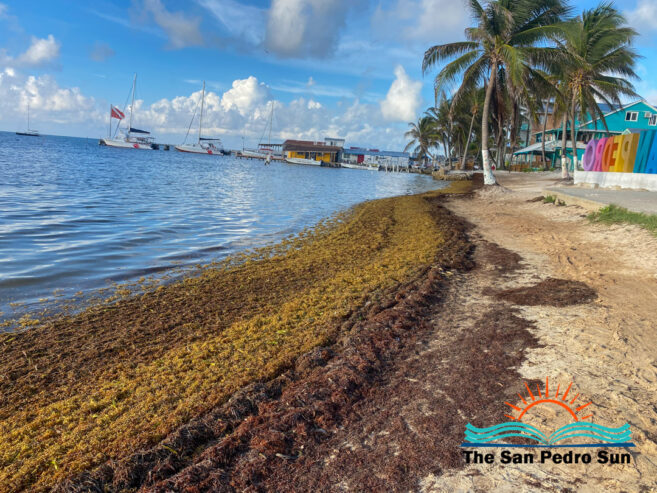
Briceño said the government is consulting with the private sector on using sargassum by-products for electricity generation and broader waste-to-energy initiatives. Goldfajn acknowledged the regional scope of the problem and said the IDB is willing to engage its technical teams to explore possible support mechanisms. The release did not announce a funding commitment or specify an amount.
Meanwhile, the National Meteorological Service’s latest forecast indicated that sargassum arrivals along Belize’s coastline are beginning to decrease. However, scattered mats could still affect coastal destinations over the next few days.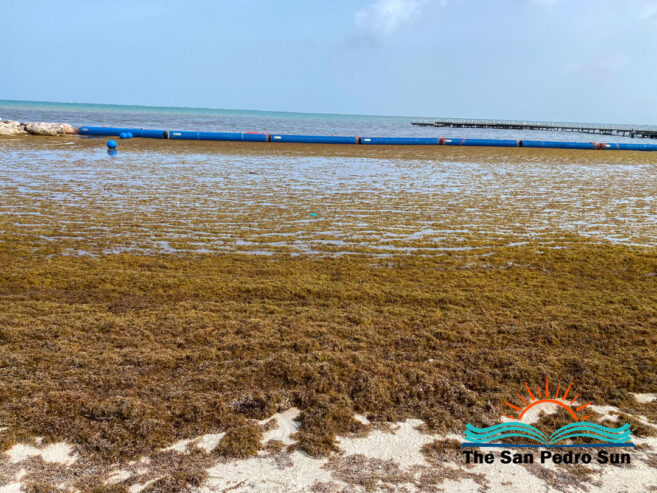
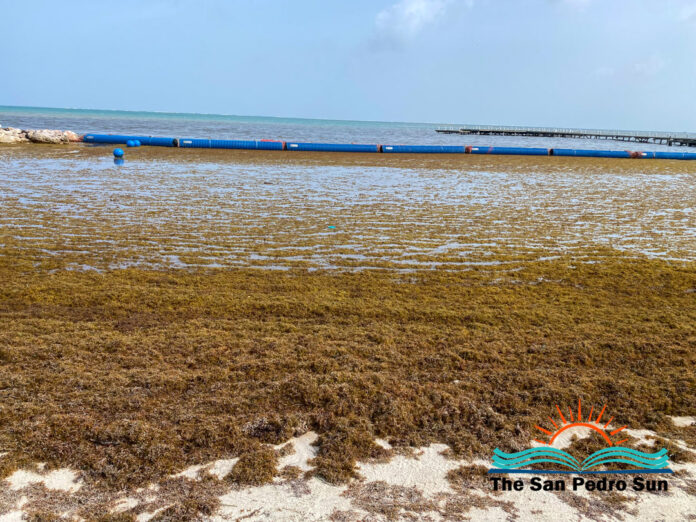
In recent months, large quantities of sargassum have accumulated along Ambergris Caye’s eastern shoreline. Restaurants reported fewer reservations and financial losses due to the unpleasant odor from decomposing seaweed. Beachfront hotels also reported cancellations linked to the conditions.
Community members organized beach clean-ups, while the San Pedro Town Council (SPTC) hired additional personnel to clear downtown beaches. The council said it has been spending about $45,000 weekly on labor and equipment to remove sargassum from the island’s beaches.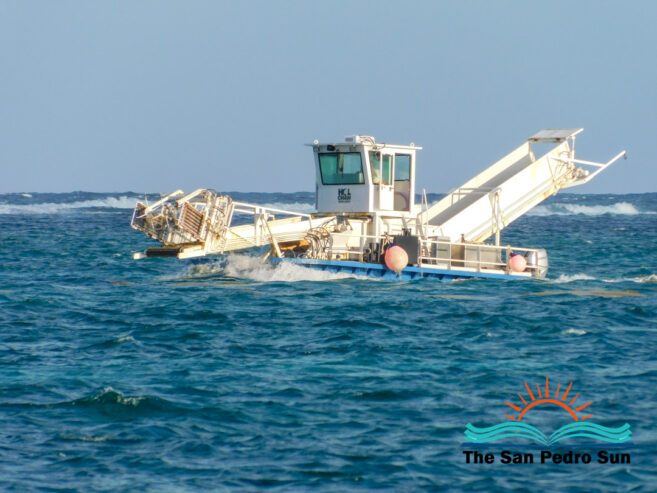
The council introduced two sargassum harvesters in San Pedro in April 2025 to intercept and collect the seaweed offshore. The Hol Chan Marine Reserve acquired the machines through a loan from the Belize Social Security Board. They operated for a few months but have recently been out of operation.
Area Representative Honorable Andre Perez said the harvesters performed well but noted that the initiative’s success depends on cooperation among stakeholders, including the town council and the private sector. He said these partnerships are essential to expanding and sustaining the project.
The government has yet to outline how it would allocate the proposed World Bank funding or when it expects to secure the financing. Potential IDB assistance remains under exploration, including support for initiatives that could turn collected sargassum into a usable resource.
Share
Related Articles
Read more