
 is conducting nationwide consultations on proposed legislative reforms.)
The Belize Social Security Board (SSB) is conducting nationwide consultations on proposed legislative reforms. The sessions, which engage stakeholders across the country, reached San Pedro Town, Ambergris Caye, on April 21st. Officials explained that the proposed changes aim to ensure the system remains relevant, equitable, and sustainable for future generations.
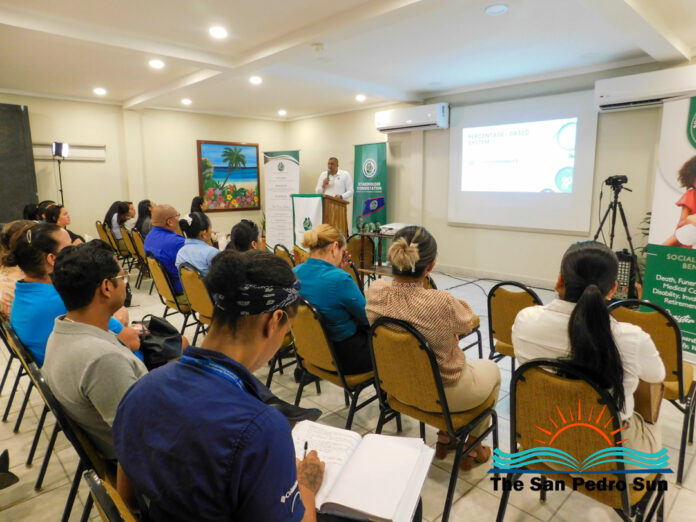
Held at the Sunbreeze Hotel conference room, the session brought together dozens of stakeholders from San Pedro and Caye Caulker. SSB Chief Executive Officer Jerome Palma delivered a comprehensive presentation outlining the proposed amendments. Palma explained that the reforms include shifting from a wage-based system to a percentage-based system that calculates contributions based on actual earnings, as well as increasing the contribution floor. “We have a strategic plan that involves key modernization through legislative changes,” Palma said. “There is a proposal to increase the contribution floor from the current $55 to $130 per week.” He added that this strategic approach is expected to be implemented over the next five years.
Palma noted that the proposed changes aim to improve administration and better align contributions and benefits with individuals’ actual earnings. “It’s a structural shift because the current system was set up in 1981 with a fixed wage-based structure. With today’s technology, we can implement a system based on actual earnings within a defined range,” he explained. He added that similar systems have already been adopted in other countries and are expected to provide a more effective and equitable framework.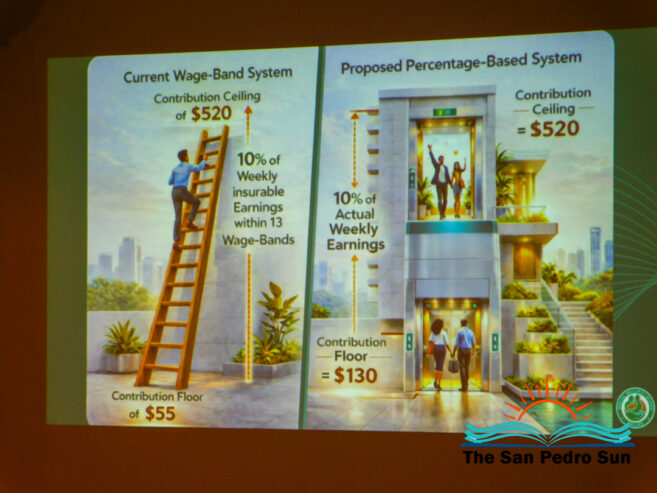
Many attendees described the presentation as informative and expressed support for the proposed amendments. Questions about pensions were also raised during the session. Palma explained that pension benefits are paid for the recipient’s lifetime and may be transferred to a legal spouse or dependent upon the recipient’s death.
The presentation concluded by emphasizing the benefits for employers, noting that the proposed system would improve efficiency through a more modern, streamlined approach. It is expected to provide a more equitable structure for both employees and employers and to ensure a more predictable application of contribution rates.
Share
Related Articles
Read more