

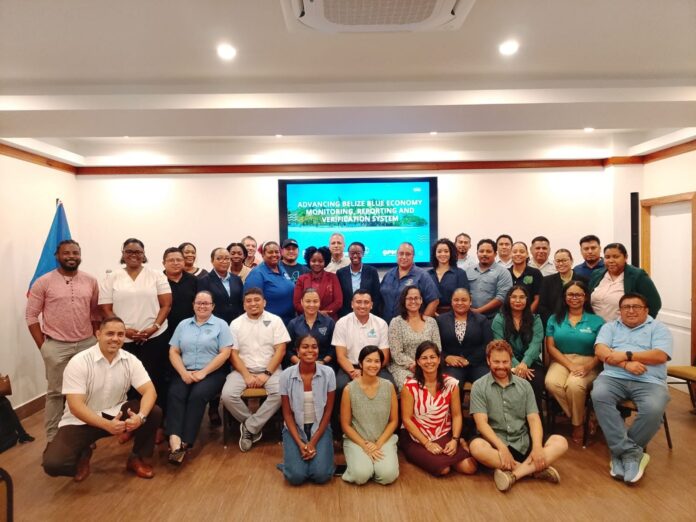
Press Release – Belmopan, September 4, 2026. The Government of Belize, through the Blue Bond and Finance Permanence Unit (BBFP) within the Office of the Prime Minister, in coordination with the Ministry of Blue Economy and Marine Conservation, and in partnership with the Inter-American Development Bank (IDB) and Stanford University’s Natural Capital Alliance (NatCap), convened an interactive stakeholder workshop to advance the development of Belize’s Blue Economy Monitoring, Reporting and Verification (MRV) System.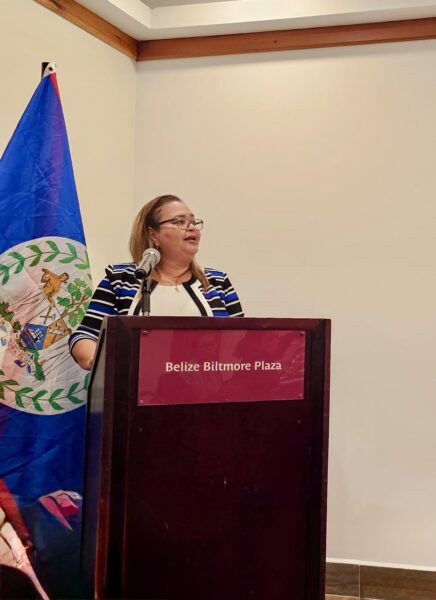
The workshop brought together representatives from Government, technical institutions, civil society, academia, non-governmental organizations, the private sector, and development partners to develop and validate practical methodologies for measuring priority Blue Economy indicators. The initiative is intended to ultimately become a nationally owned, institutionalized, and operational MRV system that can support Belize’s long-term ocean governance, conservation, and sustainable development priorities.
Building on work initiated in 2025, this phase focuses on establishing how priority indicators will be measured, validated, and tracked over time. Discussions centred on three areas: ecosystem health and extent; people protected from coastal hazards; and Blue Economy jobs and livelihoods.
Taken together, these indicators are intended to capture both the condition of Belize’s marine and coastal ecosystems and the benefits those ecosystems generate for people, including coastal protection, livelihoods, and economic opportunities. They reflect the broader role of Belize’s marine and coastal resources in national development. Coral reefs, mangroves, seagrass beds, and other coastal ecosystems are not only important for biodiversity but also serve as productive national assets and natural infrastructure, supporting tourism, fisheries, livelihoods, food security, and protection from coastal hazards.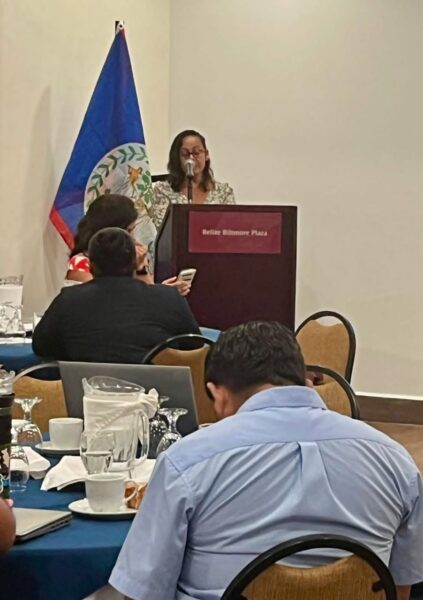
The workshop examined methodologies for monitoring the health and extent of coral reefs and mangroves, including habitat mapping, key stressors, and validation approaches, while recognizing existing data gaps for seagrass. Participants also considered the use of the InVEST Coastal Vulnerability model to better understand the number of people benefiting from the protective function of coastal ecosystems, as well as a proposed jobs monitoring tool to strengthen information on employment and economic opportunities generated through Belize’s Blue Economy.
For the Government of Belize, the importance of the MRV system goes beyond data collection. It is about ensuring that investments and interventions across Belize’s coastal and marine areas can be translated into measurable and verifiable results on the ground for both nature and people.
Importantly, this work supports the Government’s People-Centric Conservation Agenda by strengthening the connection between the health and functional integrity of Belize’s natural assets and the well-being, resilience, and livelihoods of Belizeans. Sustainable management of Belize’s ocean must ultimately translate into tangible benefits and opportunities for its people.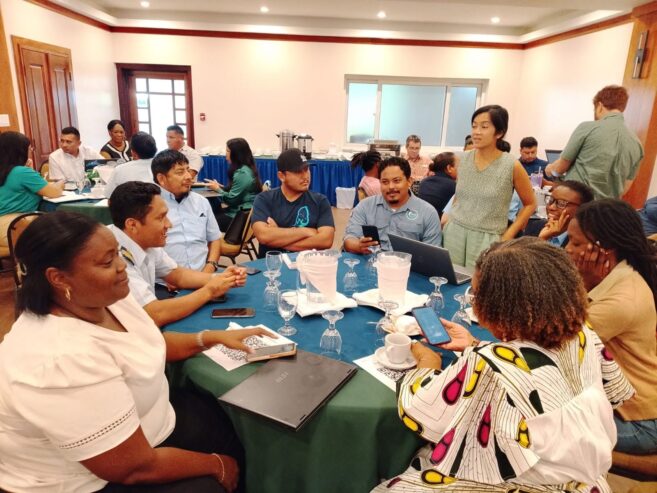
The MRV system will also help Belize better assess whether investments under the Belize Blue Bonds and other conservation and Blue Economy programmes are producing healthier ecosystems, greater coastal resilience, stronger livelihoods, and meaningful benefits for communities.
As Belize increasingly seeks public, private, concessional, and results-based financing for its Blue Economy, credible measurement and verification will also be critical to demonstrating performance, impact, and value for money. A strong national MRV system can help connect investment to measurable outcomes, strengthen accountability, and support Belize’s ability to develop a pipeline of credible and bankable Blue Economy investments.
The workshop forms part of the broader Government-led Blue Economy MRV initiative supported by the IDB and Stanford’s Natural Capital Alliance, with the BBFP serving as the executing agency. Complementary financial support for the delivery of the workshop was also provided through the Resilient Bold Belize (RBB) GEF-8 Blue and Green Islands Integrated Program Child Project, contributing to work on ecosystem services modelling, statistical analysis, and strengthened national capacity for assessing Belize’s marine and coastal ecosystems.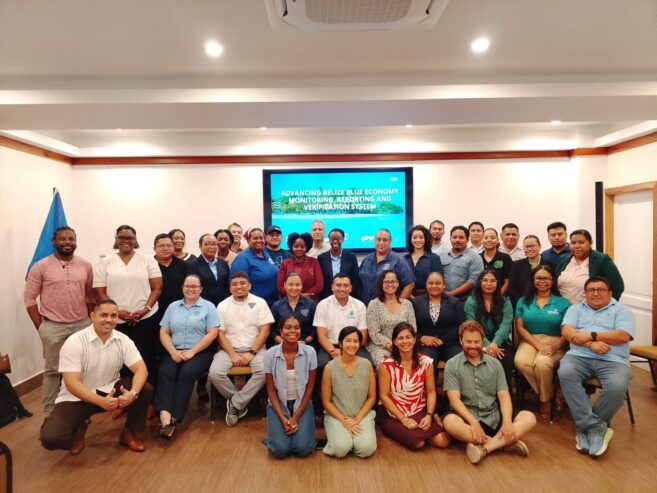
Through continued collaboration between the Office of the Prime Minister, the Ministry of Blue Economy and Marine Conservation, national technical agencies, development partners, and stakeholders, Belize is strengthening the foundation for an MRV system that is nationally owned, scientifically credible, and capable of supporting better decision-making to inform policy and investment, strengthening
accountability, and guiding more strategic financing, while delivering long-term benefits for people, nature, and the country’s future resilience and prosperity.
Share
Related Articles
Read more