

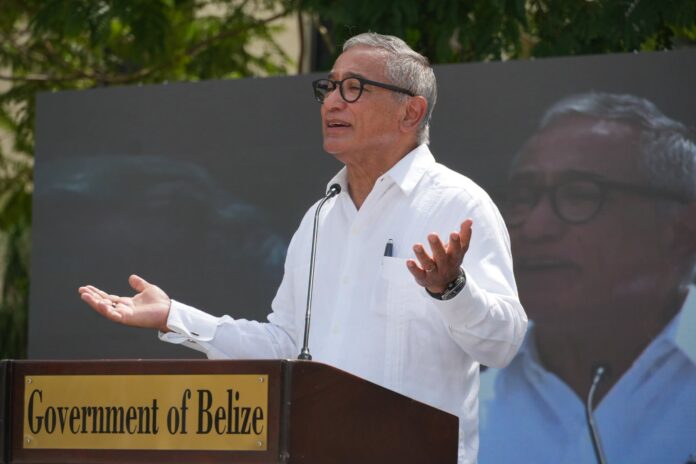
On Tuesday, September 15th, Prime Minister Honorable John Briceño delivered the annual State of the Nation Address in the capital, Belmopan. The ceremony included an inspection of the Guard of Honor, the raising of the Belizean flag, speeches, and the introduction of 45 newly naturalized Belizeans.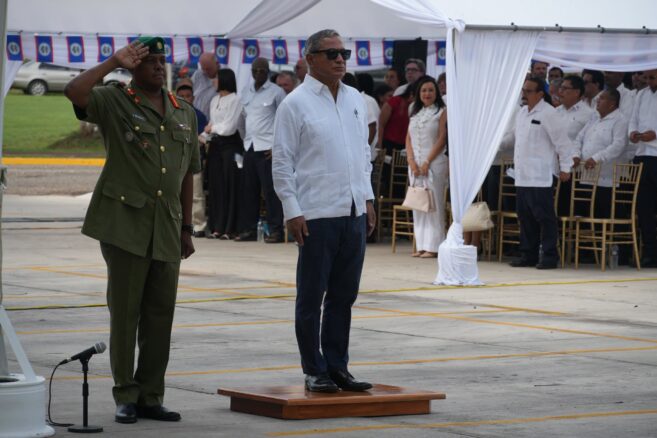
The Prime Minister addressed several national issues, including energy security, employment, sovereignty, transportation, education, investment, the economy, the cost of living, and assistance for the sugar industry. He also provided an update on a second submarine electricity cable for San Pedro Town, Ambergris Caye.
Briceño began his presentation by telling Belizeans that the country continues to perform well. “The state of the nation in 2026 continues to reflect the surpassing spirit of our people in 1981—tested, hopeful, resilient, diverse, proud, and future-focused,” he said. “In short, the state of our nation is good.”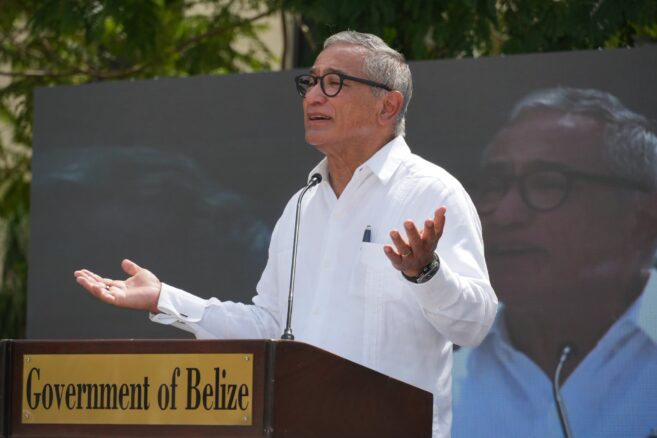
Employment and Investment
Briceño said Belizeans are working in record numbers, noting a countrywide employment rate of 98%. During the current fiscal year, $324 million in capital investments will be distributed across critical infrastructure projects. These include major highway improvements, healthcare programs, and the final expansion of the National Health Insurance program in the Cayo District. The investment will also benefit education and citizen security.
Meanwhile, BELTRAIDE’s Belize Invest Unit has facilitated 13 approved investment projects valued at $255 million. The unit is also working on seven additional projects pending approval, valued at more than $900 million and with the potential to create over 600 jobs.
Another major infrastructure project is the proposed investment of more than $800 million to redevelop the Port of Belize in Belize City. The project would involve deepening and widening the marine access channel, constructing a new cargo facility, and developing a modern cruise tourism gateway. The investment is expected to transform the city and positively affect the national economy.
Energy and Transportation
During his discussion on energy, the Prime Minister spoke about a new submarine electricity cable for Ambergris Caye. “It will be financed through the Millennium Challenge Corporation and provide the additional capacity needed to support the continued growth of Ambergris Caye,” he said.
Briceño explained that the improvement will allow Belize Electricity Limited (BEL) to provide Ambergris Caye and Caye Caulker with cheaper, renewable energy from the mainland. “This will allow them to relegate the expensive gas turbine generation presently required on the islands to emergency and backup service,” he said.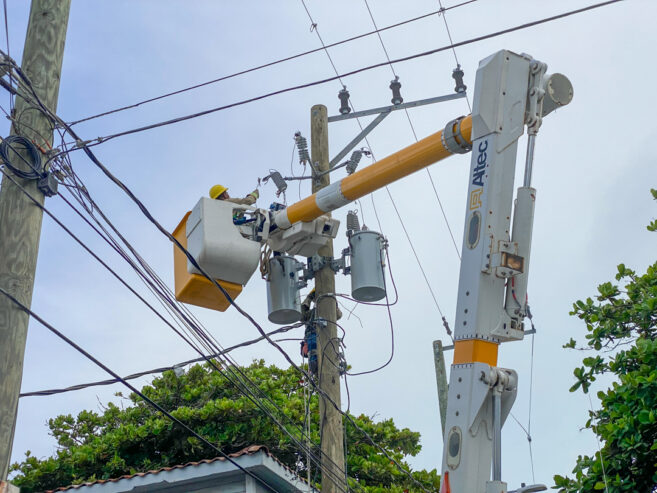
The Prime Minister also addressed the energy-security challenges that recently forced BEL to implement load shedding. He said his government is working closely with BEL to strengthen the country’s energy system, reduce its dependence on expensive fossil fuels and imported electricity from Mexico, and prepare for continued economic growth.
In the immediate term, commissioning is underway for mobile diesel generators that will add 20 megawatts of capacity to the national grid. Briceño also reminded the public that the government has removed General Sales Tax from residential electricity bills of up to $200 per month.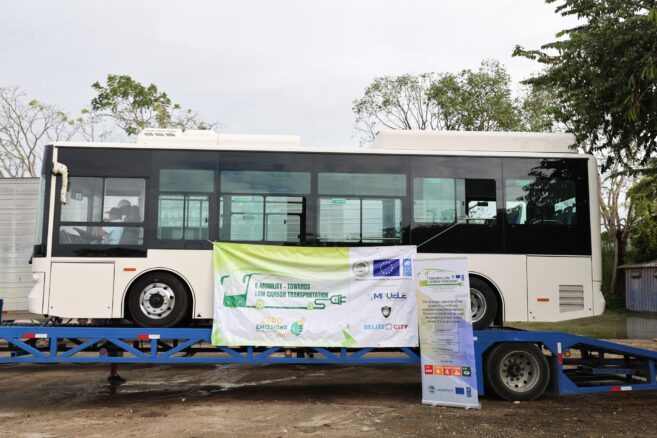
In the transportation sector, Cabinet recently approved another phase of fuel subsidies for private bus operators to avoid raising public transportation fares. The Prime Minister also announced Cabinet’s approval of a $20 million investment to support the acquisition of new electric buses for the recently launched National Bus Company (NBC).
“Very soon, commuters will enjoy new, comfortable, and safe seats on their daily shuttles,” he said. “Since the operating costs of electric buses are substantially less than those of the old diesel versions, the private-sector shareholders of the NBC can look forward to healthy dividends.”
Cost of Living
On the cost of living, Briceño said many of Belize’s challenges are imported.
“Belize has achieved self-sufficiency in basic food items. We can feed ourselves. We have enough cattle, beef, pork, chicken, eggs, milk, rice, beans, and other basic staples,” he said. “But our wider economy is a net importer, and those prices are outside of our control.”
He added that the government has taken steps to ease the high cost of living whenever possible.
Education
Briceño said the Education Upliftment Program now includes 27 high schools, comprising all 20 government secondary schools and seven government-aided schools across the country. The program benefits more than 14,000 students.
In total, more than 19,000 students, representing 83% of the secondary-school population, receive full or partial financial assistance. More than 8,500 families are benefiting from the relief.
The Prime Minister said more than $16 million was invested in financial assistance this year, up $5 million from the previous year. The school feeding program also provides a daily meal to 20,000 students across 104 institutions—83 primary schools and 21 secondary schools—through a $10.4 million investment. “A hungry child cannot learn,” Briceño emphasized.
He added that internet access has been expanded to more schools. Under the Millennium Challenge Corporation program, $46.8 million will also be invested in education.
Sargassum
The Prime Minister briefly addressed the sargassum situation affecting coastal communities and tourism destinations such as Ambergris Caye and Caye Caulker. He said the Belize Tourism Board (BTB), with government support, has developed a response plan.
The initiative will use BTB funds, grants, and loans from international financial institutions to finance the plan and acquire specialized equipment to combat the problem. Briceño did not provide further details about the proposed measures.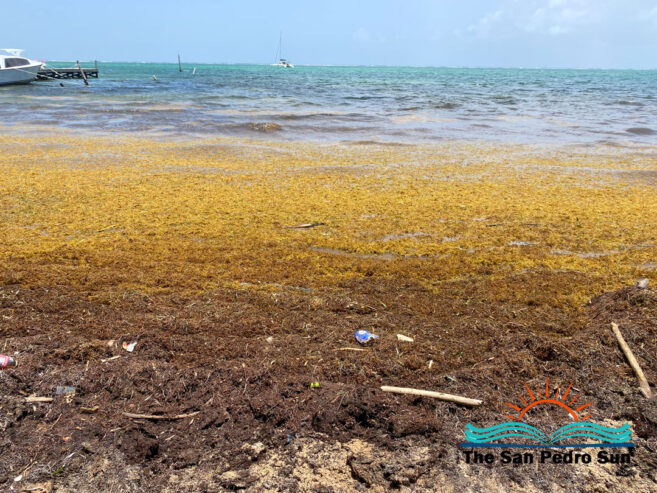
Northern Sugar Industry
On the sugar industry, Briceño said the government is working to strengthen sugarcane farmers’ ability to adapt to climate-related challenges through a $50 million Green Climate Fund project.
The grant will support northern sugarcane farmers with replanting, irrigation and drainage, soil improvement, and expanding integrated pest-management practices.
“The project will directly benefit 5,000 sugarcane farmers and indirectly benefit 87,000 Belizeans,” Briceño said.
Relations with Guatemala
The Prime Minister praised the professionalism of the Belize Defense Force and Belize Coast Guard, as well as the patriotism of the 53 Belizeans who traveled to the Sarstoon River on September 10th. The group remained in the area after 12 Guatemalan military vessels blocked its attempt to navigate around the disputed Sarstoon Island.
“Those waters are ours, by treaty, by law, and by right,” Briceño said. “Twelve vessels could not make them turn back or break their spirit, even when they could not complete their passage. That is who we are. We are a small nation, but we will not submit.”
“Sarstoon Island is Belizean soil. The mid-channel of that river has marked out a border since 1859, and no show of force will rewrite what law and history have already settled,” he added.
The territorial, insular, and maritime dispute between Belize and Guatemala is currently before the International Court of Justice. Briceño said Belize has placed its trust in the court because the country believes in the rule of law and will not be provoked into abandoning that path. “But let no one mistake our patience for weakness,” he declared.
The Prime Minister concluded by reminding Belizeans that, despite the challenges occurring around the world, the country remains a beacon of stability and a safe harbor. “We have a stable economy, a strong dollar, ample local bank credit, a resourceful labor force, excellent trade relations, bountiful land, and most importantly, a flourishing democracy of diverse and resilient citizens,” Briceño said as he concluded his annual address.
Following the address, Leader of the Opposition and United Democratic Party Leader Honorable Tracy Panton claimed that Opposition members had been deliberately excluded from the event. “A genuine State of the Nation address should rise above party politics. It should reflect the entire nation, respect our democratic institutions, and acknowledge every Belizean regardless of political affiliation,” Panton stated. “Instead, the Prime Minister chose partisan rhetoric over national unity.”
Share
Related Articles
Read more