


The controversy over prescriptions required to obtain contraceptives has sparked opposition across the country. The Ministry of Health and Wellness (MOHW) stated that such regulations have long been in place but have not been consistently enforced, and that the government is now working to regularize nationwide medication distribution. This means that, in addition to contraceptives, other medications previously available over the counter will soon require a doctor’s prescription.
In San Pedro Town, Ambergris Caye, pharmacies have already begun informing customers of the change. While many residents understand the new requirement, others are concerned about the time it may take to obtain a prescription. Some islanders expressed worry that making contraceptives more difficult to access, particularly for young women, could lead to an increase in teenage and young adult pregnancies. Others believe the policy will help ensure women receive proper guidance on the most suitable contraceptive options.
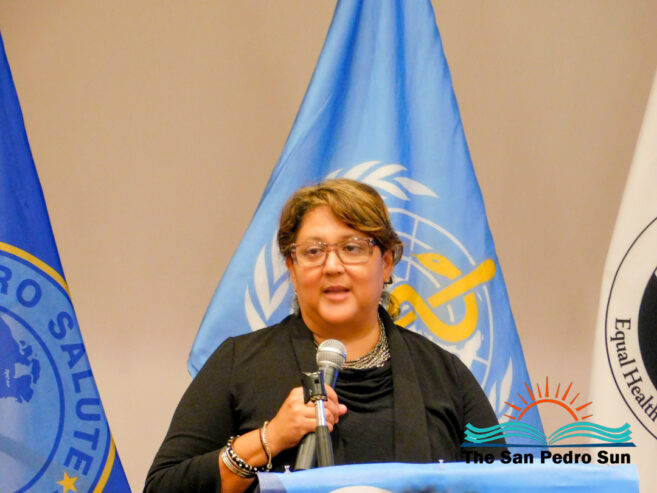
However, Director of Health and Wellness, Dr. Melissa Diaz, said on April 13th that the government is not trying to limit access, but rather to ensure safer and more informed use. “The requirement for a prescription for contraceptives, after a proper doctor or nurse consultation, ensures that you determine the safest, most effective, and best birth control method for you, along with your healthcare provider,” she explained. “You are now an informed and consenting woman. We are exercising that right for you.” Dr. Diaz emphasized that the measure is intended to protect the health and safety of women.
Dr. Diaz also addressed concerns about access for women in rural areas who may face challenges traveling to towns or cities for prescriptions. “We know about the gaps, and we know about the challenges. But you cannot have a health center in every single village,” she said. “There must be mutual collaboration. Patients and healthcare personnel must understand the importance of prioritizing health and making the effort to consult their providers.” She noted that the morning-after pill does not fall under this policy.
She added that repeat prescriptions will be available. “Prescription medications, including contraceptives and treatments for chronic diseases, can be accessed at any pharmacy countrywide using a refill or repeat prescription,” she said. “There has been a misconception that women will need to visit a doctor every month. That is not the case—doctors can issue repeat prescriptions.” Dr. Diaz noted that patients can discuss various options with their healthcare providers regarding prescription access.
The MOHW acknowledged that public consultation on the change was insufficient. “A large-scale public health campaign should have been conducted alongside discussions with store owners and the pharmacy association,” Dr. Diaz said.
The ministry indicated that the prescription regulation will be implemented in phases, including a 12-month transition period focused on public education and stakeholder and pharmacist engagement. “We do want patients to be able to access their contraceptives effectively,” Dr. Diaz added.