

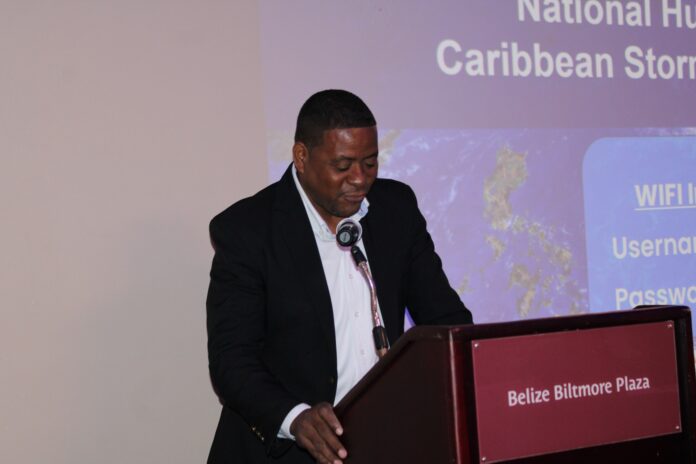
The National Meteorological Service of Belize, under the Ministry of Public Service and Disaster Risk Management, hosted a three-day storm surge workshop from April 14 to 16, 2026. Organized in collaboration with the National Oceanic and Atmospheric Administration (NOAA), its National Hurricane Center (NHC), and the University Corporation for Atmospheric Research (UCAR), the event is part of the Coastal Inundation Project for the Caribbean.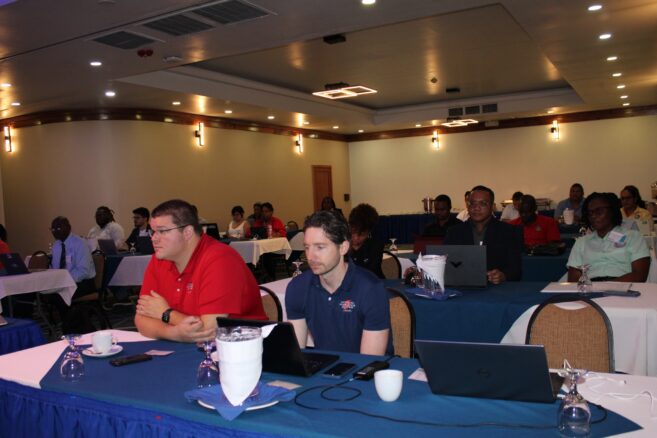
Participants included the National Meteorological Service, the National Hydrological Service, the National Emergency Management Organization (NEMO), the City Emergency Management Organization (CEMO), and the Belize Red Cross. Training sessions focus on hurricane forecasting, storm surge modeling, and hazard communication.
The workshop addressed Belize’s vulnerability to hurricanes, which bring intense rainfall, destructive winds, and life-threatening storm surges, as the region approaches another hurricane season. The three-day training, supported by the NHC and international partners, focused on advanced storm surge modeling, technology that simulates how hurricanes of varying strength, speed, and trajectories could impact Belize’s vulnerable coastline, including San Pedro. This builds on NOAA’s modeling systems, which have been upgraded to improve the accuracy of storm-surge forecasts up to 20 feet during major storms.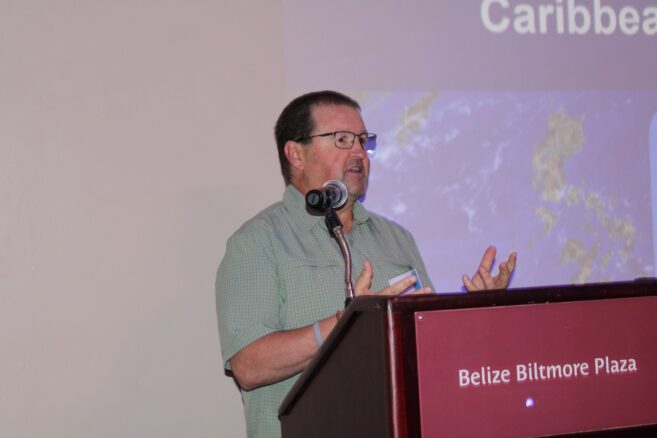
Belize has previously experienced severe coastal erosion and flooding from hurricanes, including Hurricane Lisa in 2022, which caused widespread damage. While similar regional sessions have been held, this workshop is the first to focus specifically on storm surge modeling for Caribbean nations. It comes amid increased storm activity linked to climate change, with Belize’s low-lying coastlines particularly vulnerable to erosion and flooding.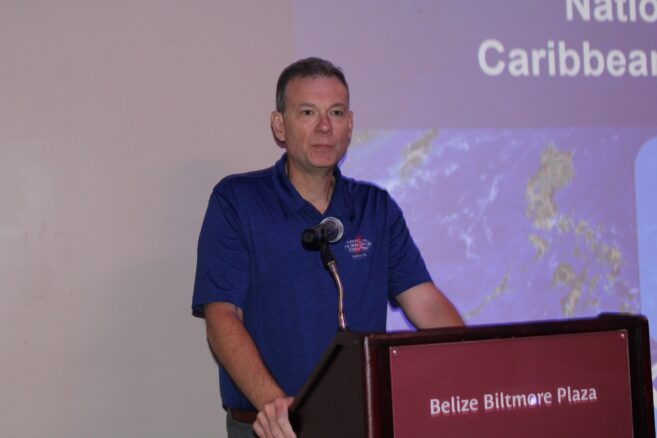
Henry Charles Usher, Minister of Public Service, emphasized the initiative’s urgency. “Like any coastline that lies below sea level, it’s vulnerable. In the Caribbean, we are victims of climate change, and we have to be resilient and responsive to these issues,” he said, noting the importance of improving predictive modeling and recovery planning. He added that the workshop represents a coordinated effort among key institutions to strengthen communication, avoid duplication of effort, and better prepare communities for increased storm activity and storm-surge risks.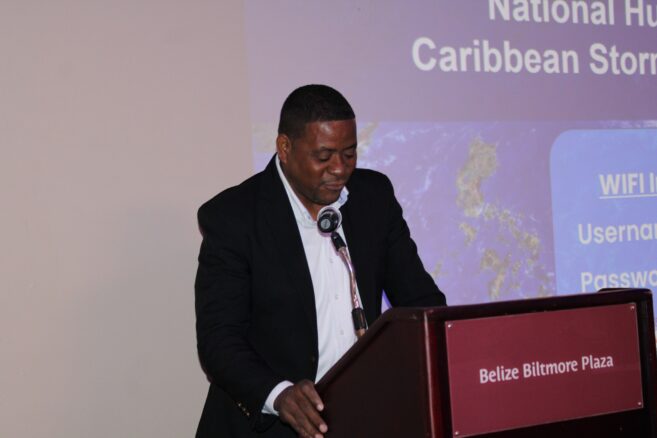
Ronald Gordon, Director of the National Meteorological Service, said the workshop marks a significant step forward in understanding and communicating storm surge risks.
The training is expected to boost national resilience by improving forecasting and early warning systems. With more frequent storms predicted, enhanced modeling capabilities could help save lives and reduce recovery costs in vulnerable areas such as San Pedro and Belize City.
Share
Related Articles
Read more