


The National Meteorological Service of Belize has advised that September marks the peak of the Atlantic hurricane season. However, this year, another climate phenomenon is also influencing weather conditions: El Niño. Forecasts indicate that the phenomenon will continue strengthening and is almost certain to persist through February 2027, potentially creating challenges related to drought, water supplies, wildfires, energy production, and public health.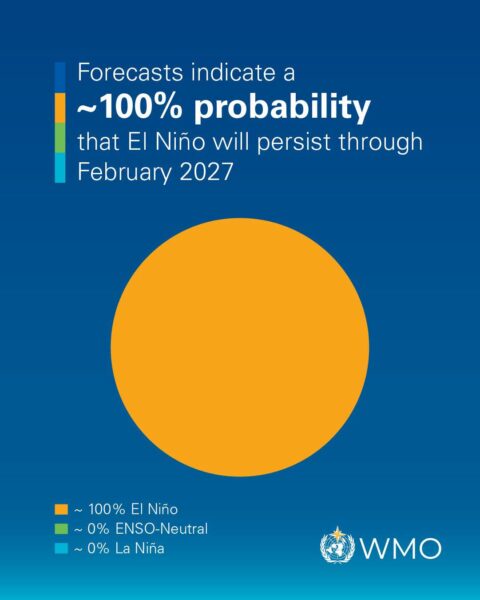
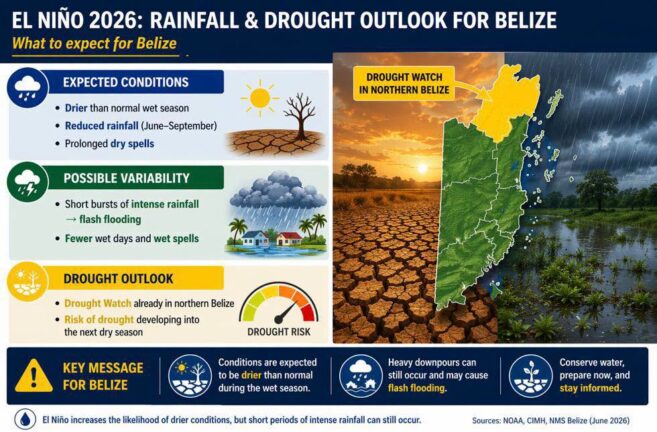
Belize Water Services (BWS) has warned Belizeans about the threat of drought across the country. The company noted that below-average rainfall and prolonged dry spells can strain rivers, groundwater sources, and reservoirs, placing northern and central areas under active drought warnings.
“As El Niño strengthens, rain may fall less frequently, dry periods may last longer, and hotter temperatures can increase water loss through evaporation,” BWS stated.
The utility company advised that water conservation should not begin only after dry conditions become severe. Residents are encouraged to repair leaks, turn off taps when not in use, use water responsibly, and report leaks within their communities. These measures can help reduce unnecessary water loss and ease pressure on the country’s water supply.
Intense heat and dry conditions have also contributed to wildfires on the mainland and near Secret Beach, northwest of San Pedro Town, Ambergris Caye. Lower water levels can reduce hydropower generation, while higher temperatures can increase electricity demand. At the same time, prolonged heat raises the risk of dehydration, while warmer conditions can increase concerns about vector-borne diseases such as dengue.
During the 14th National Climate Outlook Forum in June, the National Meteorological Service briefed stakeholders on the potential impacts of the developing El Niño and shared preparedness recommendations for key sectors.
On September 3rd, the department reported that the likelihood of El Niño strengthening had increased significantly. It referred to an update from the World Meteorological Organization (WMO), which stated that El Niño is firmly established and is expected to intensify into a very strong event in the coming months.
WMO forecasts indicate a nearly 100% likelihood that El Niño will persist through February 2027. The organization warned that the phenomenon could significantly affect rainfall and temperature patterns, increasing the risks of floods, drought, and extreme heat.
For September through November 2026, WMO multi-model forecasts indicate an increased likelihood of above-normal temperatures across almost all land areas. Rainfall patterns are also expected to show a pronounced atmospheric response to the strong Pacific El Niño.
However, WMO emphasized that the strength of the phenomenon does not mean that every country or region will experience the same effects. Impacts will vary depending on location, season, and other climate drivers.
At the beginning of the Atlantic hurricane season in June, forecasters predicted a slightly below-normal season, with between eight and 14 named storms. Of those systems, three to six were expected to become hurricanes, while one to three could develop into major hurricanes of Category 3 strength or higher.
Experts explained that a strong El Niño generally suppresses hurricane activity in the Atlantic by increasing vertical wind shear, which can disrupt storm development. However, warmer-than-average sea surface temperatures across the Atlantic Basin could still provide enough energy to support tropical cyclone formation.
As of early September, the Atlantic hurricane season had produced five named storms, none of which had strengthened into a hurricane. Meanwhile, greater storm activity had been recorded in the Pacific.
Despite the below-normal outlook, residents are reminded that it takes only one storm to cause significant damage. The public is advised to monitor information from official sources, prepare in advance, and act early when a tropical weather threat develops.
Rainfall forecasts and other climate information are available on the National Meteorological Service website at https://nms.gov.bz/climate-services/rainfall-forecast/.