
On February 24th, the San Pedro Town Council (SPTC) urged community partners to begin preparations for the upcoming sargassum season. Early windy conditions in February brought the first influx of the brown seaweed to the shores of San Pedro. According to reports, the 2026 season is expected to bring large amounts of sargassum to the region, and collective efforts will be required to keep the island’s main beach areas as clear as possible.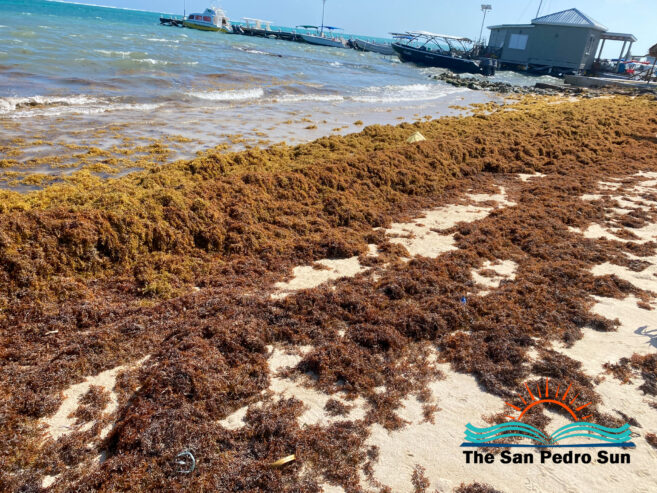
The SPTC outlined its strategic approach and encouraged stakeholders to make smart investments in equipment and personnel. The Town Council hires Sargassum workers, designates clean-up sections, and implements a weekly schedule. The primary target area extends from the Boca del Rio Bridge to the public library in downtown San Pedro, along the beginning of Barrier Reef Drive.
According to the SPTC, vehicles have been prepared to collect and transport the seaweed weekly. The clean-up effort is costly, and to help offset labour expenses, the Town Council continues to lobby the central government for additional resources to address the Sargassum influx, which impacts the tourism product in destinations such as San Pedro. Among the projects being explored are designated nearshore collection points for Sargassum and the establishment of a Beach Management Unit to coordinate beach interventions, including seaweed mitigation.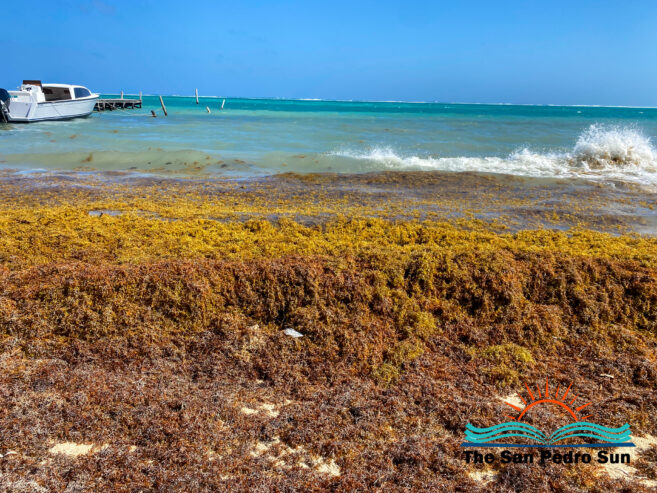
“We are reviewing guidelines and regulations to approve Sargassum mitigation structures, such as booms and heavy machinery,” the SPTC stated. Officials also noted that a monitoring and forecasting program has been established to document clean-up efforts and improve access to equipment and resources.
Area Representative Honorable Andre Perez added that plans include installing barriers and acquiring equipment, such as beach rakes, for other tourist destinations, including Placencia in southern Belize. Perez confirmed that the Sargassum harvester machines will be deployed again once maintenance is completed.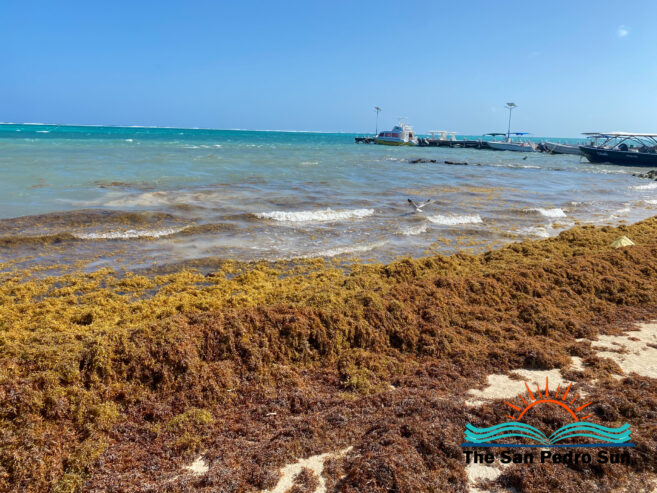
“It is all hands on deck. It will be a constant battle, and we want to make sure that as the season begins, we are prepared,” Perez said. Regarding long-term solutions to the seasonal influx, Perez indicated that discussions are ongoing about converting Sargassum into an energy source. He expressed hope that progress could be made within the next five years.
As predicted in January, Sargassum levels across the Caribbean have risen significantly. Reports indicate a rise from 0.45 metric tons in December of last year to 1.7 million metric tons in January. According to Sargassum monitoring reports, a major increase has been observed in the western Caribbean region, leading to predictions of heightened beaching events along regional shorelines.
Sargassum has been tracked in large quantities since 2011, creating environmental, ecological, and economic challenges throughout the Caribbean. The seaweed originates in the tropical Atlantic, and its increased influx is believed to be linked to climate change, as well as other natural and human-induced factors.
Share
Read more

 urged community partners to begin preparations for the upcoming sargassum season.)