
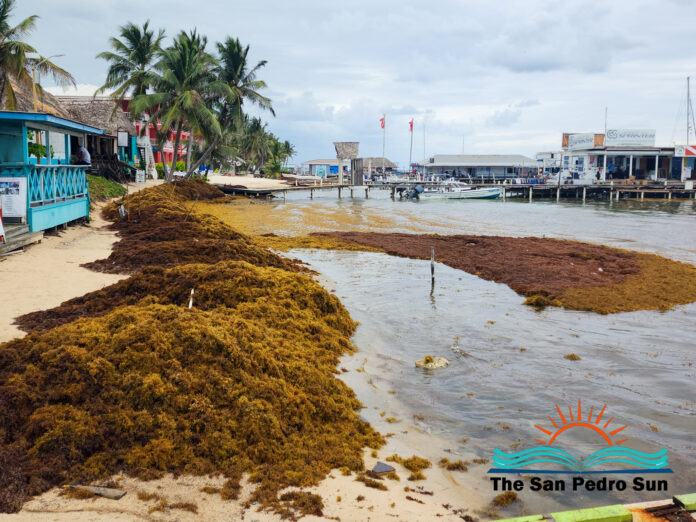
As sargassum continues to cover coastlines and threaten marine ecosystems on Ambergris Caye, the San Pedro Town Council (SPTC) has implemented a formal approval process for mitigation measures, including sargassum corrals and heavy machinery. The initiative, launched on March 23rd, aims to control the increasing inflow of seaweed affecting beaches, tourism, and daily life on the island.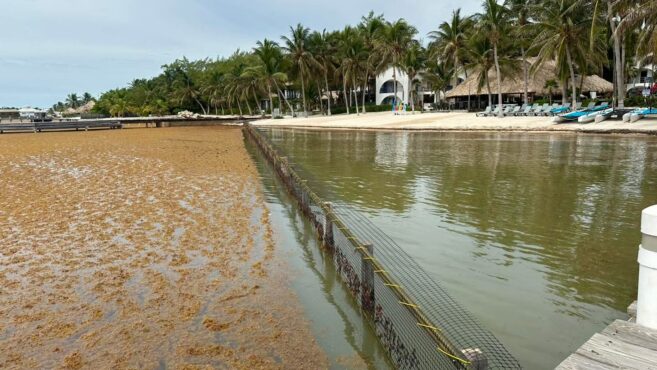
Corrals or alternative mitigation measures may only be installed at approved locations during a Sargassum Response Phase declared by the SPTC. Applications must include property details, geo-location, estimated sargassum collection volumes, corral sketches with dimensions, and GeoGrid mesh specifications, or images of proposed machinery. A technical team will conduct site inspections in collaboration with the Department of the Environment, the Belize Fisheries Department, and the Physical Planning Unit. Approved sites will receive a Certificate of Inspection within five days.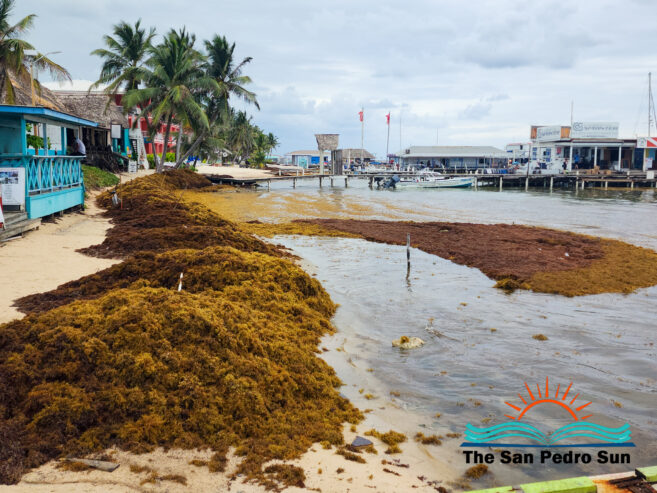
Before this rollout, the council tested corral designs. It established a color-coded response system: Watch for forecasts; Yellow Response for initial cleanup; Red for reinforced measures, such as restricted beach access; and All Clear after three weeks without sargassum. These preparations followed heavy influxes in February and alerts from the national task force predicting an intense season. The council has also encouraged stakeholders to invest in equipment and monitor sargassum movements via satellite tracking.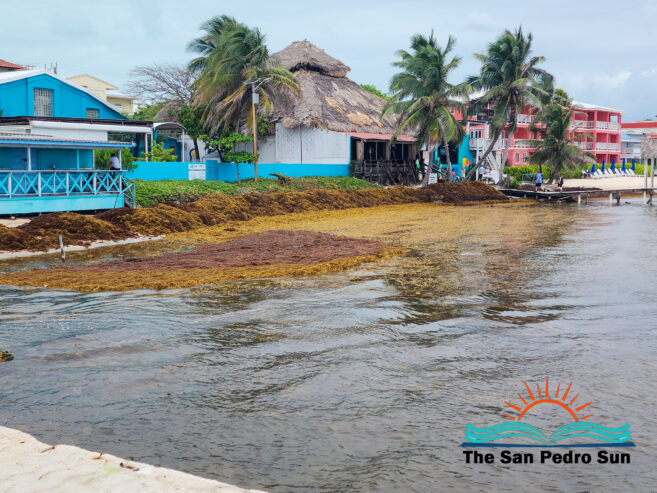
Corral standards mandate temporary GeoGrid structures at pre-approved sites, with a north arm extending up to 80 feet and a south arm up to 40 feet, tapering alongshore toward shoreline collection points. Stakes must be anchored into bedrock eight feet apart and extend four feet above mean sea level, with fail-safe gates for rough weather conditions. These measures are designed to allow marine life passage with no fish mortality, improve water aeration, and reduce shoreline hypoxia and erosion without blocking currents or diverting seaweed to neighboring properties. Heavy machinery will also be subject to ecosystem impact assessments.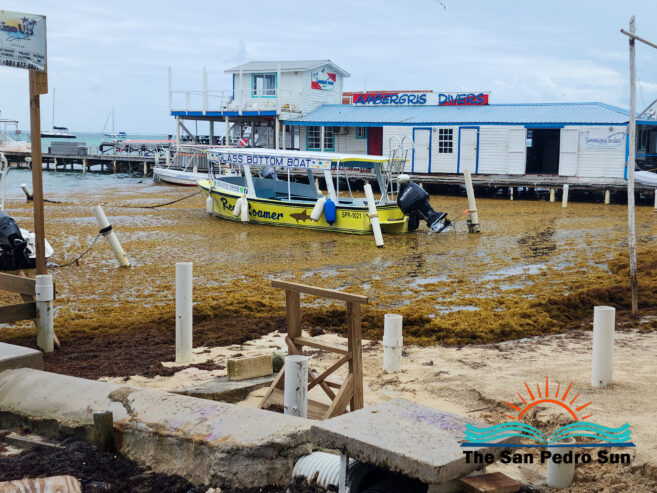
The council emphasized the importance of early intervention, stating that removing sargassum from the water at an early stage is critical. Officials encouraged all forms of mitigation while stressing the need to protect beaches, neighboring properties, and marine ecosystems.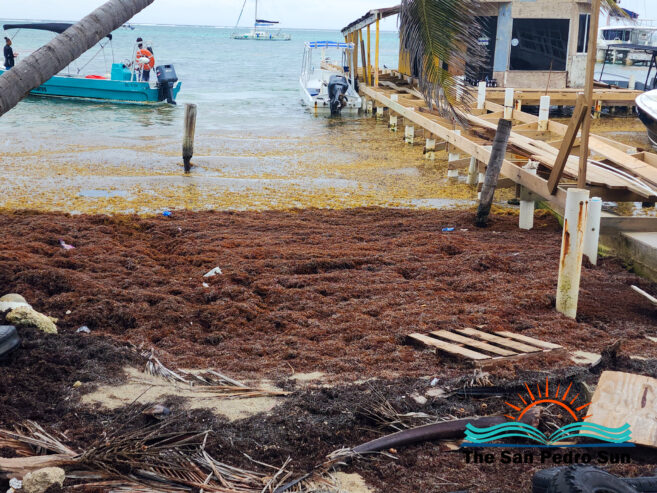
Once implemented, these measures are expected to result in cleaner beaches during sargassum season, potentially strengthening San Pedro’s tourism economy amid forecasts of increased seaweed influxes. All structures must be dismantled once an All-Clear phase is declared. If successful, the initiative could serve as a model for other coastal communities across Belize.
Applications can be submitted via email at [email protected].
Share
Read more