
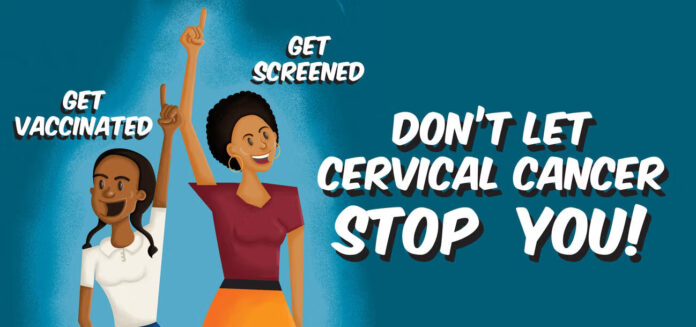
February 4th marked World Cancer Day, and the Pan American Health Organization (PAHO) is calling for accelerated action to prevent cervical cancer across the Americas, including Belize, where the disease remains a major health threat to women. PAHO is urging countries to strengthen vaccination, screening, and treatment efforts to eliminate cervical cancer as a public health problem by 2030.
PAHO’s targets include achieving 90% HPV vaccination coverage for girls under 15, ensuring 70% of women are screened at ages 35 and 45, and providing 90% of women diagnosed with cervical disease access to treatment. The organization says meeting these goals could significantly reduce cervical cancer cases and deaths throughout the region.
In Belize, nearly 1,900 cancer cases were recorded between 2020 and 2024. Cervical cancer has consistently ranked among the top cancers affecting women, often alongside breast cancer. On average, Belize recorded about 378 cancer cases per year during that period.
Cervical cancer is primarily caused by the human papillomavirus (HPV), transmitted through sexual contact. PAHO estimates that HPV results in more than 78,000 cervical cancer diagnoses and 40,000 deaths annually in the Americas, with 83% of cases occurring in Latin America and the Caribbean. Belize continues to report some of the region’s highest incidence and mortality rates, a situation PAHO attributes to gaps in screening and treatment coverage, despite the availability of the HPV vaccine since 2016.
PAHO reported that 24 countries in the region have adopted a single-dose HPV vaccination schedule, expected to improve coverage. However, the organization noted ongoing challenges, including limited access to radiotherapy, available in only 18 countries, and weak data systems that hinder monitoring and long-term planning.
Belize’s Ministry of Health and Wellness reports that cervical cancer remains among the leading causes of cancer-related illness and death. Between 2020 and 2024, the country recorded 1,420 cancer-related deaths, underscoring the importance of early detection and improved access to treatment.
PAHO’s Disease Elimination Initiative identifies cervical cancer as one of the most preventable forms of cancer. However, the organization warns that without stronger intervention, cervical cancer deaths across the region could rise to more than 46,200 annually by 2030.
PAHO Director Dr. Jarbas Barbosa noted that progress is already being made in many countries. “Important progress is already being seen,” Barbosa said. “The HPV vaccine is available in 49 of the 51 countries… 24 have adopted a single-dose schedule, which significantly increases coverage.”
Belize’s Director of Public Health, Dr. Melissa Diaz Musa, has also highlighted the importance of early screening and prevention. In a previous media interview, she said, “Cervical cancer is one cancer that is very much preventable… We’ve introduced the HPV swab and self-swab, which has had very good response.”
PAHO continues to support Belize through technical assistance, vaccine access, and health tools provided through its Regional Revolving Funds, in partnership with Unitaid and the Spanish Agency for International Development Cooperation (AECID). Health officials are encouraging women to prioritize screening at recommended ages and to take advantage of available prevention services. PAHO says sustained vaccination and stronger primary healthcare services could help eliminate cervical cancer in Belize and across the region by 2030.
Share
Read more

 is calling for accelerated action to prevent cervical cancer across the Americas.)