

Record-breaking sargassum blooms affected coastal communities across Belize in 2025, including San Pedro, Ambergris Caye. According to regional data, more than 37.5 million tons of the brown seaweed were recorded in the Caribbean this year, placing heavy strain on shoreline management efforts nationwide.
In San Pedro, two sargassum harvesters were acquired to intercept and collect the seaweed offshore. Area Representative Hon. Andre Perez said the machines helped alleviate some of the impacts of the influx but emphasized that broader community involvement is needed to achieve better results.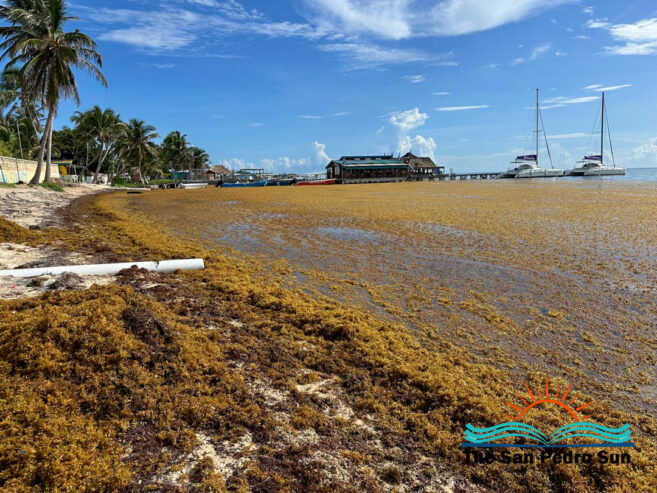
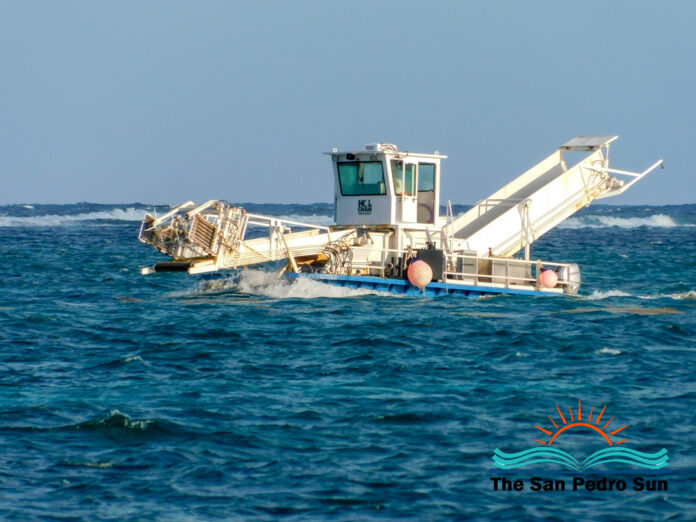
The Hol Chan Marine Reserve acquired the harvesters through a loan from the Belize Social Security Board. During the peak of the influx, the equipment was observed operating primarily along the coastline in front of downtown San Pedro, collecting large volumes of seaweed before it reached shore.
Perez said from the outset that the initiative’s success depends on collaboration among multiple stakeholders, including the San Pedro Town Council and the private sector. He recently reiterated that such partnerships are essential to expand and sustain the project.
“Sargassum has become a regional crisis every year,” Perez said. “The machines work, but they cannot work on their own. We need to collaborate with everyone else.”
While acknowledging that some residents have criticized the equipment, Perez maintained that the harvesters were effective and helped reduce the severity of the influx this year. He added that the initiative is intended as a pilot project and part of a longer-term strategy that would include additional harvesters for the cayes and other parts of Belize.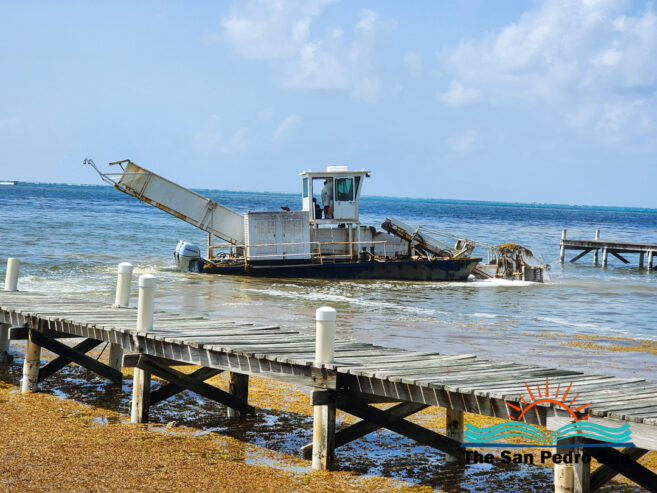
Perez also explained that one of the harvesters was temporarily taken out of service for routine maintenance. Looking ahead, he said, preparations are already underway for the next season. “To better prepare for next year, we will have the installation of booms or floating barriers that will enhance collection and reduce beach impacts,” he said.
Despite these efforts, the San Pedro Town Council reported that it still had to hire additional personnel during the height of the season to assist with cleanup efforts. Businesses along the eastern shoreline also worked to keep their beachfronts clear of seaweed, but the effects were still felt across the island’s tourism sector. Several hotels reported cancellations, while seafront restaurants and bars noted a decline in customers due to the strong odour released by decomposing sargassum.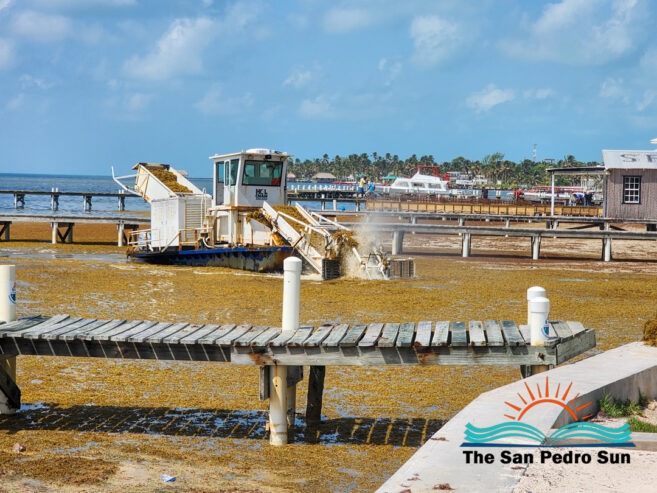
Looking to 2026, stakeholders in San Pedro are hopeful for a more manageable season. However, if sargassum levels mirror those seen this year, they are calling for improved preparedness and greater community involvement in mitigation efforts to ensure a more coordinated response.
Scientific forecasts suggest that sargassum will remain a significant factor in the region. Preliminary projections indicate potential large blooms between February and March, with heavier impacts expected between May and August across the Caribbean–Mexico region. Scientists caution that these forecasts depend heavily on ocean currents and climatic conditions and warn that the issue is unlikely to disappear in the near future, with the potential to expand into parts of the Northern Hemisphere.
Share
Related Articles
Read more