
The Government of Belize, through the National Sargassum Task Force (STF), has begun early preparations for the 2026 sargassum season, focusing on five priority coastal areas: San Pedro, Caye Caulker, Seine Bight, Hopkins, and Placencia. The initiative launched on January 21st and is co-chaired by the Ministry of Tourism, Youth, Sports, and Diaspora Relations and the Ministry of Blue Economy and Marine Conservation.
According to officials, the STF is acquiring new equipment and conducting technical assessments to strengthen shoreline management and response capacity. These preparations come amid increasing sargassum influxes across the Caribbean region. Belize continues to rely on the satellite-based Sargassum Monitoring (SAM) Tool platform, which provides real-time detection, drift forecasts, and data to help prioritize response efforts.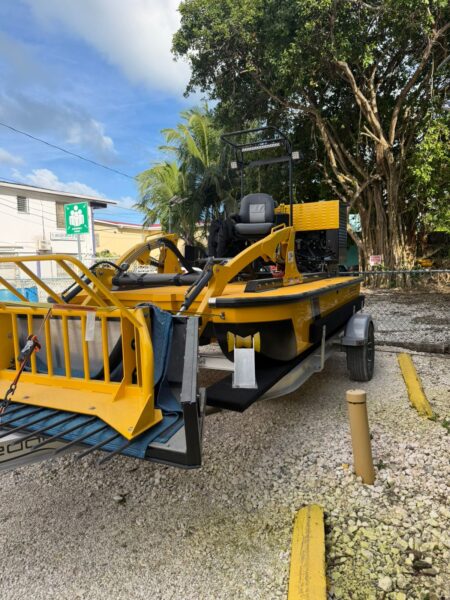
New equipment being procured includes a Barber Beach Rake for shoreline cleanup, replacement parts for Placencia’s existing beach rake, a “Weedoo” TC-3014 workboat designed for shallow-water removal, and a DESMI Tri-Turtle floating unit intended for continuous offshore collection. In addition, project scoping assessments are being conducted in San Pedro and Caye Caulker to evaluate infrastructure needs, disposal sites, logistical capacity, and potential circular-economy models to support scalable, long-term solutions.
Recent sargassum influxes in San Pedro have significantly affected both the marine environment and the tourism sector. Heavy accumulations of sargassum have smothered coral reefs, reduced oxygen levels, and harmed fish populations. Beaches were also affected by decomposing seaweed, deterring visitors and, according to some local reports, contributing to tourism booking declines of up to 30 percent during the previous season.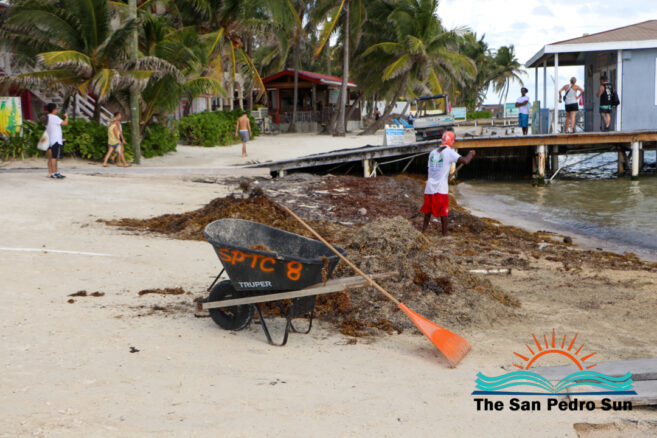
A San Pedro-based tour guide with more than 20 years of experience described the situation as devastating. “Sargassum choked our reefs and scared off snorkelers. It hit tourism hard, with cancellations piling up,” he said, adding that fish populations declined and a strong odor discouraged divers. “We need this equipment now,” he emphasized.
A San Pedro Town Council councillor, who requested anonymity, expressed cautious optimism about the initiative. “With how badly the last sargassum season affected us, I hope these new measures help keep it under better control this year, so it does not negatively impact our tourism sector,” the councillor said.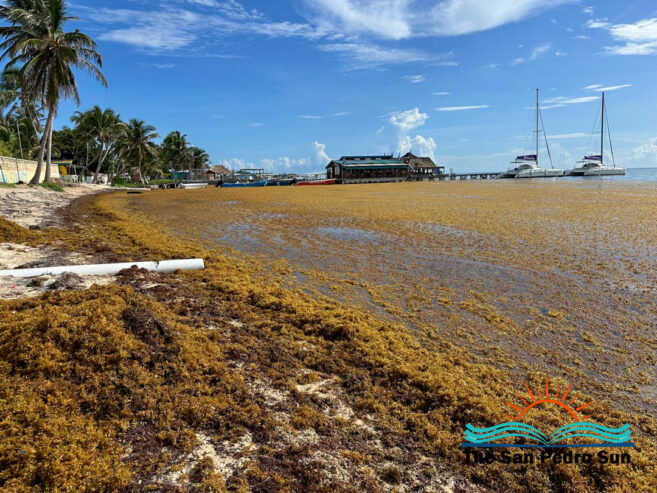
Officials say the early preparations aim to minimize disruptions through improved coordination and faster response times. Full deployment of equipment and response strategies across all priority areas is expected to roll out progressively, with the goal of safeguarding Belize’s coastal ecosystems and tourism-dependent economy as the 2026 sargassum season approaches.
Share
Read more

, has begun early preparations for the 2026 sargassum season.)