
Beach restoration efforts in San Pedro Town are progressing slowly as authorities contend with a long-standing erosion problem that has been intensified by increasing sargassum influxes. Environmental consultant Valentine Rosado says the situation requires sustainable, science-based solutions rather than short-term fixes.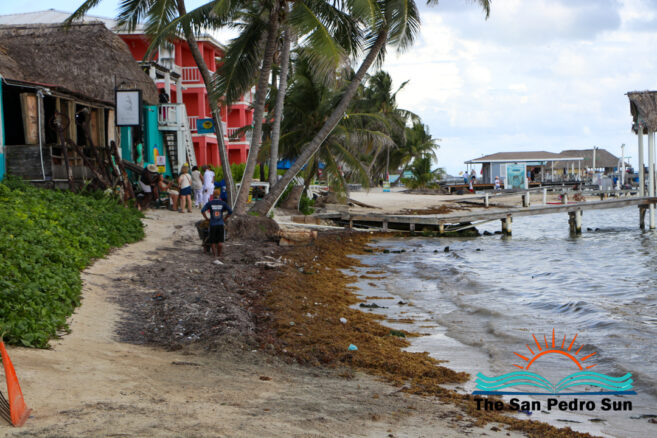
In San Pedro, a beach nourishment site established in 2022 near the local high school has been designed to trap sediments and help restore natural shoreline processes. According to Rosado, visible drainage structures in the area will soon be replaced with a less obtrusive system that will allow sediment to move more naturally along the coast. Once that phase is complete, similar work will begin near the drainage outlets by the Amigo’s del Mar dock and the Maya Princess Hotel.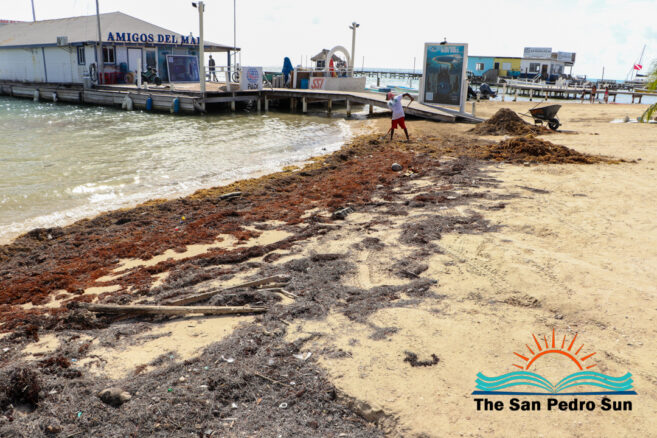
These measures are intended to address erosion that has affected San Pedro’s shoreline for more than two decades. Recent storm events have worsened the situation, in some cases leading to road closures and threatening nearby streets and infrastructure.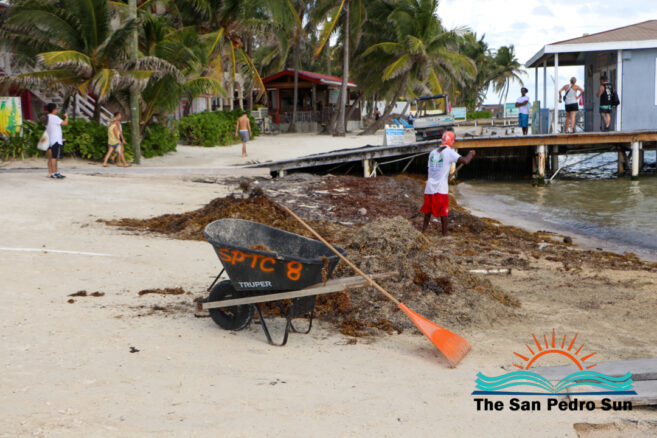
Rosado explained that sargassum presents a unique challenge. While cleanup efforts are necessary, removing the seaweed often results in the loss of sand that would otherwise help protect the beach. Leaving the sargassum in place, however, can also be damaging. “If you remove the sargassum, you’re taking sand away,” Rosado said. “If you leave the sargassum there, it decomposes, becomes acidic, and erodes the beach.”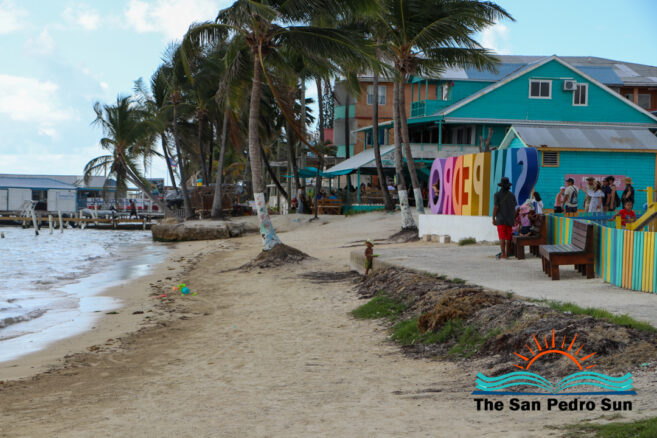
He noted that these impacts compound historical damage caused by storms and past interventions. Earlier approaches, such as filling eroded areas with crushed limestone or rubble, resulted in hardened, unusable shorelines. Examples of this can still be seen in areas such as Boca del Rio.
As a consultant to the San Pedro Town Council, Rosado advocates for nature-based solutions supported by scientific research. He said studies show that beaches can be restored and maintained without the use of seawalls or dredging.
“All the science and all the research show us that we are able to restore a beach and maintain a living shoreline,” he said.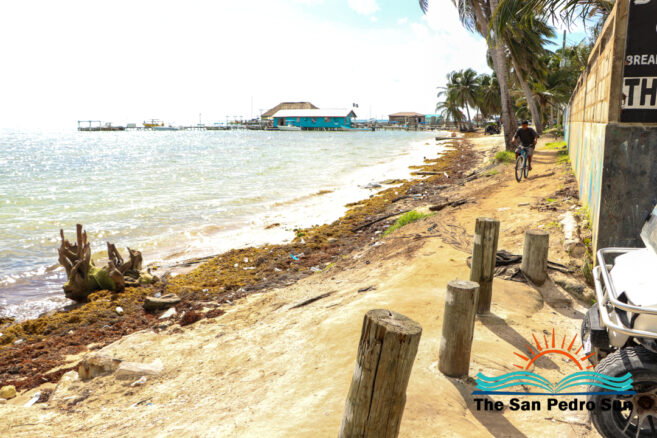
Current strategies include the use of stakes, geotextiles, and native vegetation, such as sea grape vines, to stabilize sand. Monitoring has shown that sediment from the nourishment site is naturally moving along the coast, with measurements indicating a southward movement of approximately 220 metres.
Rosado added that international funding has been sought to support the project. Once funding approvals are finalized, a procurement process must be completed before implementation can continue, contributing to delays.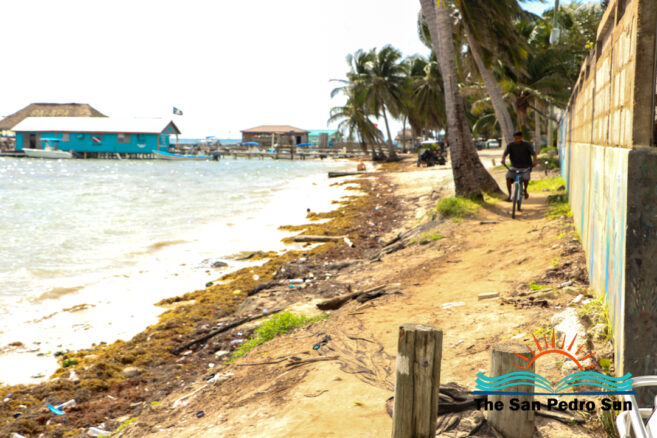
He acknowledged that progress can be slow due to the need to balance public access, business interests, and differing viewpoints. Despite these challenges, Rosado remains optimistic that sustained restoration efforts can protect San Pedro’s beaches in the long term. However, he cautioned that sargassum will continue to pose significant challenges for the island’s tourism-dependent shoreline.
Share
Read more