
Following the United States (U.S.) military intervention in Venezuela on January 3rd, which resulted in the extraction of President Nicolás Maduro and his wife, the Government of Belize (GOB) issued an official statement aligning itself with the Bureau of CARICOM Heads of Government. The statement addressed matters of international law, state sovereignty and territorial integrity, and respect for human dignity, as world leaders continued to weigh in on the U.S. action.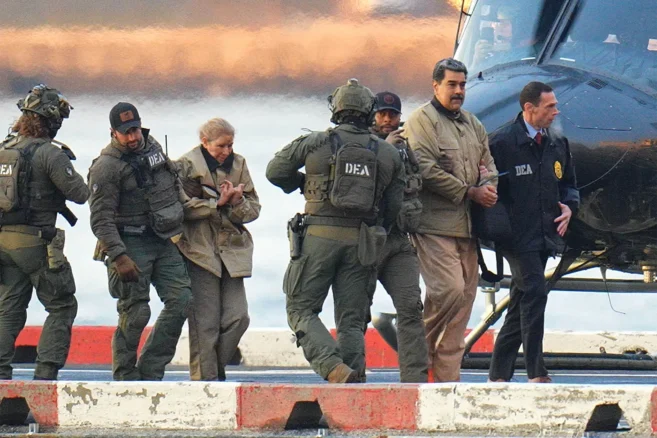
In its official note, the GOB said it has been observing the continued buildup of U.S. military assets in the southern Caribbean. “Belize aligns itself with the statement issued by the Bureau of CARICOM Heads of Government on January 3, 2026. Belize will continue to engage with CARICOM and other states in the hemisphere on the implications for the region. Belize has always been, and remains, committed to the principles of international law and the United Nations (UN) Charter, which we believe are fundamental to the maintenance of international peace and security,” the statement read.
The GOB called on all parties to exercise restraint, respect international law, and engage in constructive dialogue to resolve the crisis in Venezuela within the framework of international law.
Belize and Venezuela have historically maintained friendly, cooperative bilateral relations. The government said it would like to see a return to constitutional order as soon as possible. The statement also called for respect for the Venezuelan Constitution and the will of the Venezuelan people. It further noted that all Belizean students studying in Venezuela have safely returned to Belize.
Venezuela has been one of Belize’s close regional allies. Both countries established diplomatic relations on April 25, 1989, with ties focused mainly on commercial cooperation. That relationship led to an agreement in 2000 under the Caracas Energy Agreement, through which Venezuela sold oil to Belize under preferential payment terms, including a one-year grace period, a 15-year credit period, and a two percent annual interest rate. The arrangement, widely known in Belize as PetroCaribe, continued until 2017, when Belize suspended its participation due to ongoing supply issues.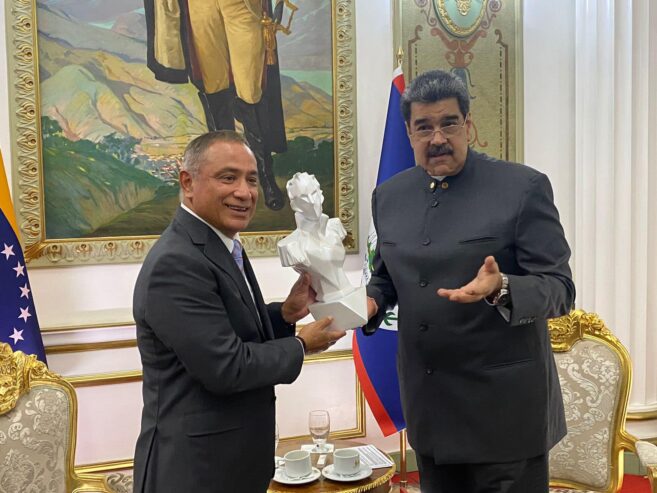
In November 2022, Prime Minister Hon. John Briceño met with President Maduro to discuss the resumption of PetroCaribe. According to reports from Venezuela, Belize was expected to begin receiving oil under special conditions linked to the programme. Maduro was scheduled to visit Belize in 2023, but that visit did not materialize.
CARICOM’s statement emphasized the need for peaceful dialogue through diplomatic channels to ensure Venezuela’s stability, while also highlighting the importance of good governance, democracy, and prosperity for the Venezuelan people. “CARICOM remains ready to support all such efforts, in a spirit of cooperation and mutual respect. The Bureau will continue to monitor the multifaceted impact of this evolving situation and the implications for economic activity within the Caribbean Community, particularly air travel,” the statement said.
While several countries, including the United Kingdom, Israel, and some European nations such as France, have expressed support for U.S. actions, others have condemned the intervention. China protested the military operation and called on the U.S. to abide by the UN Charter. Russia reaffirmed its support for the Venezuelan government, while Iran strongly condemned the military action, describing it as a violation of Venezuela’s sovereignty and territorial integrity. Belarus also condemned the U.S. operation and the extradition of Maduro.
Mexico also weighed in on the situation. On January 5th, Mexican President Claudia Sheinbaum condemned the capture of Maduro, criticizing what she described as the U.S. administration’s aggressive foreign policy in Latin America. She warned that such actions could threaten stability across the hemisphere.
The European Union’s foreign policy chief called for restraint following the strikes, stressing that the principles of international law must be respected at all times. Several European countries also called for de-escalation. Meanwhile, the UN High Commissioner for Human Rights said he was alarmed by the situation and warned of possible regional consequences.
Maduro, 63, was indicted in 2020 on U.S. charges, including conspiracy to commit narco-terrorism, allegations he has consistently denied. In the months leading up to his capture, the U.S. military had increased its presence near Venezuela, intercepting vessels suspected of drug trafficking. While speculation grew over whether the U.S. would enter Venezuelan territory, Maduro was reportedly guarded by Cuban security personnel at the time of his seizure, several of whom were killed during the operation.
Maduro and his wife, Cilia Flores, are currently being held in a New York City, New York, USA, detention facility. They appeared in court for the first time on January 5th, where Maduro pleaded not guilty.
“I am innocent. I am not guilty. I am a decent man, the constitutional president of my country,” he said.
Meanwhile, Venezuela’s interim leader, Delcy Rodríguez, has demanded that the U.S. return Maduro to Venezuela. She has also indicated interest in engaging with U.S. President Donald Trump and his administration moving forward.
Share
Read more