
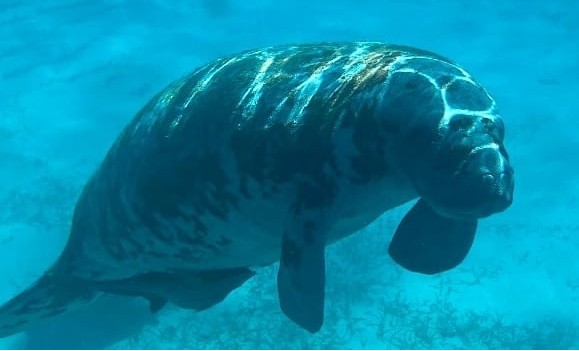
The Belize Fisheries Department issued an urgent warning on March 3, 2026, to all vessel operators after several recent manatee strandings across the country. In February, eight manatees were reported stranded in areas including Corozal, Belize City, Placencia, Gales Point, and Hopkins. Authorities confirmed that three of these cases—one adult male and two adult females, found on February 11th, 14th, and 16th—resulted from boat strikes.
The Greater Caribbean Manatee is fully protected by Belizean law, and harming or killing the species leads to severe penalties. Fisheries officials highlighted that recent incidents emphasize the importance of being more cautious when navigating Belize’s coastal waters.
According to the department, the fatalities happened in shallow coastal areas, river mouths, lagoons, and seagrass beds where manatees often feed and rest. Authorities said many of these accidents are linked to unsafe boating practices, including speeding through designated no-wake zones and not staying alert for marine wildlife.
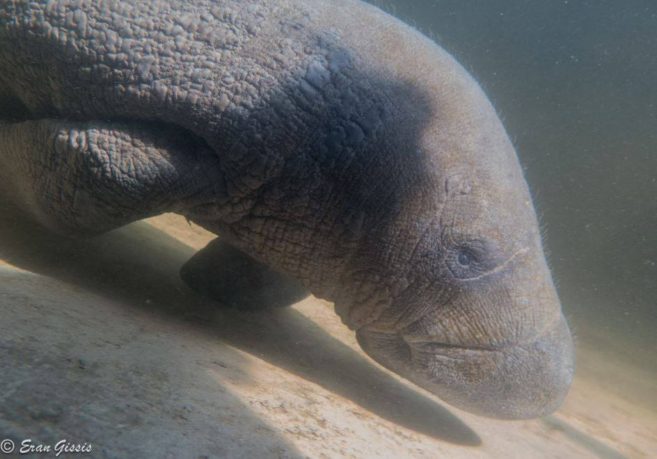
Boat strikes have increasingly become a major human-related threat to Belize’s manatee population, driven by the growth of tourism and higher boat traffic along the coast. Past research has also shown an increase in propeller scars and vessel-related injuries among manatees, especially in busy tourism areas. These patterns are similar to those observed in places like Florida, USA, where boat strikes remain a significant threat to the species.
The Belize Marine Mammal Stranding Network has been tracking manatee strandings and related incidents for several years. Conservation groups warn that unless compliance with boating regulations improves, the risks to the country’s manatee population could keep growing.
Local tour guides in San Pedro, who led manatee-watching tours near key habitats, are also urging boaters to stay vigilant. One guide explained that responsible operators slow to idle speeds in known manatee areas and educate visitors on how to spot the animals in the water. “We slow to idle speeds and teach tourists to spot manatees first. It’s our duty to protect what draws visitors,” he said.
Another tour guide with over 20 years of experience noted that many operators in the area now offer specialized manatee-watching trips between San Pedro and Caye Caulker. “We use sailboats for those trips to prevent those types of accidents. Something needs to be done,” he said.
The Fisheries Department stated that monitoring and patrol efforts will increase in collaboration with partners, including the Clearwater Marine Aquarium Research Institute (CMARI). Officials highlighted that protecting Belize’s manatee population is vital for maintaining the country’s marine biodiversity and supporting eco-tourism.
Authorities are reminding all boat operators to obey speed limits, respect no-wake zones, and stay alert in areas known to be inhabited by manatees.