
A nationwide consultation exercise to identify climate adaptation priorities concluded in San Pedro Town, Ambergris Caye, on January 29th. The final session, which covered the Belize District, supported the development of Belize’s Multi-sectoral National Adaptation Plan (MNAP). The consultations were led by the National Climate Change Office (NCCO) under the Ministry of Sustainable Development, Climate Change and Solid Waste Management, in partnership with consulting firm Metroeconomica, which facilitated the stakeholder sessions.
The San Pedro consultation, which also included stakeholders from Caye Caulker, was held at El Fogon Restaurant. Participants included representatives from the tourism and fisheries sectors, local authorities, and non-profit organisations.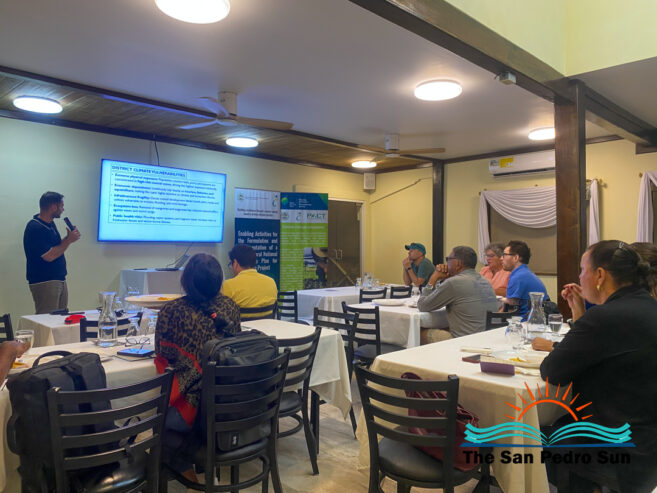
Metroeconomica consultant Sascha Goonesekera delivered presentations on national and district-level climate risks. He noted that Belize ranks eighth among 167 countries in climate risk and 61st in relative mortality risk from multiple hazards. Hurricanes were identified as a major cause of infrastructure damage nationwide.
In the public health sector, Goonesekera explained that rising temperatures increase the incidence of heat-related illnesses and mortality. “Warmer and wetter conditions expand vector-borne diseases and waterborne infections after floods,” he said.
District-specific climate hazards were also highlighted, including sea level rise and coastal erosion. “Sea levels are projected to rise to one metre by 2100, leading to land loss and saltwater intrusion,” Goonesekera said. Other threats discussed included stronger storms, coastal flooding, degradation of marine ecosystems, and increased sargassum influx.
Preliminary adaptation actions for the tourism sector included risk-informed planning, zoning, and standards, as well as the protection of nature-based coastal and marine assets. Proposed measures included living shorelines, beach vegetation programmes at tourism nodes, and reef restoration at priority sites.
Additional adaptation strategies focused on climate-resilient tourism infrastructure and services include improving water-use efficiency, establishing contingency water supplies for hotels and resorts, upgrading wastewater systems in tourism towns, and developing storm-resilient visitor information systems aligned with national alerts.
Heat safety measures for visitors were also discussed, including shaded infrastructure, hydration stations, adjusted tour times, and training for hospitality staff. Tourism diversification and market incentives were proposed, including developing less climate-sensitive tourism products and integrating climate criteria into Belize Tourism Board certification programmes to reward climate-ready operators.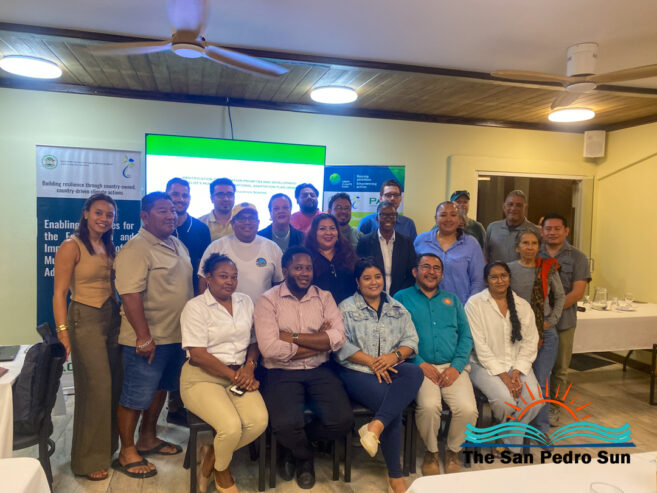
The consultation included group discussions where participants shared ideas relevant to the Cayes. Many stressed the need for stronger enforcement and the importance of balancing development with environmental conservation.
Organisers said all feedback will be compiled and presented to stakeholders at a future session. The NCCO and the ministry thanked participants for their active engagement, noting that stakeholder input is critical to strengthening Belize’s climate resilience.
Stakeholders nationwide are encouraged to remain engaged and watch for further updates as the MNAP development process continues.
Share
Read more