

On Wednesday, February 4th, the Sarteneja Alliance for Conservation and Development (SACD) hosted a final socialization session with stakeholders in San Pedro Town, Ambergris Caye, regarding its management plan for Bacalar Chico National Park. The session brought together island stakeholders from the private and tourism sectors. Attendees were updated on recent findings in the park and proposed conservation measures, while also providing feedback and recommendations.
SACD said the consultations are critical to finalizing a defined management framework that can be enforced once approved. Zoe Walker, representing the non-governmental organization Wildtracks, led the presentations. During the session, a five-year management plan was discussed, with emphasis on establishing a stronger knowledge base for long-term conservation.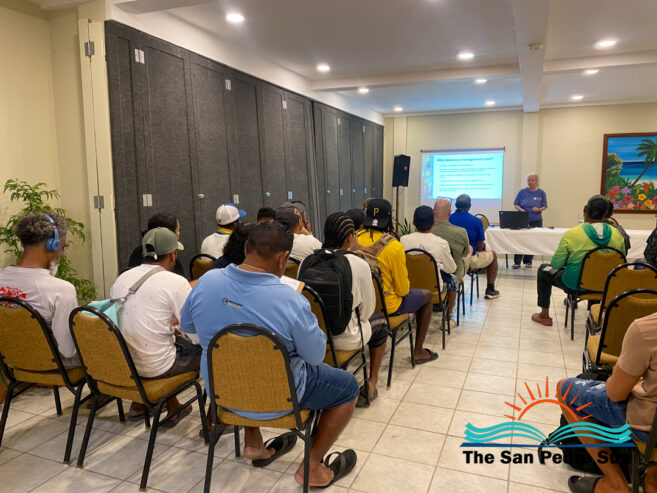
“This plan will provide a vision, goals, and objectives that will guide management activities and support financial sustainability for the next five years,” Walker said. “This management plan is the result of a series of meetings to better shape the plan for this time period.”
Walker shared updated ecological assessments for several key ecosystems within the protected area. The park’s littoral forest, plant species, and lowland broadleaf dry forest were rated “Very Good” in terms of size. However, its condition and landscape context were rated “Good,” with Walker noting that there is room for improvement.
The lagoon portion of the protected area, which supports Greater Antillean manatees, seagrass beds, and fish populations, was also rated “Very Good” for size. However, its condition, landscape context, and viability ranking were graded as “Good.”
The turtle nesting areas were rated “Good” overall. Walker highlighted key challenges affecting sea turtle nesting, including human activity and unsustainable development along the northern beaches of Ambergris Caye. She explained that vehicles driving on beaches continue to threaten nesting sites, with some nests being damaged or destroyed.
“These activities need to be better monitored, and visitors to these remote beaches must exercise caution,” Walker said.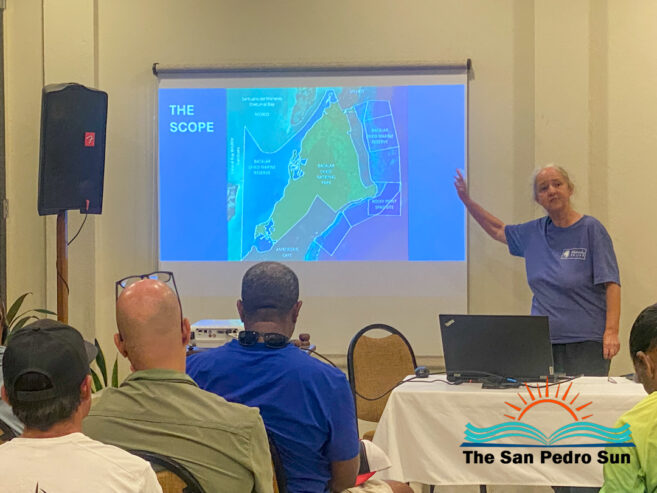
Sport fishing species such as tarpon, bonefish, and permit were also rated “Good,” while the landscape context for these habitats was graded “Fair.” Walker explained that this is largely due to unsustainable development near the area, which can disrupt habitats and displace fish species. Similar ratings were given for colony nesting birds and commercially important species such as game animals and commercial fish stocks.
The session also highlighted that illegal hunting and illegal extraction of trees remain ongoing threats to the park’s wildlife. Additional threats identified included seasonal sargassum influxes, water contamination, and increased use of motorized vehicles in sensitive areas.
The presentation outlined several key priorities for improved management of the national park. These included stronger surveillance and enforcement, clearer zoning and boundaries, habitat and species management, and cultural resource protection. Continued community engagement through environmental education, public outreach, and capacity-building initiatives was also emphasized.
In terms of tourism, SACD noted that once the plan is implemented, improvements are expected to increase visitor safety and protection. Proposed developments include docking facilities, administrative and operational infrastructure, tourism infrastructure, and improved fleet operations.
Several recommendations were raised during the consultation, with many attendees thanking SACD for the presentation. One major recommendation was the need for stronger enforcement and better infrastructure to access the park. Some tour operators said improved facilities would allow them to offer more tour options to guests. Others suggested closer collaboration between SACD rangers, the Belize Coast Guard, and tour guides, particularly fly-fishing guides.
SACD acknowledged the feedback and said the recommendations will be included in the final submission of the management plan, which will be forwarded to the National Biodiversity Office for approval.
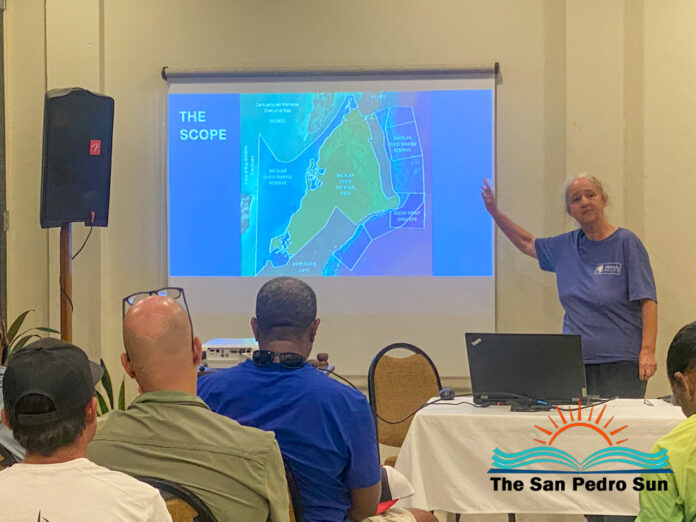
Bacalar Chico National Park is a UNESCO World Heritage Site measuring over 12,600 acres in northern Ambergris Caye. It includes both dry land and surrounding waters from the Caribbean Sea and is considered one of Belize’s most unique natural landscapes. The park is also the only protected area in Belize that connects directly to the Mesoamerican Barrier Reef.
Share
Related Articles
Read more